

Dr Ramjilal, Social Scientist and Former Principal, Dyal Singh College, Karnal (Haryana, India)
Email: [email protected]

(Asian independent) Abstract: Dr B. R. Ambedkar warned in 1916 and again in 1946 that if Hindus migrated to other regions around the world, the issue of Indian caste would become a global problem. More than a century later, his prediction has come true, as approximately 37.28 million people make up a strong Indian diaspora across all continents.
According to the Ministry of External Affairs (MEA), Government of India, there are about 17,760,528 Non-Resident Indians (NRIs), who are Indian citizens living abroad, alongside 19,520,317 Persons of Indian Origin (PIOs), which includes foreign citizens of Indian ancestry. This brings the total overseas Indian population, or the Global Indian Diaspora, to around 37.28 million in 207 countries. To break it down further: – Non-Resident Indians (NRIs): approximately 17.76 million (Indian citizens residing abroad for work, education, or other purposes); Persons of Indian Origin (PIOs/OCIs): approximately 19.52 million (foreign citizens with Indian ancestry); and the top countries with the largest populations of NRIs and Persons of Indian Origin are the United States: approximately 6.08 million; the United Arab Emirates (UAE): approximately 4.34 million; Canada: approximately 3.25 million; Malaysia: approximately 2.90 million; and Saudi Arabia: approximately 2.75 million. This diverse and rapidly growing global community highlights the significance of the Indian Diaspora in the world today. (https://www.mea.gov.in/population-of-overseas-indians)
The Indian diaspora is often celebrated as a symbol of India’s cultural diversity, economic success and growing international influence. Millions of people of Indian origin have established themselves in Britain, North America, Europe, Australia, Africa, the Gulf and Southeast Asia. They have contributed to education, medicine, business, technology, public administration, politics and cultural life. Yet the achievements of overseas Indians should not prevent us from examining an uncomfortable question: has migration weakened the caste system, or have some of its inequalities travelled with Indian migrants?
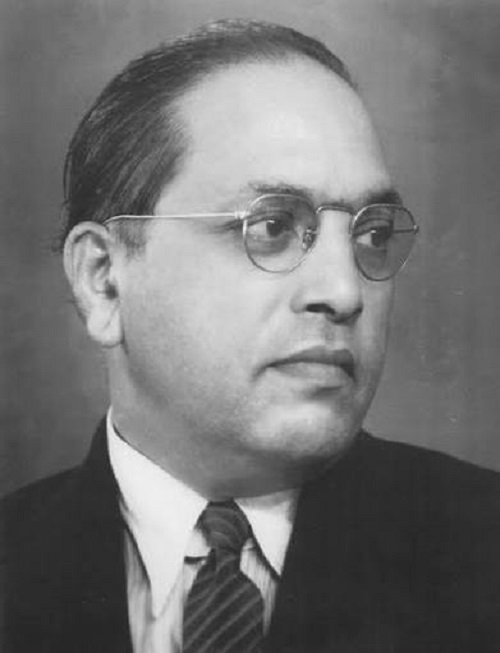
Dr B. R. Ambedkar’s philosophy provides an essential framework for examining this question. For Ambedkar, caste was not simply a division of occupations or a collection of cultural identities. It was a system of graded inequality that restricted social interaction, reproduced hereditary status and denied equal dignity to people placed at the bottom of the hierarchy. His criticism of untouchability was inseparable from his wider commitment to liberty, equality, fraternity and social democracy. These principles remain relevant wherever caste-based exclusion is reproduced, whether in India or among communities living abroad.
The diaspora is not a homogeneous community. Its members differ in caste, religion, language, region, class, gender, occupation and immigration status. Some have migrated as highly qualified professionals and entrepreneurs, while others work in agriculture, construction, domestic service, transport, factories and other low-paid occupations. Some enjoy citizenship and substantial economic security; others face insecure employment, dependency on employers or uncertain immigration status. Consequently, the effects of caste cannot be understood without examining its relationship with class, race, gender and economic power.
Details:
Dr B.R. Ambedkar: The System of Reproduction:
Although inter-caste relationships have evolved, the caste system continues to persist, even among the Indian diaspora abroad. In his early essay “Castes in India: Their Mechanism, Genesis and Development”, originally presented in 1916 and published in 1917, Ambedkar examined endogamy—the regulation of marriage within a social group—as a central mechanism for the reproduction of caste. In “Annihilation of Caste” (1936), he challenged both the religious and social foundations of the caste hierarchy, arguing that political democracy could not achieve its full significance without social transformation.
According to Dr B.R. Ambedkar, three fundamental pillars uphold the system of reproduction: endogamy, hierarchical inequality, and religious beliefs. The connection to the homeland fosters caste consciousness, which serves as a form of identity. The caste system is being revived in various countries by the Indian diaspora through matrimonial websites and organisations. Ambedkar asserted that this community perpetuates all three pillars. Notably, 94% of matrimonial advertisements mention caste, and inter-caste marriages are often stigmatised, leading to personal conflicts, harassment, and violence.
Regarding social capital, upper castes have accumulated socio-economic, intellectual, and caste capital abroad. Cultural dominance is illustrated through religious beliefs, traditions, Indian culture, festivals, popular music, and cultural presentations at ceremonies and conferences, all of which glorify specific castes. Consequently, instead of a decrease in caste dominance, patronage continues among non-resident Indians (NRIs) worldwide.
Research on the Indian diaspora in the United Kingdom provides crucial evidence on this topic. Kumar and Borkar’s 2026 study, “Reproduction of Caste Inequality and Anti-Caste Resistance Among the Indian Diaspora in the United Kingdom,” examines how caste inequality may be reproduced through socio-religious institutions, endogamy, dietary practices, community organisations, and informal networks. It also documents forms of resistance developed through religious, sociopolitical, and student organisations. The significance of this research lies in its demonstration that the diaspora is a site of both caste reproduction and opposition to caste.
Ambedkar’s arguments are particularly relevant for migration studies. Caste is often maintained through marriage, family expectations, inherited status, social networks, and ideas of purity and pollution. Thus, geographical relocation does not necessarily eliminate caste identity. A person can leave an Indian village and settle in cities like London, Toronto, New York, Sydney, or Dubai while still retaining social practices acquired from family and community life. While these practices may evolve in their outward expression, they can continue to influence friendships, marriage choices, religious participation, and access to community networks.
Ambedkar also distinguished between formal political equality and substantive social equality. A constitution may guarantee equal citizenship, but the practical value of that guarantee depends on whether individuals can exercise their rights without facing humiliation, exclusion, or inherited disadvantage. His ideal of fraternity was not merely a decorative appeal to national unity; it required individuals to recognise each other as equals. This recognition serves as an important test for institutions within the Indian diaspora.
Does Caste Travel Overseas?
Caste does not transfer as a legal system identical to that which has historically operated in India. Its expression abroad depends on local laws, demographic conditions, religious institutions, community structures, and the economic positions of migrants. However, caste identities can remain socially significant after migration. Family networks may continue to influence marriage choices, while community associations can maintain distinctions based on caste or sub-caste. In some cases, caste may impact social interactions, including who is welcomed into social circles, who receives job referrals, who is considered a suitable marriage partner, and who is treated as an outsider.
Such patterns should not be assumed to exist in every Indian-origin community, nor should every disagreement among migrants be labelled as caste discrimination. Evidence must establish the nature of the conduct and its relationship to caste. Nonetheless, the absence of a formal caste system in the host country does not mean that caste prejudice has disappeared from the lives of its migrants.
Caste Across Continents: A Comparative View
A search for major overseas Indian caste conflicts yielded 74 results. Here is a comparative overview of caste discrimination across continents:
- North America (USA and Canada, 5.6 million Indian diaspora): According to Equality Labs, 67% of Dalits experience caste discrimination in the workplace, 25% face physical or verbal assault, and 33% of students encounter caste discrimination in education. The 2020 Cisco Systems case exemplified this issue, where two upper-caste managers discriminated against a Dalit engineer. In February 2023, Seattle became the first city in the U.S. to pass a law banning caste discrimination, a measure later mirrored by California State University, Fresno. Guru Ravidas Gurudwaras and Valmiki Temples are recognised as the first places of worship in the U.S. and the U.K. organised around separate caste distinctions. Endogamy is maintained through Asian matrimonial publications that seek spouses based on caste.
- Europe and Britain (5 million South Asians):A Research in the U.K. indicates that caste identification serves as a means of privileged access to a closed network for dominant castes, leading to systematic disadvantages for underprivileged groups. In the Tirkey v. Chandhok case, the U.K. Employment Tribunal ruled that caste qualifies as “ethnic origin” under the Equality Act 2010. Derogatory language directed at Dalits parallels the term “Nigger,” which has been used against Black individuals. Upper-caste students often avoid attending the anti-caste Ambedkar forum at Oxford and frequently study abroad to accumulate caste-related wealth before returning home. Notably, Dr B.R. Ambedkar was the first Asian to serve as President of the Student Union at Oxford University in the 20th century; he later became the architect of the Indian Constitution. Following him, Dr K.R. Narayanan became the second Asian President and subsequently served as the President of India.
- Caribbean, Latin America, and Fiji: The Jajmani system broke down during the indentured labour era, but the caste system persists through marriages and temple committees. In Trinidad and Guyana, while the caste hierarchy has diluted, Brahminical priestly dominance continues.
- South Africa (including Kenya and Tanzania, 2.8 million Indian diaspora): Most early Indian traders in this region, primarily Gujarati Patels and Lohanas, were part of a trade network. Caste operates through business networks and endogamy, and casteism is prevalent. Mauritius has the highest level of integration due to the absence of caste-based occupations.
- Gulf & West Asia (9 million): This region has the largest Indian diaspora, characterised by temporary labour migration. Caste dynamics manifest through recruitment networks, housing segregation, and caste or village organisations. Dalit workers face double marginalisation.
- Oceania – Australia and New Zealand (1 million Indian diaspora): A recent study in Australia indicates that caste prejudice persists in subtle ways, often overlooked by the media. However, caste slurs and exclusionary community events still occur, with reminders not to “mingle with the Bhimees.” The term “Bhimees,” which refers to caste-based identities, is commonly used informally.
Ambedkar’s Relevance to Diaspora Life:
Ambedkar’s philosophy provides more than just a critique of historical untouchability; it offers a framework for evaluating contemporary institutions. Liberty requires the freedom to participate in society without inherited restrictions. Equality demands the rejection of caste-based superiority and inferiority. Fraternity calls for relationships grounded in mutual respect instead of social distance.
His emphasis on education, organisation, and agitation is particularly relevant to diaspora communities. Education can empower individuals to recognise discrimination and understand their rights. Organisations can offer support to those who feel isolated or are hesitant to voice their concerns. Collective action can pressure employers, universities, governments, and community institutions to adopt fair policies.
Ambedkar’s approach also challenges the assumption that national prestige or economic success are sufficient indicators of social progress. A prosperous diaspora may still have members who remain excluded. The true measure of progress is whether dignity and opportunity are shared, rather than merely assessing the community’s wealth or visibility.
The author’s previous discussions of Ambedkar, untouchability, and casteism in Pratibim Media (Chd.), Samaj Weekly (U.K.) , and The Asian Independent (UK) have highlighted the connection between social justice and the democratic transformation of Indian society. This article extends that concern beyond India’s borders, emphasising that the struggle against caste discrimination is not limited to the regions where caste originally developed. It also pertains to the social dynamics that migrants carry, reshape, or resist.
A Programme for Equality:
First, governments should guarantee that anti-discrimination protections are clear, enforceable, and accessible to individuals experiencing caste-based exclusion. Where existing laws are ambiguous, lawmakers should consider the need for specific legal clarifications or protections, while adhering to constitutional and human rights principles.
Second, universities and employers should establish confidential complaint systems, fair investigation procedures, and safeguards against retaliation. Training should address caste discrimination without painting any entire religion, nationality, or ethnic group as collectively guilty.
Third, religious and community institutions must examine their own practices. They can enhance their contribution to cultural life by ensuring that worship, participation, welfare services, and leadership are not restricted by caste hierarchy. Community associations should be encouraged to adopt explicit commitments to equality.
Fourth, governments, researchers, and civil-society organisations should support evidence-based research. Reliable data is needed on the nature, frequency, and contexts of caste discrimination in various countries. Research should differentiate caste prejudice from racism, class exploitation, and other forms of exclusion while examining where these issues intersect. It should also document the efforts of Dalit, Ravidassia, Ambedkarite, and anti-caste organisations.
Finally, diaspora organisations should build alliances across caste, class, gender, religion, and nationality. Such cooperation can effectively challenge discrimination without turning the struggle into hostility against any entire community. The goal is to transform institutions and relationships instead of merely replacing one form of inherited prejudice with another.
The Indian diaspora illustrates both the possibilities and contradictions of migration. It shows that individuals can cross borders, build successful lives, and contribute to societies around the world. However, it also highlights that social attitudes do not necessarily vanish when people relocate. Caste may be challenged, replicated, concealed, or transformed in different contexts.
Dr. Ambedkar’s enduring lesson is that equality must be defined by lived experience rather than formal declarations. The presence of Indian temples, gurdwaras, associations, and cultural organisations abroad is not inherently problematic; the critical issue is whether they promote equal dignity or reproduce inherited hierarchies. Similarly, discrimination by members of host societies must be scrutinized with evidence and differentiated from the caste inequalities that may exist within diaspora communities.
The objective should be to create a diaspora where ancestry does not dictate social worth, religious identity does not serve as a cover for exclusion, and community solidarity does not rely on the humiliation of others. Ambedkar’s vision of liberty, equality, and fraternity provides a principled foundation for that transformation. The ultimate test is not whether Indians abroad preserve their heritage, but whether they can uphold its humane and democratic possibilities while rejecting untouchability and caste-based discrimination wherever these persist
Ambedkar’s relevance to diaspora life:
Ambedkar’s philosophy provides more than a critique of historical untouchability. It offers a way to evaluate contemporary institutions. Liberty requires the freedom to participate in society without inherited restrictions. Equality requires the rejection of caste-based superiority and inferiority. Fraternity demands relationships grounded in mutual respect rather than social distance.
His insistence on education, organisation and agitation is particularly relevant to diaspora communities. Education can help people identify discrimination and understand their rights. Organisation can provide support for people who are isolated or reluctant to complain. Collective action can press employers, universities, governments and community institutions to adopt fair policies.
Ambedkar’s approach also challenges the assumption that national prestige or economic success is sufficient evidence of social progress. A diaspora may be prosperous and influential while some of its members remain excluded. The appropriate measure of progress is whether dignity and opportunity are shared, not merely whether a community has accumulated wealth or achieved visibility.
Dr Ambedkar’s enduring lesson is that equality must be judged by lived experience rather than formal declarations. The presence of Indian temples, gurdwaras, associations and cultural organisations abroad is not itself a problem; the decisive issue is whether they uphold equal dignity or reproduce inherited hierarchy. Similarly, discrimination by members of host societies must be examined with evidence and distinguished from the caste inequalities that may exist within diaspora communities.
Conclusion:
According to Ambedkar, migrant casteism is not a cultural relic but a systematic inequality that has been exported. Dr Bhimrao Ambedkar believed that laws alone are not sufficient to eradicate casteism; social reforms are essential. Constitutional, legal, and judicial measures, along with sanctions like those in Seattle, can prove extremely helpful if the foundation of social reforms is strengthened through inter-dining and inter-marriage. However, achieving this requires a fundamental change in mentality.
The concept of constitutional morality contrasts with community morality. Overseas Indians live in countries like the United States, Britain, Canada, and France, which are governed by egalitarian constitutions. Notably, the Indian diaspora includes prominent figures such as the President and Vice President of the USA and the Prime Minister of the UK. In Canada, the 2.8 million Indian diaspora accounts for 22 Members of Parliament and four Ministers, including the Minister of External Affairs. While the indigenous populations of these countries often practice communitarianism, the Indian diaspora should also embrace community morality. Political democracy is incomplete without social democracy.
Over 30 Ambedkarite organisations in the United States, such as the Ambedkar International Centre, Ambedkar King Study Circles, and the Texas Buddhist Association, actively promote social democracy. The Dalit diaspora has made significant contributions to internationalising Ambedkarism. Organisations like Solidarity Network UK, CasteWatchUK, and Equity Labs USA have successfully brought the issue of caste into discussions at the International Convention on the Elimination of Racial Discrimination (ICERD). The victory in Seattle represents a global triumph for Ambedkar’s vision of constitutionalism.
Ultimately, Ambedkar’s warning has proven to be prophetic: caste is now a global problem. The Ambedkar ideology calls for education, organisation, struggle, inter-caste marriage, inter-caste dining, and the promotion of the egalitarian principles outlined in the Indian Constitution as legally protected categories. Global brotherhood is meaningless without the eradication of caste, from Karnal to California. To effectively address this global issue, a change in mindset is essential.
References:
1.https://www.mea.gov.in/population-of-overseas-indians
2.https://www.mea.gov.in/advanced-search-list
4.Ambedkar, B. R. (1917). Castes in India: Their mechanism, genesis and development. Indian Antiquary, 46, 81–95.
5.Ambedkar, B. R. (1936). Annihilation of caste. Independent Labour Party.
6.Chandhok v. Tirkey, UKEAT/0190/14/JOJ (Employment Appeal Tribunal 2014).
7.Dhanda, M., & Waughray, A. (2016). The law of caste discrimination in Britain: A legal and political analysis. The Political Quarterly, 87(3), 339–346. https://doi.org/10.1111/1467-923X.12280
8.Kumar, A., & Borkar, S. (2026). Reproduction of caste inequality and anti-caste resistance among the Indian diaspora in the United Kingdom. Transitions: Journal of Transient Migration, 10(1), 33–56. https://doi.org/10.1386/tjtm_00088_1
9.Ministry of External Affairs, Government of India. (n.d.). Population of overseas Indians. https://www.mea.gov.in/population-of-overseas-indians.htm
10.Parliament of India, Standing Committee on External Affairs. (2025). Welfare of Indian diaspora and status of Emigration Bill (Report No. 6).
11.Seattle City Council. (2023). Ordinance 126767: Adding caste to the City of Seattle’s anti-discrimination protections.
12.Lal, Ramji,Dr.(2025, February 26). Casteism is a destructive obstacle in nation-building: An analysis. Samaj Weekly. https://samajweekly.com/in-dr-bhimrao-ambedkars-thinking-casteism-is-a-destructive-obstacle-in-nation-building-an-analysis/
13.Lal, Ramji,Dr.. (2025, May 1). Challenges against Ambedkarism in the current scenario: An analysis. The Asian Independent. https://theasianindependent.co.uk/challenges-against-ambedkarism-in-the-current-scenario-an-analysis/
14.Lal, Ramji,Dr. (2026, October 10). Bhagat Singh, Mahatma Gandhi, and Dr B. R. Ambedkar’s views on untouchability: A comparative study. Samaj Weekly. https://samajweekly.com/bhagat-singh-mahatma-gandhi-and-dr-b-r-ambedkars-views-on-untouchability-a-comparative-study/
15.Lal,Ramji,Dr.(2026,October10). https://theasianindependent.co.uk/bhagat-singh-mahatma-gandhi-and-dr-b-r-ambedkars-views-on-untouchability-a-comparative-study/