

Balram Sampla

Geopolitics
(Asian independent) During the Indian freedom struggle, the Indian National Congress (INC) projected itself as a unifying front representing all Indians against British colonial rule.
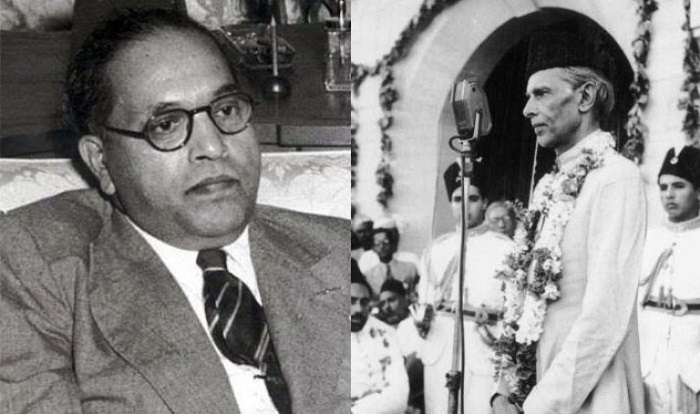
However, key contemporary figures like Dr. B.R. Ambedkar and Muhammad Ali Jinnah sharply criticized the party. They argued that behind its nationalistic rhetoric, Congress was structurally dominated and controlled by upper-caste Hindus, serving their political and social interests at the expense of marginalized groups.
While both leaders shared a deep distrust of Congress leadership, their critiques stemmed from distinct political realities and led to dramatically different political outcomes, culminating in Jinnah’s force-based partition of the subcontinent and Congress’s strategic integration of Ambedkar into the constitution-making process.
Dr. B.R. Ambedkar’s Critique: The “Brahmin-Bania” Hegemony
Dr. B.R. Ambedkar approached his critique from the perspective of anti-caste emancipation and the rights of the Depressed Classes (Dalits). He maintained that political independence (Swaraj) without social reform would simply transfer power from British colonisers to upper-caste oppressors.
Ambedkar characterized the Congress as a combination of Brahmin intellectual dominance and Bania financial backing. In his work What Congress and Gandhi Have Done to the Untouchables (1945), he raised several core arguments:
(I) Prioritizing Politics over Social Equality
Congress leaders advocated for self-rule first and relegated the dismantling of the caste system to a secondary issue. Ambedkar argued that genuine freedom was impossible for Dalits while the caste system remained intact.
(II)Rejection of Paternalism
Ambedkar rejected Gandhi’s approach of moral reform and the term Harijan, viewing it as patronizing. He argued that upper-caste leaders wanted to remain custodians of lower castes rather than grant them true political autonomy.
(III) The Poona Pact Clash
This conflict peaked during the Poona Pact of 1932. Ambedkar demanded separate electorates to ensure Dalits could elect their own representatives. When Gandhi went on a fast-unto-death, Ambedkar yielded to reserved seats, which he felt left Dalit representatives dependent on upper-caste Congress voters.
Muhammad Ali Jinnah’s Critique: Fear of a “Caste-Hindu Raj”
Muhammad Ali Jinnah began his political career as a member of Congress and an advocate for Hindu-Muslim unity. However, over time, he became convinced that the party had transformed into an instrument for upper-caste Hindu majoritarianism.
Jinnah’s ideological shift was driven by specific political turning points:
(I) Cultural and Religious Mobilization. Following Gandhi’s rise in the 1920s, Congress adopted mass-mobilization techniques heavily infused with Hindu “symbols and idioms”, which Jinnah felt altered the secular nature of the party.
(II) Exclusion from Governance
After the 1937 provincial elections, Congress refused to form coalition governments with the All-India Muslim League in regions like the United Provinces. Jinnah viewed this as proof that the upper-caste Congress leadership intended to monopolize power.
(III) The “Two-Nation” Theory
Jinnah argued that a united India governed by a parliamentary majority would inevitably result in a “Caste-Hindu Raj,” where Muslims would be permanently outvoted and dominated by the upper-caste Hindu majority.
Divergent Paths:Jinnah’s Direct Action vs. Co-opting Ambedkar
These two giants demonstrated two completely different political paths :
1. Jinnah, Direct Action, and the Creation of Pakistan
When negotiations over power-sharing collapsed, most notably with the rejection of the 1946 Cabinet Mission Plan. Jinnah bypassed constitutional talks altogether. On 16th August 1946, the Muslim League launched “Direct Action Day” to demonstrate that Muslims would not accept a Congress-dominated central government. Jinnah wanted loose federation. The resulting wave of widespread communal violence forced both the British and the Congress leadership to concede that a united India was unworkable. Through violent political pressure and unyielding brinkmanship, Jinnah successfully carved out Pakistan as a separate nation.
2. Congress’s Strategy: Co-opting Ambedkar to Build the Constitution
Faced with the trauma of Partition and eager to secure domestic legitimacy, the Congress High Command adopted a very different tactic toward Dr. Ambedkar. Recognizing his intellect, legal acumen, and international stature, Congress pragmatically brought Dr. Ambedkar into the fold:
(I) Appointing Him Drafting Chairman. Nehru and Patel invited Ambedkar to join the Cabinet as India’s first Law Minister and appointed him Chairman of the Constituent Assembly’s Drafting Committee.
(II) Institutionalizing Safeguards. By granting Ambedkar the latitude to draft the Constitution, Congress allowed him to embed his lifelong concerns directly into the nation’s “legal bedrock”, incorporating the abolition of untouchability (Article 17), anti-discrimination laws (Article 15), reservations in legislatures and public employment (Articles 16, 330, and 332), and strong central authority.
(III) A Masterstroke of Political Accommodation. This move served a dual purpose: it gave Ambedkar the legislative authority to institutionalize protections for Dalits, while simultaneously allowing Congress to neutralize a formidable opponent, absorb the anti-caste movement into the national framework, and present the newly independent state as an inclusive democracy.
Conclusion
The critiques raised by Ambedkar and Jinnah exposed deep structural flaws in the Congress Party’s claim to represent all Indians. While Jinnah broke away entirely by leveraging Direct Action to force Partition, Congress neutralized Ambedkar’s challenge by co-opting him into the state-building process. By handing him the pen to draft the Indian Constitution, Congress allowed Ambedkar to legally dismantle upper-caste hegemony on paper, creating the constitutional framework that continues to define Indian democracy today.
References
1.Ambedkar, B. R. (1945). What Congress and Gandhi Have Done to the Untouchables.
2.Ambedkar, B. R. (1949). Final Speech to the Constituent Assembly (November 25, 1949).
3.Jinnah, M. A. (1937). Presidential Address at the Lucknow Session of the All-India Muslim League.
4.Jinnah, M. A. (1946). Direct Action Resolution & Press Statement (July–August 1946).
5.Jaffrelot, Christophe. (2005). Dr. Ambedkar and Untouchability: Analysing Dalit Elite Formation.