

Dr Ramjilal, Social Scientist and Former Principal, Dyal Singh College, Karnal (Haryana, India)
Email: [email protected]
(Asian independent)

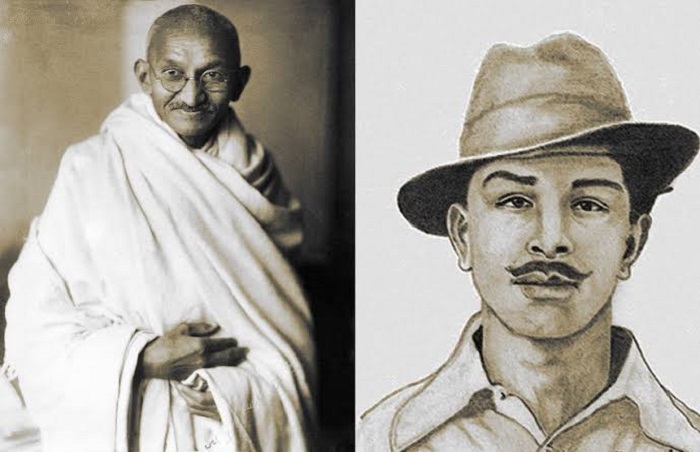
Overview: Untouchability has been a deeply painful and dehumanising aspect of caste inequality within Indian society. It extends beyond individual prejudice or social distance, manifesting through the exclusion of certain communities from temples, wells, schools, public transport, and other fundamental societal aspects. This historical practice has relegated individuals to predetermined social destinies, associating them with concepts of pollution, impurity, and hereditary inferiority. The struggle against untouchability is intricately linked to the broader quest for Indian freedom, as political independence from British rule alone could not ensure dignity and equality for those marginalized within society. This understanding was distinctly articulated by three prominent figures in modern India: Bhagat Singh, Mahatma Gandhi, and Dr B. R. Ambedkar.
Details:
1. The Harmful Consequences of Untouchability:
Untouchability has fostered a societal structure where individuals are evaluated based on their birth, rather than their character or capabilities. The repercussions are multifaceted—economic, educational, political, cultural, and psychological. Those subjected to untouchability have historically been restricted to stigmatised occupations, denied equal access to resources, and deprived of educational opportunities. Furthermore, untouchability has detrimental effects on Indian society as a whole, fracturing social cohesion, and hindering the establishment of genuine fraternity. A nation cannot claim to be free, while a significant portion of its population is denied equal social standing.
2. Differing Approaches to Untouchability:
Despite their shared concerns regarding untouchability, the approaches of Gandhi, Ambedkar, and Singh differed significantly. Gandhi viewed untouchability as a moral, religious, and social issue that required a transformation of the consciousness of caste Hindus. In contrast, Ambedkar perceived it as a structural element of caste, advocating for legal rights, political representation, social equality, and the complete dismantling of the caste system. Bhagat Singh, as a young revolutionary and developing socialist thinker, linked untouchability with broader issues of caste, labour, poverty, and the revolutionary transformation of society. A comparative analysis of these three thinkers remains highly relevant today, as India continues to grapple with caste discrimination and social exclusion.
3. Bhagat Singh: Social Equality and Revolutionary Freedom:
Bhagat Singh’s perspective on untouchability warrants greater recognition than it typically receives. His influential article “Achhut Ka Sawaal” (The Issue of Untouchability), published in June 1928 in KIRTI under the pseudonym Vidrohi, reveals that Singh’s interests extended beyond British imperialism, encompassing the internal inequalities present in Indian society. Singh rejected the notion that touching another individual could be considered polluting. He connected the oppression of communities with the dual burdens of poverty and social prejudice, notably recognising the oppressed as potential agents of social change rather than merely passive recipients of sympathy.
His assertion that the oppressed represented the “real proletariat” highlights the link he identified between caste and class. Singh’s revolutionary approach posited that political freedom must be accompanied by social and economic liberation. A society could not be deemed free if a portion of its population continued to endure social humiliation. Although his writings do not constitute a comprehensive analysis of caste like that of Ambedkar, Singh’s contributions were significant—emphasising that the struggle for independence must address internal social oppression.
Singh’s socialist and rationalist ideologies evolved throughout his life, as seen in his later writings that delve deeper into issues of class exploitation, communalism, religion, labour, and social inequality. His revolutionary aim was not merely to transfer power from British rulers to Indian elites but to establish a more egalitarian society. My recent article, “Untouchability and Bhagat Singh: Caste, Class, and Social Freedom”, published on various platforms (Samaj Weekly, uk/Asian Independent, uk/Partibim Media, Chandigarh, Satya Kesari, Karnal, and Daily International Kamboja, Kabail, Pakistan– develops this dimension and rightly places his 1928 essay within the larger trajectory of his socialist thought.
4. Mahatma Gandhi: Untouchability as a Moral Crime:
Mahatma Gandhi’s opposition to untouchability began early in his life and became one of the enduring concerns of his public activism. He described untouchability as a great sin and argued that no moral or religious justification could defend it. In one of his early statements, Gandhi claimed that if Indians did not view contact with Christians or Muslims as polluting, there could be no rational justification for regarding a member of their own religion as untouchable.
Mahatma Gandhi’s approach was primarily moral and social; he aimed to change the conscience and behaviour of caste Hindus. He promoted temple entry, access to public wells, sanitation, education, and social contact. Mahatma Gandhi also undertook extensive campaigns through the Harijan movement.
His famous assertion that he would rather see Hinduism perish than allow untouchability to survive illustrates the seriousness with which he viewed the practice. However, Mahatma Gandhi did not initially advocate for the complete dismantling of the varna system, unlike Ambedkar. This difference became a fundamental point of contention between the two.
Mahatma Gandhi believed that social reform could be achieved through moral persuasion, self-purification, and the transformation of the majority community’s conscience. In contrast, Ambedkar argued that the oppressed needed rights and institutional power because relying on the goodwill of the socially dominant was insufficient.
5. Mahatma Gandhi and Ambedkar: The Poona Pact (1932):
The most dramatic confrontation between Gandhi and Ambedkar occurred in 1932 over the political representation of the Depressed Classes. The British Communal Award provided separate electorates for the depressed classes. Ambedkar viewed separate electorates as a crucial mechanism for allowing Dalits to select representatives who were genuinely accountable to them. Gandhi opposed separate electorates, fearing they would permanently divide Hindu society.
Gandhi began a fast in Yeravada Jail, placing Ambedkar in a difficult moral and political situation. The resulting negotiations led to the Poona Pact on September 24, 1932. Separate electorates were abandoned, but the number of reserved seats for the Depressed Classes in provincial legislatures was increased within a system of joint electorates.
The Pact should neither be romanticised nor reduced to a simple victory for either leader. Gandhi believed he was safeguarding social unity, while Ambedkar viewed independent political representation as essential for protecting the oppressed. Later experiences demonstrated Ambedkar’s concerns about the limitations of joint electorates.
This episode also highlights an important aspect of the relationship between the two men: profound disagreement did not preclude political negotiation. Ambedkar’s decision to sign the Pact prevented Gandhi’s fast from ending in death, but it also represented a difficult compromise for Ambedkar.
6. Dr Ambedkar: From Reform of Untouchability to Annihilation of Caste:
Ambedkar’s contributions were fundamentally different from Gandhi’s. For him, untouchability was not an isolated social evil; it was rooted in the caste system and its hierarchical principles. Therefore, merely persuading caste Hindus to treat Dalits kindly could not solve the underlying problem.
Ambedkar’s goal was equality based on rights, dignity, and institutional guarantees. “Access to education, political representation, public resources, and economic annihilation of caste” provided the intellectual foundation for his radical critique. He challenged the notion that social reform could be postponed until after political freedom. For Ambedkar, democracy was not merely a constitutional arrangement; it required social democracy based on liberty, equality, and fraternity.
This distinction remains crucial. Gandhi primarily urged the socially dominant to reform themselves, while Ambedkar encouraged the oppressed to organise themselves and demanded institutions that would enforce equality. This is highly significant. Ambedkar did not need to endorse
7. Ambedkar and the Martyrdom of Bhagat Singh, Rajguru, and Sukhdev:
An important but often overlooked connection between Ambedkar and Bhagat Singh is Ambedkar’s editorial response to the execution of Bhagat Singh, Rajguru, and Sukhdev.
On April 13, 1931, in his newspaper *Janata*, Ambedkar published an editorial titled “Three Victims.” In it, he discussed the executions of the three revolutionaries and questioned the British government’s claim to be acting in the name of justice. One section was headed “Sacrifice for Whom?” Ambedkar argued that the executions could not simply be understood as the impartial application of law.
revolutionary violence in order to recognise the political meaning of the executions. His response demonstrated his concern with colonial power, law, justice, and the treatment of political dissent.
There is therefore an intellectual connection between Bhagat Singh and Ambedkar, although they did not constitute a political partnership. Bhagat Singh attacked imperialism and social oppression from a revolutionary-socialist standpoint; Ambedkar attacked caste oppression and political exclusion through democratic, constitutional and emancipatory politics.
8.Mahatma Gandhi did his best to save Bhagat Singh and his comrades– Rajguru and Sukhdev.
The question of whether Mahatma Gandhi attempted to save Bhagat Singh and his associates remains a contentious topic in historical discussions. Documentation indicates that Gandhi did engage with British authorities regarding the death sentences of Bhagat Singh, Rajguru, and Sukhdev, advocating for commutation or postponement. Although Gandhi opposed revolutionary violence, he was also against capital punishment, publicly expressing his desire for Bhagat Singh to avoid execution. His actions included negotiations during the Gandhi-Irwin discussions and various communications about the impending executions.
It is important to clarify that while Gandhi made significant documented efforts to save the lives of these revolutionaries, it would be misleading to assert that he possessed the power to ensure their survival. Ultimately, despite his interventions, the executions occurred on March 23, 1931.My previous articles published in Samaj Weekly UK, Asian Independent UK,Paritibim Media , and Dainik Tribune ,Chd. have explored this issue extensively, presenting evidence that Gandhi’s efforts were more substantial than often recognised.
9. The Relationship Between Gandhi and Ambedkar: From Conflict to Cooperation:
The dynamic between Gandhi and Dr B.R. Ambedkar cannot be fully understood through their conflicts alone. Their later interactions highlight an important shift towards cooperation. Accounts from Gandhi-orientated historians suggest that Gandhi acknowledged Ambedkar’s capabilities, which contributed to a political environment inviting Ambedkar into the constitution-making process. Gandhi notably recommended Ambedkar’s name to Jawaharlal Nehru for the chairmanship of the Drafting Committee of the Constitution, leading to Ambedkar’s election as Chairman of the Constituent Assembly on August 29, 1947.
Remarkably, a man who had significant ideological disagreements with Gandhi and the Congress became instrumental in guiding the work of the Drafting Committee, which ultimately enshrined equality and the abolition of untouchability within the Constitution. Dr Ambedkar is hailed as ‘the Father of the Indian Constitution’.
10. Ideological Similarities Between Bhagat Singh, Gandhi, and Ambedkar:
Although Bhagat Singh, Mahatma Gandhi, and B.R. Ambedkar differed in their thinking and methods, they shared certain fundamental principles related to social justice and equality. Their common beliefs shaped their vision for a more equal society:
1. Rejection of Untouchability: All three leaders strongly condemned the practice of untouchability, considering it an intolerable violation of human dignity and a form of social degradation that must be eradicated to create a just society.
2. Political Freedom and Social Change: They understood that the quest for political freedom cannot be viewed in isolation; true freedom requires major social change and the dismantling of oppressive structures that perpetuate inequality.
3. Commitment to Dignity: Each leader demonstrated a deep commitment to upholding the dignity of marginalised people. Although their methods of achieving this goal varied—ranging from grassroots activism to nonviolent protest—their ultimate goal remained the same: empowering and respecting all people.
4. Opposition to Value Based on Birth: Unified in their beliefs, they collectively rejected the idea that a person’s worth should be measured by their birth or caste. This thinking laid the foundation for advocating for universal human rights and equality in society.
5. Importance of Unity: Recognising the deep-rooted divisions in Indian society, they emphasised the need to foster unity among different communities. They believed that solidarity was essential to overcome internal divisions and move toward the collective goal of true freedom and justice for all.
Although these thinkers were united by similar goals, their methods differed greatly. Gandhi emphasised moral suasion and nonviolence to bring about change. Ambedkar focused on ensuring legal frameworks, constitutional safeguards, and democratic representation for marginalised communities. In contrast, Bhagat Singh advocated for revolutionary change, socialism, class consciousness, and mobilisation.
11. Theoretical Differences Between Bhagat Singh, Gandhi, and Ambedkar:
Theoretical differences between Bhagat Singh, Gandhi, and Ambedkar are as follows:
1. Caste System: Mahatma Gandhi’s view on the caste system changed over time. Although he recognised the existence of inequality, his vision did not call for the complete elimination of the caste hierarchy. In contrast, Dr B.R. Ambedkar strongly criticised the caste system, viewing it as a fundamental obstacle to achieving true equality and justice in society. His view demanded the complete abolition of caste and highlighted its adverse impact on marginalised communities.
2. Political Representation: Gandhi was wary of the consequences of separate voting for marginalised groups, fearing that it could deepen existing rifts and further divide Hindu society. He believed that efforts should be directed toward unity and integration. Ambedkar, on the other hand, considered political representation a necessary safeguard for under-represented communities, arguing that without dedicated political avenues, the voices of marginalised people would remain unheard and their rights insecure.
3. Methods of Change: Gandhi supported the philosophy of nonviolent protest and advocated mass mobilisation as a method for bringing about social and political change. He emphasised moral and ethical change as the foundation for progress. In contrast, Ambedkar promoted a structured approach to change through constitutional democracy and advocated organised political action as essential for social reform. Bhagat Singh, with his passionate revolutionary spirit, took a completely different path, prioritising anti-imperialist and socialist ideals and employing radical methods to bring about change.
4. Religious Views: Gandhi aimed to reform Hindu society from within. He believed that the abhorrent practice of untouchability was in fact contrary to the core values of Hinduism. He sought to foster a sense of moral responsibility within the community to eradicate such practices. However, Ambedkar believed that the caste system was perpetuated by the very religious structures that supported it, which ultimately led him to abandon Hinduism and embrace a new spiritual path. Meanwhile, Bhagat Singh adopted a rationalist and atheistic perspective, offering a sharp, intellectual critique of religion and advocating a society driven by reason rather than dogma.
12. Contemporary Relevance of Their Ideas:
The thoughts of these three leaders remain profoundly relevant today. Current political leaders often invoke Bhagat Singh, Gandhi, and Dr. Ambedkar separately, sometimes using their legacies to symbolise competing political ideologies. A more constructive approach would be to critically examine their ideas collectively.
Bhagat Singh’s philosophy suggests that freedom is incomplete without social and economic equality. Gandhi’s teachings emphasise that social reforms demand moral courage and personal responsibility. Dr. Ambedkar’s perspective illustrates that equality relies not just on goodwill but on enforceable rights, representation, institutions, and constitutional safeguards.
This lesson holds particular significance for contemporary political leaders who seek support in the name of caste while failing to address caste discrimination effectively.
In summary, Bhagat Singh, Mahatma Gandhi, and Dr B.R. Ambedkar each addressed human dignity through different approaches. Bhagat Singh linked caste oppression to revolutionary change, Gandhi viewed untouchability as a moral issue requiring a shift in social consciousness, and Ambedkar saw caste as a structural inequality needing eradication through education and political power.
Their differing viewpoints, such as Gandhi’s and Ambedkar’s conflict over the Poona Pact, highlight the complexities of social reform. Both Gandhi’s political stance and Ambedkar’s recognition of the injustices surrounding revolutionary actions illustrate their commitment to human life and social justice.
India’s task today is to integrate their unique contributions: social and economic freedom from Bhagat Singh, moral transformation from Gandhi, and institutional equality from Ambedkar. Achieving this integration is essential for the promise of dignity and the complete elimination of untouchability.
References:
1.Ambedkar, B. R. (1931, April 13). Three victims. Janata.
2.Ambedkar, B. R.(1916).’CASTES IN INDIA: THEIR MECHANISM, GENESIS AND DEVELOPMENT’
which he presented at an Anthropology Seminar at Columbia University.
3.Ambedkar, B. R. (31 January 1920), First editorial, ‘ Hindu society’, Mooknayak (The Leader of Voiceless):
4.Ambedkar, B. R.(1942). Shri Gandhi and the Emancipation of the Untouchables’ (1942),
5.Ambedkar, B. R. (1936). Annihilation of caste. Independent Labour Party.
6.Ambedkar, B. R. (1942 ).What Did Congress and Gandhi Do for the Untouchables?’
7.Bhagat Singh. (1928, June). The issue of untouchability (Achhut Ka Sawaal). Kirti.
8.Gandhi, M. K. (1915–1948). The collected works of Mahatma Gandhi. Publications Division, Government of India.
9.Gandhi, M. K. (1932). Correspondence with Dr. B. R. Ambedkar. Selected Works of Mahatma Gandhi.
10. Shukla ,Vivek . (2 October 2026).dainiktribune.comnews/
11.Omvedt, G. (1994). Dalits and the democratic revolution: Dr. Ambedkar and the Dalit movement in colonial India. Sage.
12.Zelliot, E. (1992). From untouchable to Dalit: Essays on the Ambedkar movement. Manohar.
13.Lal,Ramji,Dr.(26.2.2025).In Dr.Bhimraoaedkar’s Thinking, Casteism is a Destructive obstacle in Nation-Building—An Analysis https://samajweekly.com/in-dr-
14.Lal, Ramji,Dr.(January 5, 2025).Forword of the book on Ambedkar
Reflection of Dr. Bhim Rao Ambedkar’s Ideology in English Literature: A Critical Evaluation/https/theasianindep
15.Lal,Ramji,Dr.(20/2/2023).
16.Lal,Ramji,Dr. (May 1.2025).hptts/heasianindepende
17.Lal,Ramji,Dr.(20/2/2023).
18.Lal, Ramji,Dr.(26/07/2023). Philosophy of Dr. Bhimrao Ambedkar in the context of deprived scheduled castes: A reconsideration and relevance in the present context https://samajweekly.com/dr-
19.Lal, Ramji, Dr. (6 May 2026) Ambedkarite Thought – Challenges before an Equality and Justice-based Alternative, Dainik Tribune, Chandigarh p.6 {(लाल, रामजी,डॉ.( 6मई 2026).अंबेडकरवादी चिंतन -समता व न्याय आधारित विकल्प के समक्ष चुनौतियां, दैनिक ट्रिब्यून,चंडीगढ़ पृ.6}
20.Lal, Ramji, Dr. (30 January 2021). Relevance of Mahatma Gandhi’s thoughts in the present times, Chandigarh and Kurukshetra, edition 30 January 2021, p. 6.
21.लाल, रामजी,डॉ.(30 जनवरी 2021).महात्मा गांधी के चिंतन की वर्तमान समय में प्रासंगिकता , चंडीगढ़ व कुरुक्षेत्र,संस्करण 30 जनवरी 2021,पृ.6.}
22.Ramji,lal,Dr. (JANUARY 30, 2025 ).गांधी ने किये थे फांसी रुकवाने के प्रयास क्रांतिकारियों की शहादत (https://www.
23.Ramji,lal,Dr. (JANUARY 29, 2025). https://samajweekly.com/
24.उर्मिलेश , (April 19, 2025).डॉ. अम्बेडकर संविधान ड्राफ्टिंग कमेटी के चेयरमैन कैसे बने? https://janchowk.com/how-
25.https://
26.dainiktribune.comnews/
27.Harshvardhan.(April 3, 2021). https://janataweekly.org/
28.Ramji,lal,Dr. (4 October 2 026)https://pratibimbmedia.
29. Ramji,lal,Dr. (9 October 2 026 ) . अस्पृश्यता और भगत सिंह: जाति, वर्ग और सामाजिक स्वतंत्रता—-एक समीक्षा,सत्य केसरी,करनाल,पृ.6 {Untouchability and Bhagat Singh: Caste, Class and Social Freedom—A Review, Satya Kesari, Karnal, p. 6}
30. Ramji,lal,Dr. (8.10.2026). Untouchability and Bhagat Singh – Caste, Class and Social Freedom International Kamboja Kabail,Pakistan (छूत छात और भगत सिंह -जात,तबका और सामाजिक आजादी Translation in Urdu language published in Daily International Kamboja Kabail,Pakistan)