

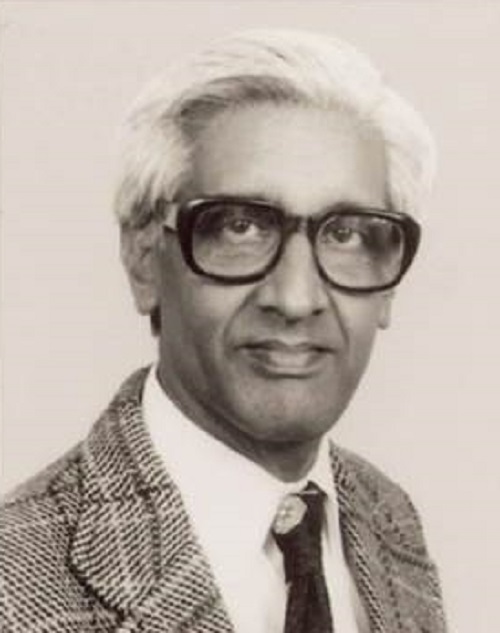
Bhagwan Das was not merely a follower of Ambedkar; he was a dedicated torchbearer of the Ambedkarite mission, who strove to link Babasaheb’s ideas with the struggle for the liberation of the most oppressed human beings.
R. Darapuri, IPS (Retd.)
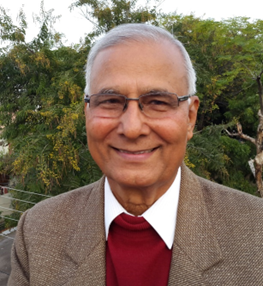
(Asian independent) Introduction:- In the history of the Indian Ambedkarite movement, the place of Bhagwan Das should be recognized not merely as a follower or associate of Dr. Babasaheb Ambedkar, or as a custodian of his literature, but as a committed thinker and social activist who sought to transform Ambedkarite philosophy into a practical program for social liberation. His life exemplifies that Ambedkarism is not just a matter of ideological allegiance, political identity, or symbolic reverence; rather, it is a lifelong struggle for the annihilation of the caste system, the establishment of social equality and human dignity, and the emancipation of the most marginalized communities.
The most significant aspect of Bhagwan Das’s contribution was his effort to both preserve the intellectual legacy of the Ambedkarite movement and broaden its social base. He specifically highlighted the issues of oppression, social exclusion, and human dignity faced by the most marginalized groups within the Dalit community—such as the Bhangi and sanitation worker communities. In doing so, he provided the Dalit movement with a capacity for self-critique, clarifying that the anti-caste struggle can only be meaningful if it also challenges the caste-based inequalities that persist within the Dalit community itself.
His contribution is evident across three vital dimensions of Ambedkarite thought: the preservation and dissemination of Babasaheb’s ideological legacy; the struggle for the social liberation of the most oppressed communities; and the establishment of equality through human rights and institutional empowerment. By raising the issue of caste-based discrimination on international platforms, promoting the Buddhist Dhamma, and working toward legal empowerment, he imbued Ambedkarism with a broader social and humanitarian context. Therefore, the historical significance of Bhagwan Das lies not merely in the fact that he was a close associate of Dr. Ambedkar, but in the fact that he made Ambedkar’s ideas the mission of his life. He was a representative of that Ambedkarite tradition in which thought and action, self-respect and social justice, and ideological commitment and organizational struggle are inextricably linked.
1.Ideological Connection with Babasaheb: From Follower to Missionary
Bhagwan Das’s meeting with Dr. Ambedkar in Shimla in 1943 proved to be a turning point in his life. This encounter gave a new direction to his ideological development and social commitment. He later became one of Babasaheb’s close associates and, in the final years of Babasaheb’s life, served as his research assistant.
This proximity provided him with the opportunity to understand Ambedkar’s personality, ideological perspective, political strategy, and his program for social transformation. However, his significance was not limited to his personal relationship with Babasaheb. He transformed this association into an ideological responsibility, advancing Ambedkarism as a tradition of study, reasoning, social critique, and struggle.
For him, Ambedkarism was not a matter of hero-worship or symbolic allegiance; rather, it was a social mission to challenge the caste system and build an egalitarian society.
2.Preservation of Ambedkarite Literature: A Guardian of Intellectual Heritage
Perhaps the most significant contribution of Bhagwan Das lies in the compilation, editing, and dissemination of Dr. Ambedkar’s writings. He undertook the vital task of systematically compiling Babasaheb’s speeches and ideas, which culminated in the publication of the four-volume work, “Thus Spoke Ambedkar Vol. I-IV”
This was not merely an act of literary editing; it was a historic endeavour to safeguard the intellectual heritage of the Ambedkarite movement. For a long time in India, the experiences, struggles, and ideological contributions of Dalits were denied adequate space in mainstream history. In such a climate, making Ambedkar’s ideas systematically accessible served as a crucial ideological and social intervention. Bhagwan Das understood that the enduring strength of any liberation movement lies in its ideological literature and historical memory. His contribution remains relevant today, as a serious study of Babasaheb’s original writings—rather than a reliance on mere selective quotes or political symbols—is essential for a true understanding of Ambedkarism.
- Challenging the Caste System and the Liberation of the Most Marginalized Communities
The most notable aspect of Bhagwan Das’s Ambedkarite thought was his commitment to sanitation workers, the Bhangi community, and other socially excluded groups. He recognized that Dalit society itself is not entirely free from social and caste-based stratification; hierarchies and social distances persist even within communities that suffer the scourge of untouchability.
Therefore, the mere slogan of broad Dalit unity was insufficient. It was imperative that the Dalit movement also confront the caste-based discrimination and social inequality existing within its own ranks.
His book, “Main Bhangi Hoon” (I Am a Bhangi), holds special significance in this regard. It gives voice to the lives, indignities, exploitation, and social exclusion experienced by the sanitation worker community. This work seeks to bring to light the experiences of communities that society long forced to endure subhuman living conditions. Similarly, his book “Dr. Ambedkar aur Bhangi Jatiyan” (Dr. Ambedkar and the Bhangi Castes) counters the false narrative that Dr. Ambedkar was a leader only for the Mahar and Chamar communities; it highlights his efforts and concerns regarding the upliftment of sanitation workers.
Bhagwan Das held a clear perspective: the annihilation of caste is possible only when the caste-based discrimination that exists even within the Dalit community itself is eradicated. In this sense, his thought underscores the need for social justice and self-critique within the Dalit movement.
- Critique of ‘Valmikikaran’ (Sanskritization/Appropriation): Cultural Identity and Social Emancipation
Bhagwan Das also raised critical questions regarding the history and social identity of the Bhangi community. He critiqued the process known as ‘Valmikikaran’ (the imposition of a ‘Valmiki’ identity). According to him, assigning a mythological or religious identity to a community cannot conceal the reality of its historical exploitation, degrading labour systems, and social exclusion.
His critique was not intended to insult any individual or cultural tradition; rather, it aimed to clarify that symbolic respect cannot serve as a substitute for genuine social emancipation.
If a community is granted a religiously ‘respectable’ name but remains trapped in manual scavenging, unhygienic tasks, and caste-prescribed occupations passed down through generations, then no real change has occurred in their condition.
This perspective was deeply rooted in Dr. Ambedkar’s anti-caste philosophy. Bhagwan Das emphasized the necessity of linking cultural self-respect with social, economic, and human emancipation.
- Internationalization of Human Rights: Bringing the Issue of Untouchability to a Global Platform
A significant contribution of Bhagwan Das was his effort to link the issue of untouchability and caste-based discrimination in India with the international discourse on human rights. In August 1983, he presented the situation of the ‘Untouchable’ communities of South Asia before the United Nations Sub-Commission on Human Rights in Geneva.
This initiative was significant because, at the time, caste-based discrimination was often excluded from international discourse by being framed merely as an internal social or religious issue of India. Challenging this perspective, Bhagwan Das reframed caste-based discrimination as a matter of human rights, equality, and human dignity.
He also established a dialogue with the Burakumin community in Japan—a group that has similarly faced historical social exclusion and discrimination. In doing so, Bhagwan Das sought to foster ideological solidarity between the Indian Dalit movement and anti-discrimination movements in other countries.
His contribution reinforces the idea that caste-based oppression is not merely a matter of social tradition, but a serious human rights issue.
- Buddhist Dhamma and the Ambedkarite Social Revolution
Bhagwan Das viewed Dr. Ambedkar’s movement for conversion to Buddhism as a historic process of social liberation. For him, the Buddhist Dhamma was not merely a matter of religious faith; rather, it served as an ideological foundation for emancipation from caste-based inequality, superstition, religious orthodoxy, and social subjugation.
He wrote extensively on the revival of Buddhism and its social role within Indian society. His perspective aligned with Ambedkar’s interpretation, which presented the Buddhist Dhamma as a social philosophy rooted in liberty, equality, fraternity, reason, and morality.
He believed that conversion alone was insufficient; it had to be accompanied by the development of mental freedom, a scientific temper, morality, and social equality. Thus, he linked the Buddhist Dhamma to a broader project of social transformation and human liberation.
- Legal Empowerment and Organizational Building
Bhagwan Das understood that an ideological movement alone is not enough to achieve social justice. Oppressed communities must also establish an effective presence within the judiciary, the administration, the education system, and professional institutions. With this objective in mind, he took the initiative to establish the Ambedkar Mission Lawyers Association and the Legal Aid Society in 1989. These efforts aimed to encourage youth from marginalized communities to pursue the legal profession, develop their professional capabilities, and provide them with legal aid.
This initiative was rooted in Ambedkar’s broader vision, which regarded education, organization, political rights, and institutional participation as essential tools for social emancipation.
In this way, Bhagwan Das sought to bridge Ambedkarism with practical institutional building.
- The Question of Reservation and a Representative Bureaucracy
Bhagwan Das’s thinking was not limited to the issues of untouchability and social discrimination. He also addressed matters such as reservation in public services, the creation of a representative bureaucracy, and the participation of Dalits in administrative institutions.
In his view, reservation was not merely a means to secure employment; rather, it was a constitutional mechanism to ensure that historically excluded communities could participate in the state’s decision-making processes and administrative structures.
The broader implication of this is that the right to vote alone is insufficient in a democracy; an effective presence of diverse social groups within democratic institutions is also essential.
This perspective remains relevant today, as questions regarding social representation within administrative institutions, institutional discrimination, and equal opportunity continue to be raised.
- Ambedkarite Writing and Ideological Intervention
Bhagwan Das was a multilingual writer, editor, and social thinker. He wrote in Hindi, English, and Urdu, making extensive ideological contributions to subjects such as Ambedkarism, caste, untouchability, human rights, reservation, Buddhism, and Dalit identity.
Notable among his major books and edited works are *Thus Spoke Ambedkar*, *Ambedkar on Gandhi and Gandhism*, *Main Bhangi Hoon* (I Am a Bhangi), *Valmiki aur Bhangi Jatiyan* (Valmiki and Bhangi Castes), *Kya Valmiki Achhoot The?* (Were the Valmikis Untouchables?), *Dr. Ambedkar: Ek Parichay, Ek Sandesh* (Dr. Ambedkar: An Introduction, A Message), *Revival of Buddhism in India and Role of Dr. B.R. Ambedkar*, and *In Pursuit of Ambedkar*. *Dr. Ambedkar aur Bhangi Jatiyan* (Dr. Ambedkar and Bhagi Castes).
A defining feature of his writing was his ability to connect Ambedkar’s ideas with the concrete social experiences of the Dalit community. He did not allow issues of caste and untouchability to remain mere theoretical discourse; instead, he framed them as real-world concerns tied to social life, labour, dignity, and rights.
Thus, he was not merely a custodian of Ambedkarite literature, but an independent writer and social analyst who advanced Ambedkarite thought.
- The Contemporary Relevance of Bhagwan Das’s Ambedkarism
The contributions of Bhagwan Das offer several significant lessons for the contemporary Ambedkarite movement:
First, Ambedkarism cannot be reduced to mere political sloganeering; it requires a serious study of Babasaheb’s original writings and social philosophy.
Second, Dalit unity can only be meaningful if the caste-based discrimination and hierarchies existing within the Dalit community itself are eradicated.
Third, the credibility of any social justice movement is determined by the extent to which it fights for the rights of the most oppressed and marginalized communities.
Fourth, caste-based discrimination must be viewed not just as a social problem, but as a violation of constitutional and human rights.
Fifth, education, legal empowerment, administrative representation, and organizational building are essential for social emancipation.
Sixth, Ambedkarism does not signify blind devotion to any individual, organization, or political party; rather, it represents a commitment to the principles of reason, discernment, equality, and social justice.
Conclusion: An Individual Who Embodied Ambedkarism
The life and contributions of Bhagwan Das serve as evidence that Ambedkarism is not merely a political ideology or a social identity, but a comprehensive movement for liberation. He preserved Babasaheb’s intellectual legacy, gave voice to the most marginalized Dalit communities, critiqued exploitation carried out in the name of caste identity, brought the issue of untouchability to the international stage, and contributed to the establishment of legal and social institutions.
His most significant quality was that he did not use Ambedkarism as a means for personal gain or prestige; instead, he embraced it as a mission for social transformation.
Today, when one observes symbolic politics, the cult of personality, and opportunistic ideological compromises—all in the name of Ambedkarism—the life of Bhagwan Das reminds us of the true benchmark of Ambedkarism.
A true Ambedkarite is not one who merely invokes Babasaheb’s name, but one who challenges the caste system, defends the dignity of the most vulnerable, disseminates knowledge and reason, and dedicates their life to building a society founded on liberty, equality, and fraternity.
Bhagwan Das was a remarkable example of this Ambedkarite commitment. His life teaches us that the most meaningful way to carry forward Babasaheb’s legacy is to transform his ideas into a living force for social change.
The historical significance of Bhagwan Das lies in the fact that he did not merely preserve Dr. Ambedkar’s ideological legacy; he sought to translate it into an active program for social liberation. His version of Ambedkarism was rooted in three fundamental commitments: the preservation and dissemination of Ambedkarite thought; the struggle against the most inhumane manifestations of the caste system—including internal caste-based discrimination within the Dalit community itself; and the endeavour to secure human dignity, rights, and institutional participation for the most marginalized communities. In this light, Bhagwan Das was not merely a follower of Ambedkar; rather, he was an independent thinker, a social activist, and an ideological guardian who advanced the mission of Ambedkar’s social revolution.
The legacy of Bhagwan Das offers us a vital yardstick for Ambedkarism—the authenticity of Ambedkarism is determined not by the mere invocation of Babasaheb’s name, but by tangible actions taken toward the anti-caste struggle, a commitment to the most marginalized individuals, intellectual freedom, and the pursuit of social equality.