By: Surjit Singh Flora

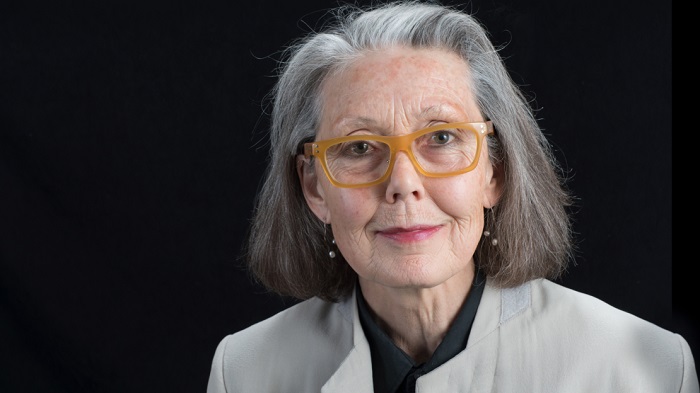
(Asian independent) A Nobel Prize in Literature for Toronto-born Anne Carson would bring international attention to one of Canada’s most distinctive writers. Her work moves freely among poetry, essays, translation and classical scholarship, often examining desire, grief and the difficulty of understanding another person.
Canadian readers have good reason to celebrate Carson’s literary achievement. Still, a report of a Nobel Prize must be distinguished from an official announcement, and the award’s status should remain separate from the value of her books.
The Swedish Academy’s official announcement is the authoritative record of the literature laureate and the award citation. Reports have put the prize at 12 million Swedish kronor, roughly $1.7 million in Canadian currency, although the conversion changes with exchange rates.
What the Award Would Mean for Canada
Counting Canadian-born Saul Bellow, Carson would be the third Canadian recipient, after Bellow in 1976 and Alice Munro in 2013. Bellow was born in Lachine, Que., grew up in Chicago and is often described as Canadian-American.
Munro drew international attention to short fiction rooted in southwestern Ontario. Carson’s recognition would bring that history into conversation with poetry, essays and classical translation. Such an honour would be a proud moment for Canada, though Carson’s work belongs to literary conversations that cross borders. Her Toronto origins also give Canadian readers a meaningful local connection.
An internationally prominent award would likely prompt new interest in Carson’s books, including works that resist familiar bookstore categories. Readers who discover her through prize coverage might find Greek scholarship alongside intimate accounts of longing and loss. Increased sales, new editions and wider classroom use, however, should be treated as predictions unless confirmed by evidence. A verified award would give publishers, libraries and readers a clear reason to revisit her work.
Scholarship and the Ancient World
Born in Toronto in 1950, Carson studied at the University of Toronto and earned a doctorate in classics in 1981. She also studied Greek metre at the University of St Andrews. Her scholarship informs her poetry, essays and translations, but her writing rarely stops at technical analysis. Questions about language become questions about emotional experience.
In If Not, Winter (2002), Carson translates the surviving poetry of Sappho while preserving its fragmentary state. Brackets and blank spaces make gaps in the ancient text visible instead of smoothing them into complete poems. Readers meet both the words that remain and the absences that surround them.
Carson’s sustained engagement with Greek literature also includes Homer, Sophocles and Euripides. In Antigonick (2012), her unconventional version of Sophocles’ Antigone, translation meets striking verbal and visual choices. These works preserve the distance between ancient societies and contemporary life. At the same time, their conflicts make grief, attachment and competing obligations recognisable without reducing ancient texts to modern stories.
Published in 1986, Eros the Bittersweet examines desire in ancient Greek poetry and thought. Carson describes a triangle formed by the lover, the beloved and the distance between them. Desire depends on that separation: the beloved remains beyond complete possession, so pleasure and pain coexist in the experience of wanting.
Through close readings of language and literary form, Carson connects textual detail with familiar emotional contradictions. The book reaches beyond a specialist audience and introduces a method that recurs across her work: scholarship can test what feeling makes difficult to explain.
Many Ways Into Carson’s Work
Carson’s books offer different entry points rather than one defining style. Verse, prose, criticism and visual design often share the same work, which makes standard genre labels only partly useful.
Autobiography of Red (1998), a novel in verse, reworks the Greek myth of Geryon as a contemporary story of desire and isolation. Its central character keeps his red body and wings, while photography becomes part of his effort to understand himself. The book gives readers a compelling route into Carson’s blend of myth and emotional observation.
In “The Glass Essay,” collected in Glass, Irony and God (1995), Emily Brontë’s writing meets heartbreak and solitude. Literary reading becomes part of the speaker’s effort to live through loss. Meanwhile, The Beauty of the Husband (2001) announces its unusual form in the subtitle, “a fictional essay in 29 tangos.” Its account of marriage, betrayal and beauty connects attraction with the harm it can conceal.
Brief works such as “Short Talk on Pain” and “O Small Sad Ecstasy of Love” leave connections unstated. Their compressed images ask readers to hold feelings together without a full explanation. In these poems, pauses and omissions carry as much weight as the words.
Wrong Norma (2024) extends Carson’s experiments with prose and visual material. The book was longlisted for the 2024 National Book Award for Nonfiction, a useful detail about its reception, though that category cannot fully describe its formal variety. Readers who want to see Carson challenge standard forms will find another way into her work.
Any claim about a 2026 Nobel Prize requires confirmation from the Swedish Academy. Carson’s literary contribution, by contrast, is already clear in her published work. Through translation, close reading and formal invention, she brings classical texts into conversation with love, grief, loneliness and human connection. For Canadian readers, that achievement is reason enough to return to her books, whatever the official prize record shows.