

THE ASIAN INDEPENDENT UK
My tribute to Lala Jagat Narayan on his martyrdom day:
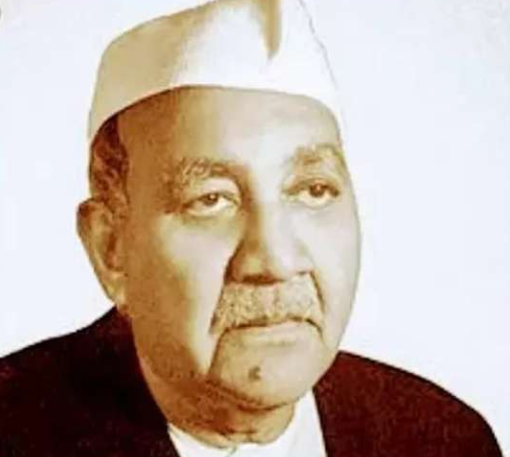
Lala Jagat Narayan – Life Journey: Freedom Fighter to Martyrdom – A Review
 DR RAMJILAL,
Social Scientist and Former Principal,
Dyal Singh College, Karnal (Haryana—India)
Email.id [email protected]
Brief:
Lala Jagat Narayan (31 May 1899–9 September 1981) was a significant figure in India’s struggle for independence, recognised as a freedom fighter, politician, and the founder of the renowned Punjab Kesari newspaper group. His life is a testament to his commitment to national service, advocacy for truth, and courageous journalism. During the fight for India’s freedom, he emerged as both a revolutionary and a Satyagrahi. In the post-independence period, he played a crucial role in shaping ideological thought in north-west India through his influential writings on various social, economic, political, administrative, and linguistic issues.
Expansion:
1. Early Life and Education:
Born on May 31, 1899, in Wazirabad, Gujranwala District (now part of Pakistan), Lala Jagat Narain hailed from a family deeply rooted in nationalism. He completed his initial education locally and graduated from Dayanand Anglo-Vedic (DAV) College in Lahore in 1919. Subsequently, he enrolled in Law College in Lahore to pursue a career in law, but his passion for patriotism, fuelled by the rising freedom movement, led him to abandon this path. At that time, Lahore had emerged as a hub for education and political activism.
2. Active Contribution to the Freedom Struggle:
In 1920, when Mahatma Gandhi launched the Non-Cooperation Movement, Lala Jagat Narain prioritised national service over his legal education and became actively involved in the movement. His dedication to the national freedom movement resulted in his first arrest by the British government in Lahore, where he served as the personal secretary of Lala Lajpat Rai, a prominent leader in Punjab’s struggle for freedom, commonly referred to as Punjab Kesari, or the Lion of Punjab. The political philosophy and sacrifices of Lajpat Rai greatly influenced Jagat Narain’s own political beliefs. Following his initial imprisonment, he engaged in several significant movements, such as opposing the Simon Commission in 1928, participating in the Salt Satyagraha, and contributing to the Quit India Movement in 1942. His revolutionary activities led to nearly nine years of imprisonment for him, and also resulted in the imprisonment of his family members, including his wife and son.
3. Entry into Politics and Administrative Reforms:
After the partition in 1947, Lala Jagat Narain moved from Lahore to Jalandhar, where he experienced the harsh realities of displacement. Upon his return to India, he assumed the role of General Secretary of the Punjab Congress and successfully won elections to the Punjab Legislative Assembly. He subsequently served as the Minister of Education, Transport, and Health under Chief Minister Bhim Sen Sachar. During his tenure, he introduced significant administrative reforms, notably becoming the first minister in any Indian state to nationalise health services, transport, and school textbooks, which greatly improved educational access for underprivileged children. Despite these accomplishments, he resigned from the Congress Party and his ministerial position in 1956 due to ideological disagreements regarding regional policies. Later, he was elected as an independent candidate to the Rajya Sabha.
4. Journalism and the Establishment of “Punjab Kesari”:
Lala Jagat Narain began his journalism career in 1924 by editing “Akashvani”, a weekly newspaper founded by Bhai Parmanand. In 1948, he established “Hindu Samachar”, an Urdu daily focused on the challenges faced by the public after Partition. Recognising the necessity for a Hindi newspaper to reach a broader audience in independent India, he launched “Punjab Kesari” on June 13, 1965, as a tribute to his mentor” Lala Lajpat Rai. The newspaper rapidly gained recognition for its impartial and fearless reporting, compelling editorials, and dedication to addressing the concerns of everyday citizens, ultimately becoming one of the most widely circulated Hindi newspapers in the country.
Lala Jagat Narain was a prominent Indian freedom fighter and a visionary politician, credited with founding the esteemed Punjab Kesari newspaper group. His life exemplifies a deep commitment to national service, the pursuit of truth, and courageous journalism. He played a vital role during India’s struggle for independence, standing out as both a revolutionary and a Satyagrahi. In the post-independence period, he provided significant ideological direction to society and politics in northwest India through his impactful writings on various social, economic, political, administrative, and linguistic issues.
5. Resistance to the Emergency and Fearless Journalism:
Lala Jagat Narain’s journalistic career was marked by his unwavering commitment to fearless reporting and his strong opposition to government misdeeds. In 1974, when his newspaper publicly criticised the government’s wrong policies, the government retaliated by cutting off electricity to the Punjab Kesari Group office. In a striking example of his determination, Lala Jagat Narain connected his printing machines to a tractor engine, allowing him to continue printing the newspaper and delivering it to his readers on time. This incident, which I still remember, became an important reference point for press freedom worldwide.
During the emergency declared in 1975, Lala Jagat Narain was arrested under the Maintenance of Internal Security Act (MISA) for his anti-government views. He spent 19 months in jail, where his health deteriorated significantly, requiring two surgeries. Despite these difficulties, he remained resolute and refused to bow to government pressure, further cementing his reputation as a champion of journalistic integrity.
6. Punjab Crisis and Martyrdom:
In the late 1970s and early 1980s, Punjab faced significant challenges due to separatist movements and terrorist activities. Lala Jagat Narain emerged as a prominent figure who strongly advocated for national unity. Through his newspaper, he openly opposed the extremist agenda that threatened peace in the region. His editorials repeatedly advocated for harmony and emphasised the importance of Hindu-Sikh unity. This unwavering commitment to his principles made him a target of terrorists who saw him as a major threat to their cause. Tragically, on September 9, 1981, terrorists attacked and killed Lala Jagat Narain near Ludhiana, symbolising his martyrdom in the fight for national unity and journalistic integrity.
7. Legacy and Honour:
Even after Lala Jagat Narain’s death, his family continued his legacy. His eldest son, Ramesh Chandra, took over the management of the newspaper, but he too met the same fate: he was martyred by terrorists in 1984. The sacrifices of this family demonstrate their commitment to freedom and the values of journalism. Today, their grandchildren and future generations are dedicated to carrying forward this glorious tradition of journalism. In recognition of Lala Jagat Narain’s contributions to the nation, a special postage stamp was issued in 2013 to honour his patriotism, social service, and significant impact on Indian journalism. He is known not only as the founder of a news paper but also as a champion of fearless, impartial, and values-based journalism. His life and work will continue to inspire future journalists and youth to advocate for the nation’s interests. It is vital for today’s generation of leaders and journalists to learn from Lala Jagat Narain’s remarkable life.