Balram Sampla
Geopolitics
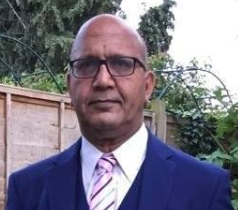
(Asian independent) On May 15, 2026, a business news channel ran a story. Within hours, the Prime Minister of India personally called it false on X. Within hours, the channel took the story down and apologised.
The reporter behind it was Timsy Jaipuria. She had spent a decade at CNBC-TV18 covering finance and economic policy. Not long after, she left the channel. She’s since started her own independent channel, Newsconomy, covering the economy in Hinglish , no newsroom, no editor above her.
On its own, this is one story about one journalist. But it’s not really on its own. Look at the bigger picture of Indian journalism over the last few years, and it starts to look like a pattern.
What the numbers say
In April 2026, Reporters Without Borders released its World Press Freedom Index. India came in at 157th out of 180 countries. Down six places from 2025. That’s the lowest the global average has been in the 25 years the index has existed. The report called out India specifically for using laws ,defamation, national security, to go after independent media. India stayed in the “very serious” category for press freedom.
That’s an uncomfortable number for a country that calls itself the world’s largest democracy. The constitution guarantees free speech. In practice, journalists don’t always feel that protection.
This has happened before
Jaipuria’s exit isn’t a one-off. In November 2022, Ravish Kumar , one of India’s most recognised TV anchors, 27 years at NDTV. He resigned soon after the Adani Group took over NDTV’s parent company. Kumar was known for being sharply critical of the ruling party, and of Indian TV news more broadly for acting like a mouthpiece instead of holding power to account. His exit made international news as a sign of how ownership changes were shrinking the space for tough journalism in India.
The details are different, a hostile takeover in one case, a prime ministerial tweet and a retraction in the other. But the shape of the story is the same: a senior journalist, working on a beat close to government power, eventually leaves the big institution and rebuilds on their own, usually on YouTube, usually talking to the audience directly instead of through an editor.
This isn’t a new complaint
This tension between journalism as a public service and journalism as a business isn’t new to India. In 1943, B.R. Ambedkar, writing in his own newspaper, Janata, because the mainstream press of his time largely refused to carry the concerns of India’s oppressed castes put it bluntly:
“Journalism in India was once a profession. It has now become a trade. It has no more moral function than the manufacture of soap. It does not regard itself as the responsible adviser of the public.”
Ambedkar wasn’t complaining about commercialisation in the “abstract”. He was pointing at something specific: the press of his day, he argued, was staffed and run in a way that reflected the caste and political biases of its owners, and it wouldn’t publish news that was inconvenient to the powerful. That’s part of why he started his own papers: Mooknayak, Bahishkrit Bharat, Janata.
If the existing press wouldn’t report his side, he’d build his own platform.
Eight decades later, that’s a strange thing happened. A journalist bypassing the mainstream press because it wouldn’t carry inconvenient stories, and building an independent outlet instead. That’s more or less the same move Ravish Kumar and Timsy Jaipuria made, just with a YouTube channel instead of a printing press. The technology has changed. The underlying complaint is the same that journalism close to power tends to protect power rather than question it.
Why TV news is especially exposed
Part of the reason cases like this happen is simple economics. India has close to 900 private TV channels, and about half of them are news channels. They depend on advertising, on owners with their own business interests, and increasingly on staying in the government’s good books for access.
A sourced story that gets a same-day public denial from the PM’s own account puts a channel in a tight spot. Either stand behind the story, or be seen backing down from the head of government. Channels that depend on access and advertising tend to pick the second option, which is exactly what CNBC-TV18 did, within hours.
This is the kind of pressure press freedom researchers try to measure: not outright censorship, but the everyday business incentives of media companies that operate close to state power.
The flip side: journalism is moving to individuals
There’s a silver lining here. These exits haven’t ended anyone’s career, they’ve just relocated it. Ravish Kumar’s YouTube channel became one of the most-watched independent news operations in Hindi media. Jaipuria’s Newsconomy is a newer, smaller bet on the same idea: that people want serious, well-sourced economic journalism, and that a journalist’s credibility. Built up over years of reporting , can travel with them even when the institution doesn’t.
Is that a healthy adaptation, or a sign of decline? Depends who you ask.
The optimistic view: platforms like YouTube are breaking up a media landscape that used to be controlled by a small number of big, commercially exposed owners. Journalists can now reach audiences directly, without a boardroom in between.
The less optimistic view: institutions matter. Newsrooms have legal teams, editors, the resources to sit on a hard story for months and get it right. Individual creators, however good, don’t have that safety net.
Probably both are true at once. What connects the RSF ranking, Ravish Kumar’s exit, and Jaipuria’s story is one simple fact: when journalism in India runs into powerful interests, it’s increasingly not the newsroom that absorbs the hit. It’s the individual reporter. Whether that makes journalism a dying trade, or just a trade being forced to reinvent itself, is something we’ll probably only know in hindsight.
Reference
1.https://www.tribuneindia.com/news/archive/comment/ambedkar-set-a-high-journalism-bar-573384
2.https://www.newslaundry.com/2026/01/26/8-decades-later-ambedkars-warning-still-echoes-the-republic-deserves-better-than-hero-worship
3.https://scroll.in/latest/1092488/india-rank
4.https://youtu.be/gVLt-Iw9T8c?is=qVH1FpHAbMmgOKsA
5.https://youtu.be/cQT6R95KihA?is=ezCKorxgRNMWzZpH
6.https://muckrack.com/timsy-jaipuria
7.https://x.com/TimsyJaipuria