THE ASIAN INDEPENDENT UK

Bal Ram Sampla
Geopolitics
Summary of Kayva’s Article
The 1960 Indus Waters Treaty (IWT) between India and Pakistan is frequently cited as a triumph of international diplomacy. Negotiated under Prime Minister Jawaharlal Nehru and Pakistani President Ayub Khan with World Bank mediation, the treaty aimed to settle the post-Partition dispute over the shared Indus River basin.
Kavya presents a sharp critique of Nehru’s leadership, arguing that the treaty was an asymmetric concession driven by an idealistic foreign policy that traded away India’s tangible leverage for an illusory peace.
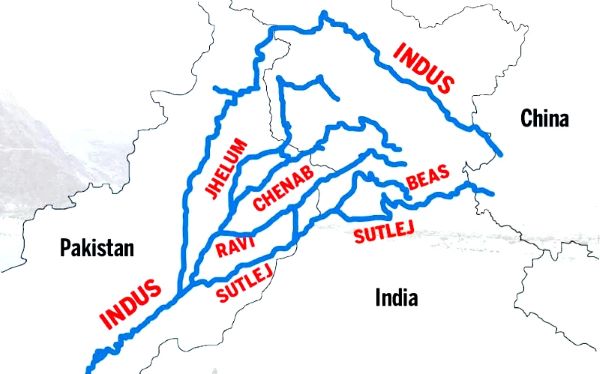
The structural core of Kavya’s criticism lies in the sheer imbalance of the agreement. Instead of sharing the river system proportionally, the treaty granted India exclusive rights to the three Eastern Rivers (Ravi, Beas, and Sutlej), carrying roughly 33 million acre-feet (MAF) annually. While assigning Pakistan the three Western Rivers (Indus, Jhelum, and Chenab), which carried 135 MAF. This amounted to an 80:20 water allocation in Pakistan’s favour.
On top of this, despite India facing a severe foreign exchange crisis, Nehru agreed to pay £62.06 million (around ₹83 crore) toward Pakistan’s canal construction, an amount equal to nearly 45 percent of India’s foreign currency reserves at the time.
Kavya’s primary grievance with Nehru is not that he negotiated with Pakistan, but that he was willing to make massive, irreversible national sacrifices on the mere expectation of future goodwill. Defending the treaty in Parliament, Nehru famously stated, “We purchased a settlement, if you like; we purchased peace.” Kavya argues that Nehru was “living in a utopia,” naively believing that foreign nations would behave according to his personal political vision. This misplaced faith was quickly disproved when Pakistan launched wars against India in 1965 and 1971, and used the treaty’s arbitration mechanisms to stall crucial Indian development projects—such as Baglihar, Kishenganga, and Ratle, for decades.
Furthermore, Kavya criticizes Nehru’s decision-making style, noting his tendency to dismiss internal opposition. When Parliament debated the treaty in late 1960, leaders across party lines voiced outrage: Ashok Mehta called it a “second partition,” Atal Bihari Vajpayee warned against unilateral concessions, and MPs from Punjab and Rajasthan argued their states had been betrayed. Rather than taking these warnings into account, Nehru pushed forward, informing Parliament that the government had already ratified the agreement before full formal debates or the exchange of instruments took place.
Ultimately, Kavya connects the Indus Waters Treaty to a broader pattern of utopian idealism in Nehru’s foreign policy, drawing direct parallels to his handling of China, where concessions like the Panchsheel Agreement failed to prevent the 1962 war. By highlighting these historical missteps, including their echoes in modern strategic debates like Operation Sindoor, Kavya calls on readers to reject the “blind worship” of political figures and critically evaluate historical decisions based on long-term national interest rather than misplaced diplomatic goodwill.
Reference
https://kavya2k6.substack.com/p/how-nehru-gave-away-indias-water?utm_source=share&utm_medium=android&r=hzmrl