THE ASIAN INDEPENDENT UK
My Tribute to Sardar Dyal Singh Majithia — 9 September 2026
 Dr RAMJILAL, Social Scientist,
Former Principal, Dyal Singh College,
Karnal (Haryana, India)
Email: [email protected]
Introduction:
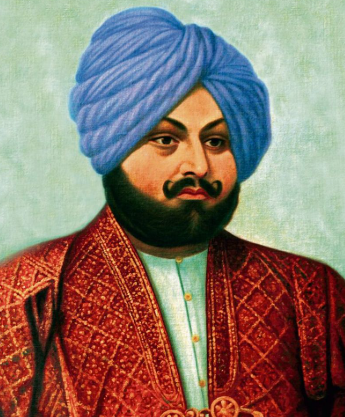
Sardar Dyal Singh Majithia (1848-1898) was a notable philanthropist, national leader, and advocate for equality, freedom, fraternity, neoliberalism, and humanity. He was an editor, journalist, sportsman, economist, distinguished Congress leader, serious scholar, writer, educator, poet, Brahmo Samajist, logician, eloquent speaker, and a liberal nationalist figure, embodying an ideal and glorious personality. In fact, he was a man of his era—a talented messenger, great visionary, far-sighted genius, pioneer of public awareness and ideological freedom, and a respected public figure of his time. Due to his magnetic personality and remarkable qualities, his name is held in high regard from Lahore (now in Pakistan) to Calcutta (now Kolkata, West Bengal). He is often compared to ‘Raja Karna’ and ‘Bhama Shah’ as a modern philanthropist. B.K. Nehru noted that Dyal Singh played a pivotal role in guiding North India from ignorance to modernity, like the contributions of Raja Ram Mohan Roy in Bengal during the early 19th century. Raja Ram Mohan Roy is considered the pioneer of the Indian renaissance and nationalism.
Family Lineage:
The Leading Aristocratic Family of Punjab During Maharaja Ranjit Singh’s Reign:
The Majithia family was one of the prominent aristocratic families in Punjab during Maharaja Ranjit Singh’s reign. Dyal Singh’s great-grandfather, S. Nodh Singh, grandfather, S. Desa Singh, and father, S. Lehna Singh, were top generals in Maharaja Ranjit Singh’s army and served as his chief advisers, being among his most trusted administrative and military officers. S. Nodh Singh, a prominent zamindar, expanded his influence through marriage with the sister of Amar Singh Bhaga, a feudatory of Dharamkot.
S. Nodh Singh died in 1788. During the Kangra campaign, the Bhaga Sardars failed to supply provisions to Maharaja Ranjit Singh’s forces. S. Nodh Singh’s only son, S. Desa Singh, remained loyal to Maharaja Ranjit Singh, who granted him a share of the Bhaga estate. As a general in Maharaja Ranjit Singh’s army, S. Desa Singh was recognised for his loyalty and dedication to the ‘Khalsa Empire’. His administrative skills earned him the governorship of Amritsar city and the nearby hill states of Mandi and Saket. Additionally, he served as the civil administrator of the highest Sikh religious shrine, ‘Harmandir Sahib’ (Golden Temple) in Amritsar. For his deep devotion and participation in various military campaigns, he was awarded the title ‘Qasir-ul-Iqtidar’ (Chief of Exalted Dignity). S. Desa Singh passed away in 1832.
S. Desa Singh had three sons – Lehna Singh, Gujjar Singh, and Ranjodh Singh. As the eldest son, Lehna Singh inherited his father’s properties and honours. Dyal Singh’s father, S. Lehna Singh, followed in his father’s footsteps as a capable administrator, known for his intelligence and liberal views. Even before his father’s death, S. Lehna Singh participated in Maharaja Ranjit Singh’s military campaign in Multan (1818). Consequently, he was granted control over the possessions of his mother-in-law, Mai Sada Kaur, who was also Maharaja Ranjit Singh’s mother-in-law.
Later, S. Lehna Singh succeeded his father as the governor of Kangra and the hill territories between the Ravi and Sutlej rivers, holding both administrative and military roles within Maharaja Ranjit Singh’s empire. Impressed by Sardar Lehna Singh’s contributions, Maharaja Ranjit Singh awarded him considerable property, which generated an annual income of ₹125,000. He was honoured by the Maharaja with the title ‘Hisan Ud Daula’ (The Sword of the State). Due to his stance against the British Empire, S. Lehna Singh refused to associate himself with the ‘Council of Regency’.’
The political situation in Punjab was unstable as the region fell under British imperialism, marking the decline of Maharaja Ranjit Singh’s empire. After the Maharaja’s death, S. Lehna Singh’s influence in the royal court diminished, and conspiracies against him increased, prompting him to leave Punjab permanently on January 14, 1848, and settle in Banaras. He possessed immense wealth in gold, silver, and diamonds, with around 200-armed men assigned to his security. S. Lehna Singh heavily invested in real estate in Banaras (Kashi), further accumulating vast wealth.
Birth to Youth (1848-1876):
Dyal Singh was born in 1848 in Banaras (now Varanasi, Uttar Pradesh). No official record of his birth date exists. In Punjab, there has been a longstanding tradition of adding the ancestral village to the surname instead of using caste or sub-caste identifiers. Dyal Singh’s ancestral village is Majitha (in Amritsar, Punjab), so he chose to add the surname “Majithia” rather than specify a sub-caste. He was blood-related to the Shergil gotra of the Jat Sikh caste, who’s sub-gotra is Gill. The Gill gotra is significantly represented in the Jat Sikh community in Haryana, Punjab, and Uttar Pradesh.
Dyal Singh’s father once prophesied that he would be the “messenger of the new era”. Tragically, Dyal Singh lost both his parents when he was just six years old. Consequently, he was raised under the guardianship of Raja Teja Singh, and his property was managed by the Court of Wards. The Majithia family eventually left Banaras and settled in their ancestral village of Majitha.
Dyal Singh began his early education at the Christian Mission School in Amritsar, Punjab. He later pursued self-education in India before travelling to England for higher studies. However, his decision to go to England in 1874 faced strong opposition due to prevalent social norms such as conservatism, ignorance, and superstition in Punjab. His family members and even his young and beautiful partner, Rani Bhagwan Kaur, opposed his plans. Despite this, Dyal Singh remained resolute and travelled to England, becoming the second Punjabi youth to do so, following Dilip Singh. He spent two years there (1874-1876) but returned home in 1876 without earning a degree.
Dyal Singh: Sources of Liberal Thinking:
The sources of Dyal Singh’s liberal thinking can be classified into two categories:
1. Primary Sources:
A writer must command both language and writing style, and Dyal Singh was proficient in both English and Urdu. His writings in The Tribune, which he founded in Lahore on February 2, 1881, provide a clear glimpse of his secular and nationalist ideology. Notably, his book *Nationalism*, published in 1895, also reflects his thoughts. In 1871, Dyal Singh edited a 115-page book titled *Nagma-i-Tamboori*, which included letters discussing religious debates between Sunni Muslims who had converted to Christianity and Islamic Mullahs. He was also a talented poet and wrote under the pseudonym “Mashriq”, with his poems showcasing his love for literature and reflecting his liberal, social, economic, and political ideas. Additionally, “The Last Will and Testament of S. Dyal Singh Majithia” (15 June 1895), which established three trusts, can be considered another source of his thinking. His speech at the Reception Committee during the Lahore session of 1893 (delivered by Lala Harikrishna Lal) exemplifies his secular, liberal, and nationalist outlook.
2. Secondary Sources:
Notable views expressed by contemporaneous leaders such as Surendranath Banerjee, Sir Syed Ahmed Khan, and Lala Harikishanlal Singh serve as significant secondary sources. Over the years, various scholars have published articles on Dyal Singh’s personality, thinking, and legacy in *The Tribune* (Chandigarh), The Dainik Tribune, and The Punjabi Tribune. Key scholars include Lajpat Rai Nair, Prem Nath Kripal, Kripal Singh, BK Nehru, VN Dutta, Prakash Tandon, Sumail Singh Sidhu, Madan Gopal, and Justice Dilip K. Kapoor, among others. The editorials and articles in these publications further contribute to secondary sources, along with works by scholars such as Dr. Ramjilal, and Dr. Neena Puri.
Dyal Singh: As a Social Reformer and a Brahmo Samaji;
In the 19th century, Indian society faced numerous challenges due to ignorance, illiteracy, and the influence of Manuvadi and Brahminical culture. Issues such as the caste system, untouchability, religious fanaticism, the Sati system, idol worship, child marriage, polygamy, and the systemic denial of widow remarriage plagued society. The number of child widows was alarmingly high, leading to miserable lives for many women. Dyal Singh emerged as a determined opponent of these social evils.
Raja Ram Mohan Roy (1772-1833), known as a pioneer of the Indian Renaissance, nationalism, and women’s upliftment, greatly influenced Dyal Singh. Raja Ram Mohan Roy founded the Brahmo Samaj in 1828, advocating against polytheism, idol worship, the caste system, child marriage, and polygamy. Dyal Singh shared this vision and aimed to bring about reform in Indian society.
To free North-West India, especially Punjab and Punjabis, from conservative mentalities and superstitions, Dyal Singh translated Raja Ram Mohan Roy’s writings into Urdu, and the translated booklets and writings were distributed among the public for free in the form of pamphlets.
Dyal Singh began to gain recognition in social and religious circles as a prominent member of the Brahmo Samaj. His work in social reform across United Punjab paralleled the efforts of Swami Dayanand Saraswati, the founder of Arya Samaj in North India, and Raja Ram Mohan Roy in Bengal. This recognition led people from the elite class to acknowledge him from Lahore to Kolkata, and he quickly became a sought-after social reformer. Upon arriving in Kolkata in 1880, Dyal Singh received a red-carpet welcome, a gesture he had never anticipated. This grand reception left a lasting impression on him. In response, he donated a substantial amount of money for the construction of the Sadharan Brahmo Samaj Temple in Kolkata and took on the role of trustee. As a result, Dyal Singh’s name became widely known in social and religious circles from Lahore to Kolkata. To further promote social reform, he founded ‘The Tribune’ newspaper and sought to guide society in a new direction through education.
Dyal Singh: A Liberal Leader and Advocate of the ‘Theory of Demand and Supply’:
Dyal Singh Majithia was not only a social reformer but also had a keen interest in contemporary Indian politics and the liberal national movement. The liberal political climate of England and the liberal education he received there significantly shaped his perspectives. The Indian National Congress was established on December 28, 1885, at the Gokul Das Tejpal Sanskrit College in Bombay (now Mumbai), with the participation of 72 representatives, including 54 Hindus, 2 Muslims, and the rest Jains and Parsis. Key founders included W. C. Banerjee, who served as the President of the first session, Sir A.O. Hume, the Founder General Secretary, as well as Dadabhai Naoroji, Dinshaw Wacha, William Wedderburn, Firoz shah Mehta, and other liberal leaders.
This was a pivotal time for the liberal nationalist movement. The Indian National Congress was supported and led by the contemporary liberal elite, with its primary objective of initiating administrative, political, economic, and social reforms. Like his contemporaries, Dyal Singh viewed the British Empire as a potential benefit for Indians, advocating that India’s administration should be based on the same principles and rules as the political system of England.
While in Lahore, Dyal Singh established connections with notable liberal leaders such as Surendranath Banerjee, Dadabhai Naoroji, R. C. Dutt, Justice Ranade, and others. These relationships significantly influenced his views and broadened his outlook, aligning him with other Indian liberals. Consequently, Dyal Singh became a prominent critic of the British bureaucracy in India. Despite facing governmental opposition, he participated in the Allahabad Congress in 1888, where he shared his insights. His charisma, skilled oratory, and leadership abilities led to his appointment as the chairman of the reception committee for the Lahore Congress in 1893, marking the pinnacle of his political career. The speech he delivered as chairman at the Lahore session is considered one of his finest works, exemplifying his liberal ideology. Although he was unable to speak due to arthritis, his speech was delivered by Lala Harikrishna Lal.
Dyal Singh applied the ‘theory of demand and supply’ from economics to various aspects of the political system, religion, and spirituality. He argued that the constitutions of all civilized nations permit officials to consider any reasonable request. Yet, he questioned why the British government adopted a biased stance towards India. He stated, “The Congress is branded as treasonous and disloyal not because it opposes British rule, but because it persistently voices the rights of Indians and stands against injustice before the British government, Parliament, and judicial system.” He further asserted, “The Congress is committed to addressing issues that concern the Indian public and strives to resolve them through the British judicial system and public discourse. Without these efforts, improvements are unlikely due to administrative shortcomings. What is wrong with this process? The principle of demand and supply applies to both the economy and the political system. Demand stimulates supply; when there is a need, it should be fulfilled. A religious perspective also aligns with this notion: something is granted only when asked of God. Quoting Hazrat Mohammad, he wrote, ‘Ask, and you will receive; seek, and you will find; knock, and the door will be opened to you.’ To the British government, he declared: ‘Fulfilling our just rights and accepting our fair demands will strengthen the empire, based on the will of the people.’”
Dyal Singh: An Educationist:
Dyal Singh Majithia established three trusts — the Tribune Trust, the College Trust, and the Library Trust — to dispel the darkness of ignorance spread in society. Through his tireless efforts, Punjab University, Lahore, was founded in 1882. He believed that Punjab University should be established and managed similarly to the universities of Kolkata, Madras, Mumbai, and London. Dyal Singh authored about 20 articles on this topic and launched a mass movement. As a result of his efforts, English was adopted as the medium of instruction at Punjab University. He regarded the English language as the key to the development of the individual, education, society, the nation, and humanity.
Dyal Singh College, Lahore, was established in 1910 by the Dyal Singh College Trust Society in accordance with Article 8 of the will of Dyal Singh Majithia. Today, it is known as Government Dyal Singh College, Lahore, and ranks among the top colleges in Pakistan. He founded a public library in Lahore, and even now, the Dyal Singh Public Library remains in Lahore.
India gained independence on 15 August 1947. Most assets of the Dyal Singh College Trust Society remained in Lahore. Despite this, Dyal Singh College, Karnal, was established on 16 September 1949, faithfully carrying forward the legacy, will, and ideology of Dyal Singh. Currently, in addition to the college, four senior secondary schools have been set up in Karnal, Panipat, and Jagadhari.
To honour the will and legacy of Dyal Singh, the Trust established the Dyal Singh Public Library for the public in 1954-55, after India’s partition. Located on Deendayal Upadhyay Marg, this library is regarded as the best in Delhi for students, researchers, and scholars. In 1958, the Trust also founded Dyal Singh Evening College in Delhi on Lodhi Road, but it is no longer managed by the Trust Society.
Dyal Singh: As an economist, businessman, and founder of the Swadeshi movement in Indian banking,
Dyal Singh Majithia was also a successful economist, banker, and businessman. He did not spend his wealth on ‘Sura and Sundari’ (wine and women) or other luxuries that the youth of rich and elite families usually indulge in and still do. Following in the footsteps of his father, S. Lehna Singh, he also traded in diamonds and jewels to grow his wealth and accumulated more by investing in real estate, aiming for the welfare of society. By 1893, his total wealth was Rs 30 lakhs, which was Rs 7 lakhs more than Sir Dorabjee Tata of Tata House.
In 1898, at the time of his death, he owned a total of 26 major properties, including buildings, plots, and fertile land in Lahore, Karachi, Amritsar, and Gurdaspur districts. These properties were managed by the Dyal Singh Trust Society, Lahore. As an economist and businessman, Dyal Singh, like many contemporary, world-renowned economists, was a supporter of the “Principle of Demand and Supply”. He considered this principle to be fundamental not only in the economic field but also in the religious, social, political, and educational fields. Along with being a successful businessman, Dyal Singh was also a successful banker. As a result of his efforts, India’s first indigenous bank—Punjab National Bank—was established on 23 May 1894 on the basis of purely Indian capital. Its office was in Anarkali Market, Lahore (now Pakistan). Dyal Singh has the honour of being the executive chairman of this first indigenous bank of India. His share in this bank was 25%, and today it has branches all over India and in foreign countries. It is counted among the major banks of the world as well. In India, it falls into the category of the largest government commercial banks.
In short, Dyal Singh was the founder of the Swadeshi movement in Indian banking. Customers banked with this institution. This bank is credited with having accounts of national leaders like Mahatma Gandhi, Jawaharlal Nehru, Lal Bahadur Shastri, Indira Gandhi, and the famous Jallianwala Bagh Committee, among others. Lala Har Krishna writes about Dyal Singh that ‘I was very impressed with his business knowledge and his sharp intellect. I learnt something or the other from him which proved very useful to me in the later stage of my life when I entered into business wholeheartedly.’
Dyal Singh: As a journalist, a columnist, and an editor of the highest order:
Dyal Singh Majithia was a lover of freedom and a pioneer. In the 19th century, influenced by the ideas of Surendranath Banerjee, Rai Bahadur Mulraj, and JC Bose, Dyal Singh founded ‘The Tribune’ (a weekly newspaper) to convey the ‘voice of the Indian people’ to the government and to raise awareness among the public. The first edition of ‘The Tribune’ was published on Wednesday, 2 February 1881, from Lahore (now Pakistan). In the first editorial, Dyal Singh himself clarified the main objective of ‘The Tribune,’ writing that the ‘planners and directors of the Tribune work only for the public interest and are aware that welfare can be promoted more through generosity and restraint than by bitter attacks or harsh rhetoric.’
He added that the objective of ‘The Tribune’ is to “represent the national public opinion” so that it can serve as the ‘mouthpiece of the people’. After partition, the newspaper moved from Lahore to Shimla and Ambala ,and is now edited from Chandigarh and other cities in English, Hindi, and Punjabi. It is our firm belief that all three editions of The Tribune are a valuable legacy of Dyal Singh Majithia. The Tribune Trust, under the able, excellent, and towering leadership of N.N. Vohra (former Governor of Jammu and Kashmir), is carrying forward the legacy of its founder, the great sardar.
Dyal Singh: As a Secular Nationalist Leader:
Every aspect of his life reflects his opposition to fanaticism and orthodoxy. In fact, he was a secular person even in his personal life. His kitchen had cooks from Christian and Muslim religions, and followers of different faiths used to dine together at the same table in his house. As a result, he faced opposition and boycott from the then-elite class and fundamentalist-conservative people of the Sikh religion. However, he remained firm on the path of secularism and did not mind the reactionary fundamentalists and regressive forces.
The parochialism based on caste, sect, religion, region, language, etc., had no place in his heart and mind — he was far above these narrow beliefs and sentiments. His secular nationalist ideology is vividly reflected in the articles and editorials written by him and published in “The Tribune,” as well as in his book “Nationalism” (1895) and the edited book ‘Nagma-i-Tamboori.’ Additionally, secular nationalist thinking is the cornerstone of his Presidential speech presented as the President of the Reception Committee at the Lahore session in 1893 (which was read by Lal Harkishan Lal). Due to his upright secular outlook, followers of different religions and the leaders of the time regarded him with great respect and honour. While praising the great and generous nature of Dyal Singh, Sir Syed Ahmed Khan very aptly said, “Sardar Dyal Singh Bahadur Majithia: Sardar Sahib is a very famous and highly respected chief in the lineage of Sikh Sardars. But far above the dynastic honour, God has gifted him with a remarkable personality. Great character, loving nature, goodwill for all, and respect for people of all communities were his personal qualities…. Muslims also consider him their truest friend and greatest philanthropist. Madrasa Tul-Alam also owes a great debt to his noble and generous nature. If I am honest, I would say that he is the only person in Lahore, or in the entire Punjab province, whom Punjabis and all Indians can feel proud of.”
Last moment of life: 9 September 1898
S. Dyal Singh Majithia was involved in many fields of life, and he died of a fatal heart attack at 2:50 pm on 9 September 1898. His close friend Lal Harkishan Lal, who was standing near his deathbed, wrote, “Sardar was as calm as he was in life, and it seemed that he had died without any remorse or sorrow.” In the Lahore Congress (1900), Sardar was paid tribute and described his demise as a ‘national loss.’ The great leader of that time, Surendranath Banerjee, paid tribute and said that “he devoted his entire life to the upliftment of the nation… his death has taken away the treasure of my life.” The then Vice Chancellor of Punjab University, Sir John Maynard, paid tribute to Dyal Singh by praising him as “a great patriot, a great Punjabi, a great gentleman, and a great philanthropist.” Former President Giani Zail Singh wrote about him, “Sardar was a great philanthropist, social worker, and a man of great vision and action.” Lala Bhrish Bhan (former Praja Mandal leader, former Chief Minister of Pepsu, former Cabinet Minister of Punjab, and former President of the Governing Body of Dyal Singh College, Karnal), while paying his tribute to S. Dyal Singh, said, “Sardar (Dyal Singh Majithia) was a great philanthropist and prominent nationalist of North India, who believed in educational awakening, social consciousness, and moulding the Indian youth on nationalist and secular lines… He had two great ideals before him – social upliftment and national service.”
We firmly believe that Dyal Singh was a secular thinker of the highest order, a nationalist leader, and a man of great, charismatic personality. In the present circumstances, his thoughts are worth adopting so that a strong, unified society and a powerful nation can be built.
Relevance:
India gained independence on 15 August 1947. Since then, up until 9 September 2026, the country has witnessed unprecedented development across various aspects of life. However, numerous challenges facing Indian democracy continue to dominate headlines in both newspapers and electronic media. Among these issues are an ever-increasing population, the widening gap between rich and poor, rising inflation, farmers’ suicides, the emergence of “bulldozer justice” instead of upholding the rule of law, totalitarianism, political corruption, hoarding, adulteration, communalism, casteism, narrow-mindedness, poverty, unemployment, terrorism, the criminalisation of politics, escalating crimes against Dalits and tribal communities, violence and rape against women and girls, the disintegration of social life and families, increasing consumerism, and a rise in barbarism in political, social, and religious life. Additionally, the exploitation of common people’s emotions by so-called religious leaders, as well as ignorance, prejudice, superstition, feudal rituals, a patriarchal mindset, and the killing of female foetuses are pervasive problems.
If these issues persist, the thoughts of Dyal Singh—such as liberalism, secularism, freedom, the rule of law, justice, constitutionalism, sacrifice, tolerance, public welfare, and education—will remain highly relevant.
(Note–Dr. Ramji Lal is supervisor of Sudesh Pal, ‘’Political Ideas of Dyal Singh’’,-A Dissertation, Kurukshetra University Kurukshetra, December 2001)
References for further study:
>Lal, Ramji, Dr. (1986). ‘The founder’, Souvenir-Dimond Jubilee, Karnal, Dyal Singh College, Karnal, P. 1-6)
>लाल, रामजी, डॉ. (9 सितंबर 1988)’ युगदूत थे, स. दयाल सिंह मजीठिया’, विश्व मानव, करनाल, पृ. 5
>लाल, रामजी, डॉ. (सितंबर 2016). ‘दयाल सिंह मजीठिया: एक युग पुरुष एवं प्रतिभावान युग दूत’, सजग समाज (करनाल), वर्ष 10, अंक, 9, सितंबर 2016, पृ.27 -35)
>लाल, रामजी, डॉ. (9 सितंबर 2025). ‘’परोपकारी महानायक की महकती विरासत’’ ,दैनिक ट्रिब्यून,चंडीगढ़.पृ.6
>लाल, रामजी, डॉ. (9 सितंबर 2025).’दयाल सिंह मजीठिया युगदूत एवं दूरदृष्टा शिक्षाविद: एक विश्लेषण’, दैनिक स्टार सवेरा, कुरुक्षेत्र, 9 सितंबर 2025, पृ.6
>लाल, रामजी, डॉ. (10सितंबर 2025). दयाल सिंह मजीठिया को मेरी श्रद्धांजलि ,सत्य केसरी करनाल,पृ.6
>लाल, रामजी, डॉ. (12 सितंबर 2024).सरदार दयाल सिंह मजीठिया के विराट चिंतन पर प्रभाव: एक संक्षिप्त विश्लेषण, सत्य केसरी करनाल. पृ. 3)
>मजीठिया, सिंह, दयाल.( 9 सितंबर 2001) ‘भारत को निराशा के भंवर से निकाला जाए’’, दैनिक ट्रिब्यून, चंडीगढ़. पृ. 7
>Lal, Ramji, Dr. (September 7,2024). https://samajweekly.com/dayal-singh-majithia-a-top-class-journalist/
>Lal, Ramji, Dr. (September 08,2024).
https://samajweekly.com/dayal-singh-majithia-a-visionary-educationist/
>Lal,Ramji, Dr.(September 10,2024). https://samajweekly.com/dayal-singh-majithia-was-a-secular/
>Lal, Ramji, Dr. (September 11,2024). https://samajweekly.com/the-great-thoughts-of-sardar-dayal-singh-majithia/
>Lal, Ramji, Dr.(September 11, 2025). https://theasianindependent.co.uk/dyal-singh-majithia-a-charismatic-leader-a-visionary-and-a-man-of-the-era-an-evaluation/
>Lal,Ramji, Dr. (September 11, 2025). https://samajweekly.com/dyal-singh-majithia-a-charismatic-leader-a-visionary-and-a-man-of-the-era-an-evaluation/
>Lal, Ramji, Dr. (20 January 2026). “Name game is an insult to Dyal Singh’s legacy”, The Tribune, Chandigarh, 20 January 2026
>लाल , रामजी, डॉ. (20 जनवरी 2026). ‘दयाल सिंह कॉलेज नाम विवाद: एक गौरवशाली विरासत से खिलवाड़ की कोशिश’’, चंडीगढ़,20 जनवरी 2026, सम्पादकीय ,पृ.