Balram Sampla
Geopolitics
Geopolitics
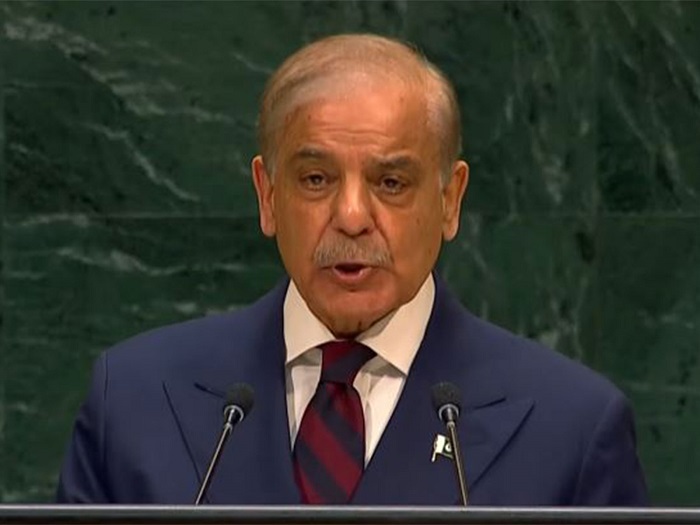
(Asian independent) Shehbaz Sharif took the UNGA podium again this week, and if you closed your eyes you could have mistaken it for any of his previous three appearances. Same grievances, same appeals, same conspicuous absence of anything resembling a concrete achievement to point to.
Start with the “Islamabad talks” framing. Sharif told the Assembly Pakistan had helped bring the US and Iran “under one roof” through talks hosted in Islamabad. Fine, hosting a meeting is not nothing. But hosting isn’t the same as achieving. There’s no ceasefire framework, no diplomatic breakthrough, no de-escalation mechanism that anyone can point to as a result of those talks. It’s the diplomatic equivalent of claiming credit for organizing a dinner party and calling it a peace treaty.
Then there’s the recycled version of the India conflict. Sharif again credited US President Donald Trump for what he called a “timely intervention” in preventing further escalation between the two nuclear-armed neighbours , despite the inconvenient detail that it was Pakistan’s own DGMO who called his Indian counterpart seeking a ceasefire in the first place. This isn’t a minor factual quibble.
It’s the difference between “our military de-escalated a crisis” and “a foreign president saved us from ourselves.” Sharif chose the version that flatters Washington over the one that credits his own chain of command — and an Indian diplomat reportedly couldn’t keep a straight face about it at the UN.
The Kashmir section was, as usual, the emotional centerpiece — and the least original part of the speech. He called for a UN-backed plebiscite and alleged Kashmiris endure “illegal occupation, arbitrary detention, extrajudicial killings, enforced disappearance, sexual violence, and collective punishment.” These are serious allegations, and independent monitors have in fact documented rights abuses in Indian-administered Kashmir. But the script itself is decades old. The same self-determination appeal that’s been recited at UNGA from Zulfikar Ali Bhutto in 1965 through Imran Khan in 2019. Repetition isn’t evidence of urgency; sometimes it’s evidence of a talking point on autopilot.
What makes the Kashmir framing harder to take seriously is what’s happening closer to home. Pakistan Occupied Kashmir has seen its own waves of protest in recent years over inflation, subsidies, and grievances against Islamabad, met at times with force from Pakistani security services. A government that positions itself as Kashmir’s global champion while its own security forces confront protesters on the other side of the Line of Control has a credibility problem it never addresses, because addressing it would mean admitting the moral high ground it claims isn’t uniformly occupied.
And then there’s the silence. Sharif’s speech touched on terrorism threats from Afghan-based militants, including Baloch armed groups, framing them purely as a security menace to Pakistan. What it didn’t touch was the other side of that ledger: years of documented enforced disappearances and extrajudicial killings attributed to Pakistani security forces in Balochistan, catalogued repeatedly by Human Rights Watch, Amnesty International, and Baloch rights organizations.
A leader can legitimately call out militant violence against his own state. What he can’t credibly do is call out violence against Pakistanis while staying silent on violence by the Pakistani state against its own citizens in the same province — and expect the omission to go unnoticed.
None of this makes Sharif unique among leaders who use the UN stage for domestic and diplomatic theatre. Plenty of governments, India included, arrive with their own selective narratives and get called out for it in the annual rounds of “right of reply” sparring. But theatre dressed as diplomacy still isn’t diplomacy, and claiming credit for outcomes that didn’t happen, or for interventions that weren’t his own military’s doing, is the kind of rhetorical padding that substitutes for policy rather than delivering it.
Reference
1.https://aninews.in/news/world/us/pakistan-pm-shehbaz-sharif-says-kashmir-dispute-requires-just-and-fair-solution-at-unga20260926024400/
2.https://tribune.com.pk/story/2631399/pm-shehbaz-addresses-81st-un-general-assembly-session-in-new-york
3.https://pakobserver.net/key-takeaways-from-pm-shehbaz-sharifs-address-at-unga/