
Balram Sampla
Geopolitics
Geopolitics
(Asian independent) It is hypocritical to celebrate Brahmins being recruited into the British Indian Army as Brahmins, while condemning Dalits for receiving reservation
.
For generations, caste was not treated as an obstacle to opportunity when it worked in favour of upper-caste men.
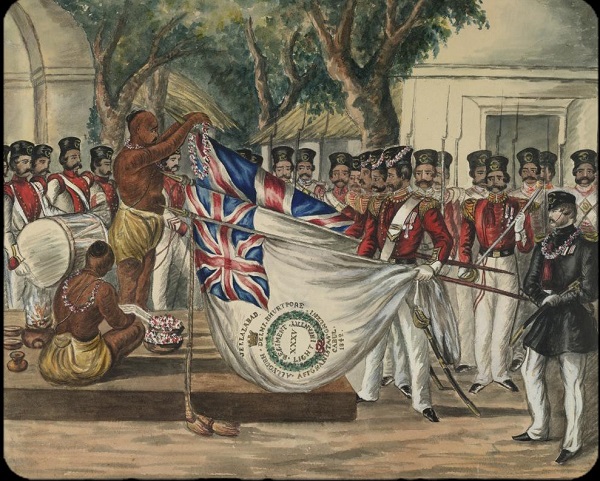
In the Bengal Army, Brahmin sepoys gained access to steady Company pay, military status, caste accommodations, and community recruitment networks precisely because of their caste position. Some units were even organised around Brahmin identity, such as the 1st and 3rd Brahmans.
Yet when Dalits seek reserved places in education, public employment, and legislatures to overcome centuries of untouchability, exclusion, and under-representation, the same caste-conscious system is suddenly denounced as “anti-merit.” That is not a principled belief in equality. It is selective outrage.
Caste mattered—when it paid
The old argument goes: the army should select only on merit. But the British Indian Army was never a neutral meritocracy. The British recruited heavily from Brahmins, Rajputs, and Bhumihars because of caste reputation, local networks, and colonial assumptions about who made a “suitable” soldier.
Brahmin sepoys benefited from a system in which caste identity opened doors. They were not asked to pretend caste did not exist. Their caste was recognised, accommodated, and often rewarded.
But when Dalits ask the state to recognise caste as the reason they were historically shut out, opponents suddenly insist that caste must be ignored.
That is the central hypocrisy: caste was acceptable when it protected privilege; it becomes unacceptable only when it challenges privilege.
“Merit” is often inherited advantage
Opponents of reservation claim quotas lower merit. But “merit” is not created in a vacuum. It is shaped by access to good schools, coaching, English, social confidence, family networks, land, capital, and freedom from caste humiliation.
A Dalit child facing segregated social treatment, poverty, discrimination, and exclusion from institutions does not begin the race at the same starting line as a child from a historically privileged caste.
To call reservation “unfair” while ignoring the unfairness that made it necessary is not neutrality. It is asking Dalits to compete equally in a system that was never equal.
Reservation is not a favour
Reservation is not a reward for being Dalit. It is a constitutional remedy for caste-based exclusion. India’s Constitution permits special provisions for socially and educationally backward classes, including Scheduled Castes and Scheduled Tribes, in education and public employment.
Dalits were denied temples, wells, schools, land, dignity, and public office because of caste. Reservation exists to make public institutions represent the society they claim to serve.
Calling that “reverse discrimination” reverses the moral order: it treats the remedy for historical injustice as worse than the injustice itself.
The crocodile tears
Many critics shed tears for the “poor general-category student” or the “deserving candidate” who lost a seat. But where was that concern when caste determined who could enter the army, the administration, the temple, the school, or the marketplace?
If caste-based advantage was tolerated for centuries, it is dishonest to call caste-based correction an attack on fairness. The complaint is not really about merit. It is about losing the comfort of inherited advantage.
The honest question
The question is not: “Why should Dalits get reservation?”
The honest question is: “Why was caste privilege accepted for so long, while caste justice is treated as an unfair advantage?”
This criticism is aimed at those who defend or romanticise historical Brahmin privilege while opposing Dalit reservation, not at every Brahmin, and not at every person who raises genuine questions about how reservation should work.
But the contradiction is clear: if Brahmins could be recruited, honoured, and organised as Brahmins under British rule, Dalits cannot fairly be condemned for seeking protection and representation as Dalits under Indian democracy.
References
1.https://en.wikipedia.org/wiki/Sepoy?utm
2.https://en.wikipedia.org/wiki/Sepoy?utm
3.https://www.tandfonline.com/doi/abs/10.1080/0031322X.2012.701495?utm
4.https://www.epw.in/engage/debate-kits/reservations-in-india-resource-kit?utm
5.https://scielo.org.za/scielo.php?script=sci_arttext&pid=S1727-37812009000100003&utm_source=perplexity
6.https://en.wikipedia.org/wiki/Reservation_in_India?utm