

Balram Sampla

Geopolitics
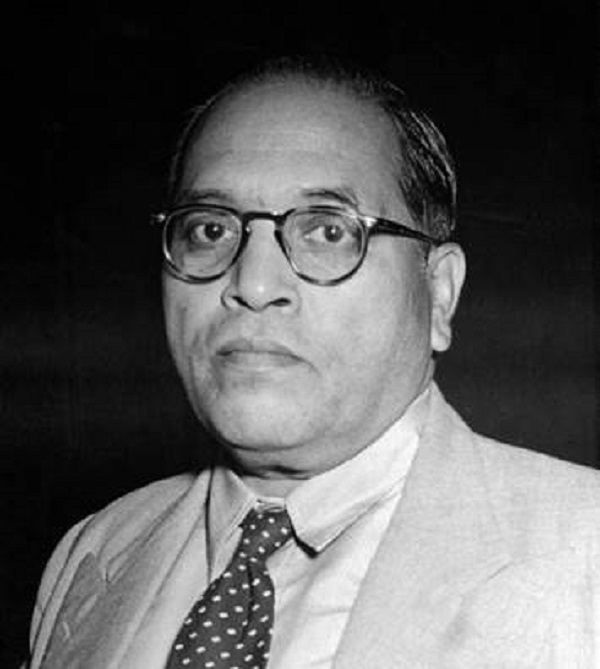
(Asian independent) When people think of Dr. B.R. Ambedkar, they usually remember him as the father of the Indian Constitution, a brilliant lawyer, or the champion of anti-caste struggles. But long before modern discussions around gender equality swept into public life, Dr. Ambedkar was laying down the groundwork for women’s liberation in India. His vision of freedom was not limited to political independence from British rule. He believed that true freedom was impossible as long as women remained legally, economically, and socially oppressed. Through his speeches, legislative battles, and election manifestos, Dr. Ambedkar proved himself to be one of the most radical feminist thinkers of the 20th century.
The Roots of Subjugation
Ambedkar’s feminism grew out of a deep understanding of how society functions. He saw that the caste system could not survive without the strict control of women. To maintain rigid caste boundaries, traditional codes enforced early marriage, banned widow remarriage, and restricted women’s choices. In his writing, Dr. Ambedkar argued that ancient legal codes, most notably the Manusmriti, had “institutionalized women’s subordination, reducing them to lifelong dependents” under fathers, husbands, and sons.
For Dr. Ambedkar, a woman was not an object of property or a passive ideal to be put on a pedestal; she was an “autonomous human” being entitled to equal dignity, education, and social independence.
The Battle for Reproductive Autonomy and Birth Control
Dr. Ambedkar’s views on women’s bodily autonomy were decades ahead of his time. In the 1930s, while most political leaders viewed family matters as private or taboo, Dr. Ambedkar brought birth control directly into the hall of law.
(I) The 1938 Bombay Assembly Resolution
On November 10, 1938, Dr. Ambedkar supported a historic resolution in the Bombay Legislative Assembly calling on the government to provide free birth control facilities.
(II) Science Over “Self-Control”
Unlike Mahatma Gandhi, who advocated for absolute celibacy (brahmacharya) as the only moral form of birth control, Dr. Ambedkar took a modern, practical approach. He recognized that expecting poor families to rely on self-control was unrealistic, and that unwanted pregnancies locked women into cycles of poverty, poor health, and high maternal mortality.
(III) Clinics for the Nation
By 1951, when drafting the election manifesto for the Scheduled Castes Federation (SCF), Dr. Ambedkar became the first political leader in India to include state-sponsored birth control and public family planning clinics as an official party platform.
Protecting Working Women and Health
Dr. Ambedkar understood that abstract legal rights meant nothing without economic security. During his tenure as a legislative leader and later as the Labour Member of the Viceroy’s Executive Council (1942–1946), he championed concrete labour rights for women:
(1) He strongly backed the Bombay Maternity Benefit Act (1929), insisting that society and employers must bear the financial cost of supporting pregnant workers.
(II) He fought for equal pay, maternity leaves, equal working conditions, and safety measures for women working in coal mines and factories.
The Hindu Code Bill: Staking His Career on Equality
The ultimate test of Dr. Ambedkar’s commitment to women’s rights came after Independence. As India’s first Law Minister, he drafted the Hindu Code Bill—a sweeping piece of legislation intended to replace chaotic patriarchal customs with unified, progressive law.
The Bill sought to give women:
(I) Equal Inheritance Rights.
The right to inherit parental property as full owners.
(II) Divorce Rights.
The legal authority to leave abusive or unviable marriages.
(III)Monogamy Laws.
A legal ban on polygamy for men.
(IV) Inter-Caste Marriage & Adoption Rights.
The freedom to marry outside one’s caste and adopt children without caste barriers.
When conservative MPs and orthodox religious leaders blocked the Bill in Parliament, Dr. Ambedkar refused to compromise on its core principles. Deeply frustrated by the lack of political courage to pass the law, he resigned from his post as Law Minister in September 1951. He chose to walk away from power rather than abandon the fight for women’s legal equality.
A Radical Legacy
Dr. B.R. Ambedkar was a feminist champion not because he used popular labels, but because he spent his entire life taking action. He attacked the root causes of misogyny in religious codes, demanded legal ownership of property for women, defended maternal health, and insisted on access to birth control as a fundamental right. By linking women’s liberation directly to social justice, Dr. Ambedkar created a roadmap for gender equality that remains vital, radical, and necessary today.
Source
1. Dr. Babasheb Ambedkar Writing and Speeches
2. A Part Apart: The life and Thought of Dr. Ambedkar. Ashok Gopal
3. Dr. Ambedkar Feminist Philospher. Dr. Sunaina Arya
4. Dr Ambedkar: Messiah of the Downtrodden. B. R. Sampla
5. Ambedkar: Awakening India’s Conscience. Narendra Jadhav
6. The Essential Writings of B.R. Ambedkar. Valerian Rodrigues