

THE ASIAN INDEPENDENT UK

Bal Ram Sampla
Geopolitics
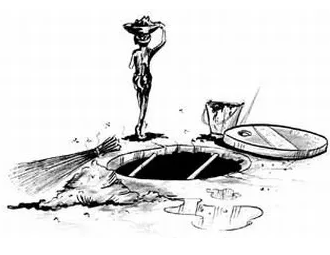
India has promised for decades to end manual scavenging, the practice of cleaning human waste by hand from dry latrines, done overwhelmingly by people from oppressed castes.
Recently, the government told Parliament that a 2024-25 survey found zero manual scavengers nationwide. Yet women like Mussi Devi in Uttar Pradesh say they still do this work every day.
Part of the gap comes from how narrowly the law defines “manual scavenger” , tied to very specific conditions. If someone’s situation doesn’t match that exact description, they simply aren’t counted, even while doing the same work. And since local officials are the ones reporting whether the practice exists in their area, there’s little incentive to find it. Admitting it means admitting a law was broken on their watch. The result is a technically accurate number that doesn’t reflect what’s actually happening.
But beyond definitions, there’s a fair question about priorities. India has built world-class capability in space exploration, sending missions to the Moon and Mars, and rightly takes pride in that. It’s reasonable to ask why a country capable of that kind of technical achievement hasn’t matched it with investment in mechanized sewer-cleaning equipment, safe sanitation infrastructure, or dry-latrine elimination at scale. The technology to end manual scavenging largely already exists elsewhere in the world. The gap isn’t scientific capability, it’s whether ending this practice has been treated with the same national urgency.
That’s really the heart of what groups like the Safai Karmachari Andolan are asking for: not just an accurate count, but the same seriousness of investment and political will that other national goals receive. A society can choose what it treats as a priority. Declaring victory on paper is easier than building the toilets, funding the machines, and rehabilitating workers , but only one of those actually ends the practice.
There should be no excuse but government officials feeble excuses are that funding constraints, federal-state coordination problems, and the scale of India’s sanitation infrastructure make this a genuinely hard problem, not simply a matter of will. And that programs and rehabilitation schemes do exist, even if implementation has been uneven.
Whether that’s a full explanation or a partial excuse is something reasonable people disagree on.
References
1.https://www.oneindia.com/india/manual-scavenging-still-thrives-in-46-districts-government-claims-false-activists-launch-safai-kar-8193591.html
2.https://amanshantinews.com/safai-karmachari-andolan-counters-govt-reply-in-parliament-claims-manual-scavenging-still-exists-in-atleast-46-districts-india-news/
3.https://theprint.in/feature/around-town/india-at-80-still-cleaning-toilets-by-hand-workers-demand-an-end-to-manual-scavenging/3031612/