

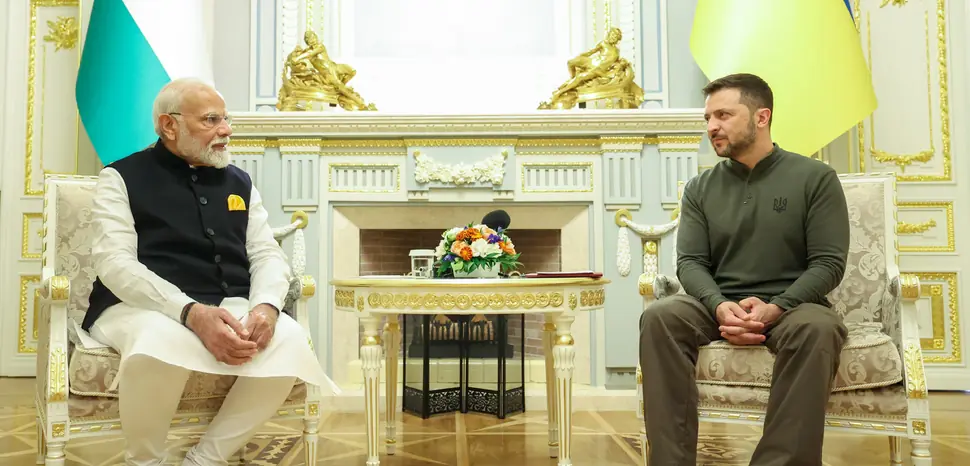
As the Russia-Ukraine war grinds on, India is emerging as an unexpected diplomatic player, advancing a broader ceasefire proposal designed to protect energy infrastructure, secure Black Sea shipping and stabilise global markets.

(Asian independent) While international attention remains focused on Donald Trump’s efforts to curb attacks on Russian and Ukrainian energy facilities, a quieter diplomatic initiative is taking shape in New Delhi. India has stepped forward with what Ukraine describes as the most comprehensive proposal currently on the table for a limited ceasefire between Moscow and Kyiv. The proposal goes beyond the narrower plans advanced by the United States, Turkey and Egypt. According to reports, India has proposed a three-part framework that would halt attacks on energy infrastructure, safeguard the flow of grain and energy through Black Sea ports, and end strikes on commercial shipping. The initiative was reportedly discussed with Ukrainian officials during External Affairs Minister S. Jaishankar’s visit to Kyiv.
Ukraine has responded positively. Foreign Minister Andrii Sybiha described India’s initiative as the broadest among four proposals currently under consideration, signalling Kyiv’s willingness to explore a combined energy and Black Sea truce. Whether the proposal gains traction remains uncertain. The Kremlin has welcomed India’s diplomatic engagement but insists that any settlement must lead to what Moscow calls a “sustainable and just peace” rather than a temporary ceasefire. Russian officials continue to argue that a truce would merely give Ukraine time to regroup and rearm. Yet India’s calculus extends beyond the battlefield. The war has become a significant source of instability for global energy markets, food supplies and maritime trade. The Black Sea remains one of the world’s most important routes for grain exports, while attacks on energy infrastructure continue to disrupt commodity markets. For India, one of the world’s fastest-growing major economies, such disruptions carry tangible economic costs. The IMF recently raised its growth forecast for India to 7 per cent, underscoring New Delhi’s interest in preserving stable trade and energy flows.
The proposal also reflects changing realities in the energy relationship between Moscow and New Delhi. While Russia remains a major supplier of crude oil to India, reports indicate that damage to Russian refinery capacity has increased Moscow’s dependence on imported refined fuels, including supplies from India. This growing interdependence gives New Delhi an additional stake in reducing economic disruption caused by the conflict. The motivations of the four diplomatic players differ significantly. The United States is focused primarily on preventing further pressure on global energy prices. Turkey’s interest lies in restoring secure maritime trade through the Black Sea and reviving economic benefits linked to regional shipping and grain transit. Egypt, one of the world’s largest grain importers, is concerned principally with food security and maintaining stable access to Ukrainian exports.
India’s approach is broader. Its proposal seeks to address energy security, maritime safety, food supply chains and global economic stability simultaneously. Just as importantly, it allows New Delhi to strengthen its credentials as an emerging diplomatic power capable of maintaining dialogue with both Moscow and Kyiv. The obstacle, however, remains unchanged. Neither Russia nor Ukraine believes it has achieved its strategic objectives. Both continue to view military pressure as essential to improving their negotiating position. That reality makes any ceasefire difficult to achieve; however pragmatic the proposal may be.
Nevertheless, India’s initiative highlights a growing international consensus: even a limited truce protecting energy infrastructure, ports and commercial shipping could deliver significant economic benefits well beyond the battlefield. The question is whether Moscow and Kyiv are prepared to prioritise those benefits over their military ambitions. Until then, New Delhi’s diplomatic gamble remains one of the most ambitious peace efforts currently under discussion.