THE ASIAN INDEPENDENT UK

Bal Ram Sampla
Geopolitics
A Political Analysis
A minister resigned. The country cheered. But before we call this a victory, we should ask a harder question: a victory for whom?
The Movement That Wasn’t Built for Us
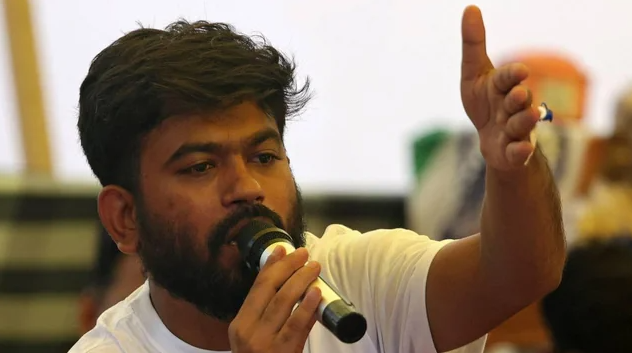
For thirty-seven days, a satirical political outfit calling itself the Cockroach Janta Party mobilized thousands over a leaked exam paper. It worked. The Education Minister resigned, something the ruling party had refused to do through scandal after scandal. On paper, this looks like democracy winning.
Look closer, and the picture changes.
A year before this movement began, a seventeen-year-old Dalit girl named Anitha ended her life because of the crushing pressure of this same exam system. No mass protests followed. No minister trembled. No celebrities tweeted solidarity. When a Dalit girl was raped and murdered in Hathras, the silence from the same crowds was deafening.
So what changed? Not the injustice. Not the stakes. What changed is whose interests were threatened. When the exam stopped working smoothly for the students it was designed to reward, suddenly it became a national emergency. When it was actively destroying Dalit lives, it wasn’t news at all.
That is not solidarity. That is self-interest wearing the mask of justice.
The Old Script, Repackaged
Listen closely to the language of this movement — “fairness,” “merit,” “transparency” , and you’ll recognize it. It’s the same language upper-caste protesters used in the 1990s to fight against reservations for Backward Classes. Then, the argument was: reservations reward the undeserving; let merit decide. Now, the argument is: fix the exam system so merit can be rewarded properly.
Both arguments rest on the same fiction, that merit is a personal quality, earned in a vacuum, rather than a product of caste privilege:
(a) the coaching classes only money can buy,
(b) the generational headstart,
(c) the social capital that opens doors before an exam is even written.
Strip away the paper leak, and this movement’s real anxiety is about protecting an unequal system, not fixing it.
It is no accident that anti-reservation sentiment has resurfaced online around the same time as this protest. The energy behind “Reservation Hatao Andolan” didn’t come from nowhere. It came from the same wellspring this movement drew on , and the movement gave it fresh cover.
Who Marched, and Who Benefits
Here is the uncomfortable truth about mass movements like this one: the people doing the marching are rarely the people who set the terms.
Bahujans show up. They chant, they organize, they take the tear gas and the pellet guns.
But the demands, the framing, the language of “fairness” , that gets written by people who were never fighting for structural change, only for the system to work smoothly again for people like them. Once the goal is achieved , the resignation is secured, the cameras move on , there is no reason for that coalition to hold together. The mask comes off. Caste pride resumes as normal.
That is the pattern. It happened after Mandal. It is quietly happening again now.
The Question Nobody Is Answering
If this movement genuinely stood for the oppressed, where was it when Anitha died? Where is it now, as anti-reservation sentiment builds online, wearing the same “merit” logic this protest ran on? A movement that borrows Dalit anger and Dalit energy to win a narrow, upper-caste-coded victory , and then falls silent on Dalit-specific harm , has not earned the right to call itself a people’s movement.
What Dalits Owe Themselves
This is not an argument to boycott every movement that isn’t explicitly ours. It is an argument against amnesia. Dalits cannot afford to keep waiting for the rest of society to discover urgency on our behalf , urgency that only seems to arrive when it’s convenient for someone else.
Anitha’s death deserves its own reckoning. Hathras deserves its own reckoning. The structural violence of a coaching-class economy that shuts out the poor deserves its own reckoning , not as a footnote to someone else’s “merit” crisis, but as the crisis itself.
We do not need permission to be angry on our own terms. We do not need a crowd the size of a savarna protest to prove our grief is real. The movement got its resignation. We are still waiting for ours.