THE ASIAN INDEPENDENT UK
 Dr Ramjilal,
Social Scientist and Former Principal,
Dyal Singh College, Karnal (Haryana, India).
Email ID: [email protected]
Brief:
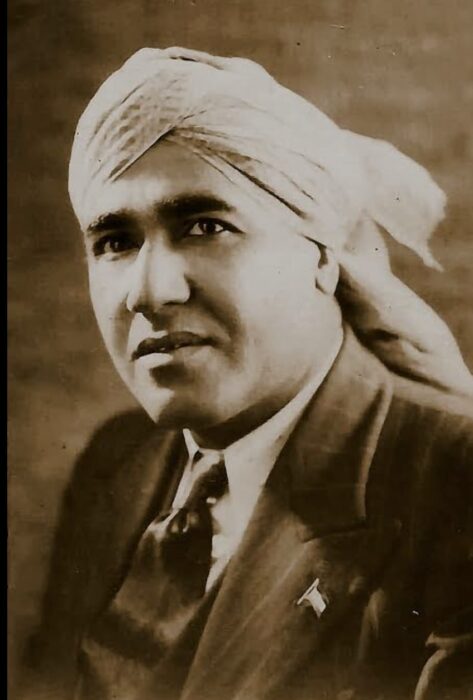
On June 4, 1940, Udham Singh, a revolutionary socialist and advocate for a just and egalitarian society, stood in the dock of the Central Criminal Court, commonly known as the Old Bailey, in London. At 40 years old, he was a prominent figure opposing imperialism and fighting for the rights of the oppressed. When asked by Judge Atkinson to state his name, he replied, “Ram Mohammad Singh Azad”, emphasising the importance of Hindu, Muslim, and Sikh unity, with “Azad” meaning free. This moment marked a significant response to the Jallianwala Bagh massacre, which had occurred twenty-one years earlier on April 13, 1919.
Singh became widely known after assassinating Michael O’Dwyer, the former Governor of Punjab, on March 13, 1940. His trial was not just a legal proceeding; akin to his predecessor Bhagat Singh, Singh transformed the courtroom into a platform to challenge and indict British imperialism. While in custody, he undertook a 42-day hunger strike, highlighting his commitment to the cause.
His trial commenced at the Old Bailey under Justice Cyril Atkinson, with representation from notable figures including V.K. Krishna Menon and St John Hutchinson, while G. B. McClure served as the prosecuting barrister. Singh’s statement during the proceedings served as a powerful critique of colonial rule, resonating with many and drawing attention to the broader struggles against imperialism.
Expansion:
Here are the key historical highlights of Udham Singh’s court statement:
Udham Singh Did Not Fear Death
On April 1, 1940, Singh was formally charged with the murder of Michael O’Dwyer and was remanded in custody at Brixton Prison. When asked to explain his motivations, Singh stated:
“I did it because I had a grudge against him. He deserved it. I don’t belong to society or anything else. I don’t care. I don’t mind dying. What is the use of waiting until you get old? Is Zetland dead? He ought to be. I shot two bullets into him. I bought the revolver from a soldier in a pub. My parents died when I was three or four. Only one dead? I thought I could get more.”
The British public prosecutor, G.B. McClure asked him, “Did you shoot O’Dwyer dead?” Singh expressed no remorse and, without any hesitation or fear of death, bravely declared:
“I don’t care; I don’t mind dying. What is the use of waiting till you get old? This is no good. You want to die when you are young. That is good, and that is what I am doing.”
After a pause, he added:
“I do not care about the sentence of death. It means nothing at all. I do not care about dying or anything. I do not worry about it at all. I am dying for a purpose.” Thumping the rail of the dock, he exclaimed, “We are suffering from the British Empire.” He continued more quietly, “I am not afraid to die. I am proud to die for the freedom of my native land. I hope that when I am gone, thousands of my countrymen will come to drive you dirty dogs out and to free my country.”
“I am standing before an English jury. I am in an English court. You people go to India, and when you come back, you are given a prize and put in the House of Commons. We come to England and are sentenced to death.”
“I never meant anything, but I will take it. I do not care about it, but when you dirty dogs come to India, there will come a time when you will be cleaned out of India. All your British imperialism will be smashed.”
“Machine guns on the streets of India mow down thousands of poor women and children wherever your so-called flag of democracy and Christianity flies.”
Revolutionary Duty for the Country— ‘I Am Dying for My Country’:
In a statement given on March 13, 1940, he said:
“I just shot to make a protest. I have seen people starving in India under British imperialism. I did it; the pistol went off three or four times. I am not sorry for protesting. It was my duty to do so. I would do it again for the sake of my country. I do not mind my sentence—ten, twenty, or fifty years, or being hanged.” He categorically stated, “I am dying for my country.”
Premeditated the Jallianwala Bagh Genocide, 13 April 1919:
He reminded the jury that in the premeditated Jallianwala Bagh massacre (13 April 1919),
General Dyer had massacred 1,800 Indians. The then-Governor of Punjab had endorsed the massacre, telling the British government that the action was entirely justified. Udham Singh questioned this: “The man who killed thousands received the title of ‘Sir’, while I face the gallows—what kind of justice is this?” He adopted the full name ‘Ram Mohammad Singh Azad’ to represent the entirety of India, explaining to the court that the name symbolised a shared heritage—Hindu, Muslim, and Sikh—and ‘Azad’ is the testament of free India. He noted that people of all three faiths had been martyred at Jallianwala Bagh, so the retribution, too, had to be a collective effort. This was a powerful ideological strike against the British policy of ‘divide and rule’.
No hate for the British people; hate against the government and the system:
In fact, he was opposed to the British government and its system, which was based on exploitation. The victims of exploitation were the British working class, like Indians. He stated unequivocally,
“Your conduct, your conduct – I am talking about the British government. I have nothing against the English people at all. I have more English friends living in England than I have in India. I have great sympathy with the workers of England. I am against the imperialist government.”
“You people are suffering the same as I am suffering through those dirty dogs and mad beasts. Everyone is suffering through these dirty dogs, these mad beasts. India is only slavery. Killing, mutilating and destroying – British imperialism. People do not read about it in the papers. We know what is going on in India.”
Down with British Imperialism:
As he travelled to many countries on four continents. and concluded that British imperialism and the empire had enslaved not just India, but the entire world—from Ireland to Africa—so his fight was not limited to India alone. Driven by this mindset, he forged ties with the Irish Republican Army and connected with other revolutionaries to seek support for India’s independence. As a result, during the trial, while facing JUSTICE ATKINSON, he exclaimed, he started the speech with a denunciation of British imperialism:
“I say, down with British imperialism. You say India do not have peace. We have only slavery. Generations of so-called civilisation have brought us everything filthy and degenerating known to the human race. All you have to do is read your own history. If you have any human decency about you, you should die with shame. The brutality and bloodthirsty way in which the so-called intellectuals who call themselves rulers of civilisation in the world are bastard blood…’
‘I Am Not Mad; Your Laws Are Mad:’ The Impact of Bhagat Singh
When the public prosecutor attempted to portray Udham Singh as mentally ill, he fiercely replied, “I am not mad; your laws are mad. You rule over people and call it civilisation—that is madness. Starving and enslaving millions can never be right.” He was deeply influenced by the ideology and sacrifice of his close mentor, friend, and comrade, Bhagat Singh. Singh stated, “I continue to carry on the work of [Bhagat] Singh; I am fulfilling the mission he left unfinished.”
This devotion is also clearly expressed in a letter he wrote on March 30, 1940, where he shared: “[It has been] 10 years since my friend [Bhagat Singh] left me behind, and I am sure that after my death, I will see him waiting for me. It was on the 23rd [when they hanged Bhagat Singh], and I hope they will hang me on the same date as he was.”
Bhagat Singh, Sukhdev, and Rajguru were hanged in Lahore Central Jail on March 23, 1931, while Udham Singh was executed on July 31, 1940, achieving supreme martyrdom.
Last Wish: Repatriation of Remains to the Motherland:
After receiving his death sentence, Udham Singh embarked on a 40-day hunger strike, expressing his final wish: to be recognised as a political prisoner and to face execution by firing squad—similar to Bhagat Singh and his comrades. He conducted this hunger strike in Brixton Prison from June 15 to July 26, 1940. Before his execution at Pentonville Prison on July 31, 1940, he stated his last wish was that his ashes be repatriated to India.
In 1974, Singh’s remains were exhumed and returned to India at the insistence of Sadhu Singh Thind, a Member of the Legislative Assembly (MLA). His remains were cremated in his hometown of Sunam. The casket was received by Mrs Indira Gandhi, the Prime Minister of India, along with Dr Shankar Dyal Sharma and Giani Zail Singh, the Chief Minister of Punjab. On August 2, 1974, Singh’s ashes were divided into seven urns: one urn was allocated to Haridwar, Kiratpur Sahib, Rauza Sharif, Sunam, and the museum at Jallianwala Bagh. The remaining two urns were designated for the library of the Shaheed Udham Singh Arts College in Sunam.
In summary, while the struggle against injustice can often feel long and challenging, the pursuit of justice remains strong and unwavering. The name “Ram Mohammad Singh Azad” represents a powerful symbol of unity and resilience for contemporary India, especially in times when efforts to divide our society along religious lines emerge. Udham Singh’s legacy serves as a stark reminder that the freedom we enjoy today was not easily won; it was achieved through the collective sacrifices of many individuals. This highlights the incredible strength and richness of our diversity, encouraging us to celebrate our differences while remaining united on our journey toward a just society.
In 1962, Jawaharlal Nehru, the then Prime Minister of India, praised Udham Singh with the following statement: “I salute Shaheed-i-Azam Udham Singh with reverence, who kissed the noose so that we may be free. ” I pay my tribute to this great martyr.
Read At:
>Lal .Ramji. Dr. (2 August 2025), Revolutionary Galaxy: Beams of Light: Great Personality and Ideology, Open Search, Delhi, p. 4(लाल, रामजी, डॉ. (2 अगस्त 2025), क्रांतिकारी आकाशगंगा: प्रकाश की किरणें: महान व्यक्तित्व और विचारधारा, ओपन सर्च, दिल्ली, पृष्ठ 4)
>Lal,Ramji,Dr.(25/12/2025).,Shaheed-e-Azam Udham Singh: A Socialist Revolutionary https://theasianindependent.co.uk/shaheed-e-azam-udham-singh-a-socialist-revolutionary/#google_vignette
Lal,Ramji,Dr.(25/12/2025) Shaheed-e-Azam Udham Singh: A Socialist Revolutionary/https://samajweekly.com/shaheed-e-azam-udham-singh-a-socialist-revolutionary/#google_vignette
>Lal,Ramji,Dr.(25/12/2025). https://pratibimbmedia.com/shaheed-e-azam-udham-singh-a-realistic-socialist-revolutionary/
>Lal,Ramji,Dr. (30 July 2026.Pratibimb Media).
शहीद-ए-आज़म ऊधम सिंह– विचारधारा और दृष्टिकोण: एक अवलोकन
https://pratibimbmedia.com/shaheed-e-azam-udham-singh-ideology-and-perspective-an-overview/
>Old Bailey Proceedings Online t19 400401-47, The King versus Udham Singh, 4 June 1940.
>The National Archives UK, KV2/ 2178 KV &2/2179: Security Service Personal file on Udham Singh.
> British Library/IOR/L/PJ/12/485:Caxton Hall Shooting,1940.
>Fenech, Louis E. (2020). Death in the Punjab: Revisiting the Story of Udham Singh. Oxford University Press.
>https://en.wikipedia.org/wiki/HM_Prison_Pentonville#:
>The Tribune, Lahore (5 June 1940): ‘Udham Singh’s defiant statement in the London Court.’
>Hindustan Times (1 August 1944), Udham Singh Hanged in Pentonville Prison
>The New York Times (14 March 1940): ‘Sir Michael O’Dwyer Slain in London’. National Archives of India, Government of India, New Delhi, Political (General), 1940, File No. 41-G/40.
>Aliases: London Metropolitan Police Report (File).
>The Metropolitan Police report (File MEPO 3/1743, dated March 16, 1940
> National Archives of India, Government of India, New Delhi; Political, General, 1940, File No. 41-G/40. >https://en.wikipedia.org/wiki/Udham_Singh.
>metropolitan police (file mepo 311743).
>https://www.nationalarchives.gov.uk/help-with-your-research/research-guides/london-metropolitan-police-british-transport-police-railway-police/
>https://www.empirefaithwar.com/blog-entries//original-file-on-udham-singh
>https://crimereads.com/udham-singh-orphan-assassin-hero-
>https://www.facebook.com/NationandBeyondRitam/videos/on-13-march-1940-inside-caxton-hall-in-london-indian-freedom-fighter-sardar-udha/4287810
>https://www.darpanmagazine.com/news/india/uk-has-31-articles-not-4-of-shaheed-udham-singh-reveals-rti/
>https://crimereads.com/udham-singh-orphan-assassin-hero-spy/#
>https://en.wikipedia.org/wiki/HM_Prison_Pentonville#:
>M. Singh. (6.4.1940) 1010 Brixton Jail (Hospital H.M. Brixton Jail, London) letter, dated 6.4.1940, PTO, Appendix, p. 294)
>Navtej .Singh(1988). Challenge to Imperial Hegemony: The Life Story of a Great Indian Patriot Udham Singh, University of Illinois at Urbana-Champaign, 1998, Appendix, pp. 293-294.
>Singh, Sikander (1998). Udham Singh, alias, Ram Mohammed Singh Azad: a saga of the freedom movement and Jallianwala Bagh. B. Chattar Singh Jiwan Singh.