THE ASIAN INDEPENDENT UK
Dr RAMJILAL, Social Scientist,
Former Principal, Dyal Singh College,
Karnal (Haryana, India)
Email: [email protected]
Historical Background:
Approximately 144 years ago, in 1882, the Hunter Commission was established by the British government. The main objective of the Commission was to provide recommendations aimed at improving the Indian education system through the development of infrastructure, the enhancement of primary education, and the adoption of a policy of religious neutrality. Additionally, the Commission recommended the facilitation of proper education for backward classes and Muslims.
During this period, the renowned social reformer Jyotirao Phule advocated for free and compulsory education as well as proportional representation, which included reservations. Large-scale demonstrations occurred in Travancore-Cochin (now Kerala) against the recruitment of foreigners for government jobs, with significant demands for job reservations for natives.
In 1902, Maharaja Chhatrapati Shahuji Maharaj of Kolhapur, Maharashtra, issued a notification for reservations aimed at the welfare of Dalit and backward classes. This marked the first official gazette in Indian history concerning reservations for these communities, leading to a systematic implementation of such policies.
Recognising the social conditions in India, the British imperial government implemented limited reservations for various castes and communities in administrative services in 1908. Subsequently, the Government of India Act of 1909 included provisions for reservations based on caste background. In the Madras Presidency, allocations were made for 44% of seats for non-Brahmins, 16% for Brahmins, 16% for Muslims, 16% for Anglo-Indians/Christians, and 8% for Scheduled Castes, effectively resulting in 100% reservations for government jobs.
In 1935, the Congress Party passed a proposal to create separate electoral constituencies for Scheduled Castes (the Dalit class). The Government of India Act of 1935 included many provisions related to reservations. In 1942, Dr Bhimrao Ambedkar emphasised the necessity of reservations in education and jobs for the upliftment of Scheduled Castes. He made significant recommendations for a proportional representation system.
The Constituent Assembly: Reservation as a Controversial Subject:
The debate over reservations in Parliament, state legislative assemblies, and in education and government jobs began during the Constituent Assembly. This initiative faced strong opposition from various factions, including members of the Assembly itself and the general public.
Within the Assembly, there was significant disagreement about reservations. Some members supported reservations based on caste, while others argued for an economic or political basis for such policies. Ultimately, the decision was made to implement reservations based on caste.
Key figures involved in the Constituent Assembly debates included Dr. Bhimrao Ambedkar, Jawaharlal Nehru, Sardar Patel, T.T. Krishnamachari, K.T. Shah, A.A. Gurung, S. Nagappa (from Madras, now Tamil Nadu), Mohanlal Gautam, Mahavir Tyagi, Z.H. Lari, Jerome D’Souza, and H.C. Mukherjee.
Dr Bhimrao Ambedkar, Jawaharlal Nehru, and Sardar Patel: Significant Differences:
Notable differences emerged among Dr Bhimrao Ambedkar, Jawaharlal Nehru, and Sardar Patel concerning the reservation of Scheduled Castes in Parliament and state legislative assemblies. This controversy is explored in W. Rajshekhar’s book, ‘’Ambedkar, Gandhi, and Patel: The Making of India’s Electoral System’’. Dr Ambedkar argued for a separate electorate for the Scheduled Castes (Dalit community), a proposal that was strongly opposed by Sardar Patel and his colleagues.
Rajshekhar noted that during the framing of the Constitution, Sardar Patel, as the Home Minister of India, controlled all files concerning the Scheduled Castes. As a result, Dr Ambedkar had to settle for reserved seats for Scheduled Castes in Parliament and state legislatures. He contended that reservations should remain until social inequality and untouchability were eliminated, arguing that the issue of ending reservations would not arise as long as these problems persisted.
The deadlock between proponents and opponents of reservations lasted for nearly six months, during which Dr. Ambedkar threatened to resign and leave his position. To resolve the impasse, the Constitutional Assembly accepted Thakurdas Bhargav’s proposal, which capped the political reservation of seats for Scheduled Castes and Scheduled Tribes in the legislatures at an initial duration of ten years. Most members supported this view, leaving Dr Ambedkar with no choice but to accept the majority decision. However, in a sharp critique of Sardar Patel’s nationalism, he stated, “You consider yourself a congressman and view nationalism as synonymous with it. I believe a person can be a nationalist without being a congressman… I consider myself a greater nationalist than any congressman. “
After ten years, in 1961, Prime Minister Jawaharlal Nehru succeeded in passing a proposal to extend the reservations in Parliament and legislative assemblies for another ten years, which continues to this day. Presently, many individuals from upper castes oppose reservations for Dalits. This opposition is why some BJP leaders and supporters of right-wing ideologies regard Sardar Patel as their ‘incarnation’ rather than seeing Nehru and Mahatma Gandhi in that light, despite Sardar Patel’s decision to ban the Rashtriya Swayamsevak Sangh (RSS) on February 4, 1948.
The Constitution of India and Reservations:
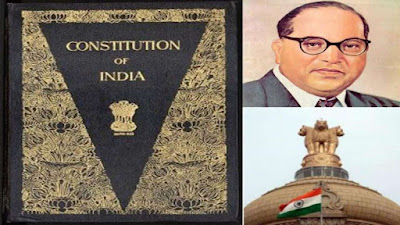 Article 15 of the Constitution of India establishes that the state must not discriminate against any citizen on the grounds of religion, race, caste, sex, or place of birth. To address social and educational disparities, Articles 15(4) and 16(4) grant authority to both central and state governments to implement reservation policies. These provisions enable the state to ensure that “backward classes” receive appropriate representation in public employment. While Article 16(4) specifically allows for reservations for backward classes, it does not explicitly mention Scheduled Castes and Scheduled Tribes, indicating a focus on broader categories of disadvantaged groups.
Who qualifies as part of “Socially and Educationally Backward Classes?
This is a crucial question that requires clarification. Articles 341 and 342 of the Constitution define Scheduled Castes (SC) and Scheduled Tribes (ST) as “backward classes” regarding social and educational criteria. After extensive debate in the Constituent Assembly, the proposal for reservation based on economic status was ultimately abandoned. Dr. Ambedkar referred to these groups as ‘backward classes’ rather than using the terms SC and ST.
Over the years, the scope of the reservation system has been broadened to include a variety of groups. This expansion encompasses backward classes, individuals with disabilities, economically backward classes, ex-servicemen, women, and members of the Muslim community. However, it is important to highlight that none of these groups are specifically referenced in Articles 15(4), 16(4), 341, and 342.
Moreover, these articles do not offer explicit guidelines regarding promotional reservations for employees belonging to Scheduled Castes and Scheduled Tribes. There is also a lack of clear direction about the feasibility of implementing reservations for temporary or contractual positions, as well as in the private sector. Although the articles do not explicitly forbid such reservations, they do not confirm their legality, resulting in ambiguity concerning their application. This ambiguity has, at times, been leveraged to limit the effectiveness of reservations in temporary and contractual jobs within both the public and private sectors.
Despite certain constitutional amendments that intended to rectify these discrepancies, there remains a consistent trend toward restricting the implementation of reservations for contract or temporary roles, which has led to a reduction in the availability of reserved seats for temporary or contract appointments or outsource appointments. Furthermore, while they do not explicitly state that such reservations are unavailable, they also do not affirm their existence. This leaves the status of reservations open to interpretation and uncertainty.
While constitutional amendments have been made to address some discrepancies, there appears to be an ongoing effort to unreserve reserved seats by not implementing reservations for contract or temporary appointments.
The Reservation for Non-Resident Indians: 5% and 15% :
Additionally, in medical and other professional courses the seats are reserved for Non-Resident Indians (NRIs). Approximately 6,000emphasising MBBS admission seats are reserved for Non-Resident Indians (NRIs) across the country. Different states allocate between 5% and 15% of their seats for NRIs, along with significant relaxations in eligibility criteria. The fee structure for these seats ranges from ₹20 lakh to ₹50 lakh per year. The architects of the Indian Constitution likely never anticipated that reservations would eventually extend to the wealthy. So why are anti-reservation and pro-reservation MLAs, MPs, leaders of various political parties, judges, and the mainstream media silent on the issue of reservations for NRIs? This silence raises surprising, bizarre, but important questions based on the truth.
In India, the absence of reservations for Scheduled Castes (SCs), Scheduled Tribes (STs), and Other Backward Classes (OBCs) in terms of service extension and re-employment after retirement is a significant issue. This is not only against the principles of social justice but also violates the basic spirit of the Constitution.
The lack of reservations in matters of service extension or re-employment:
According to the Constitution, it is mandatory to provide equal opportunities to all citizens, and it is essential to ensure that special classes have their rights protected. The lack of reservations in matters of service extension or re-employment can become a barrier for those who are already in a socially and economically disadvantaged position.
In this context, it is essential that policymakers and all sections of society pay attention to this issue to ensure equal opportunities for all classes and promote social harmony.
Lateral entry into the IAS :
Lateral entry into the IAS refers to the direct recruitment of experienced professionals from the private sector, academia, and public enterprises into mid- and senior-level government positions (Director, Deputy Secretary, and Joint Secretary) on a contract basis, bypassing the traditional Union Public Service Commission (UPSC) examination Lateral recruitment, initiated in 2018 for roles like joint secretary, director, and deputy secretary, aims to incorporate specialised knowledge. The Narendra Modi government has appointed 63 specialists to various central government departments through lateral entry between 2019 and 2023, as stated by Union Minister Jitendra Singh in the Rajya Sabha. Of these, 35 were hired on a contract basis and 28 through deputation. The lateral has no reservation. Moreover, this is used to oblige the men in power or corporates or companies.
The First Backward Classes Commission at the National Level: The Kaka Kalkar Commission (January 29, 1953 – March 30, 1955):
After India gained independence on August 15, 1947, the first Backward Classes Commission was established on January 29, 1953, under Article 340 of the Constitution of India, following a recommendation from the government. This was during the tenure of India’s first Prime Minister, Jawaharlal Nehru, and with Dr Rajendra Prasad serving as the first President (from January 26, 1950, to May 13, 1962). The chairperson of this commission was Kaka Kalelkar.
Second Backwards Classes Commission at the National Level: Mandal Commission (1 January 1979 – 31 December 1980):
Following the Emergency period (1975-1977), the Janata Party, led by Morarji Desai, formed a government at the Centre. Based on the government’s recommendations, the then President of India, Neelam Sanjiva Reddy (who served from 25 July 1977 to 25 July 1982), constituted the Socially and Educationally Backward Classes Commission (SEBC) to identify socially and educationally backward classes. This commission was formed in January 1979, with Bindeshwari Prasad Mandal (BP Mandal), a former Chief Minister of Bihar and a prominent landowner from the Yadav caste, serving as its chairman. Hence, it is commonly known as the Mandal Commission.
The Mandal Commission visited numerous districts across India and met with representatives from various castes. During its visit to Karnal at the Rest House, Dr. Ramjilal, a representative of the Kamboj caste and author of this article, along with Ch. Desh Raj Kamboj (an MLA and later the Education Minister of Haryana and chairman of backward classes in Haryana), informed the Commission about the Kamboj community’s involvement in education, economy, and employment. SS Gill, a young officer, served as the Secretary of the Commission. The discussions with the chairman and secretary were conducted in a civil and respectful manner. After two years, the commission presented its report to the president of India on 31 December 1980.
The Mandal Commission Report proposed several key recommendations. It identified 3,743 backward castes in India, representing 52% of the total population, and recommended a 27% reservation for these backward castes in education and government jobs within the public sector. After the fall of the governments led by Morarji Desai and Chaudhary Charan Singh, Indira Gandhi (1980-1984) and Rajiv Gandhi (1984-1989) came to power. Despite having a significant majority in Parliament, they could not implement the reservations due to pressure from anti-reservation MPs from the upper castes, resulting in the Mandal Commission’s report being shelved, similar to the Kaka Kalelkar Commission’s report.
Implementation of the Mandal Commission Report: Responses:
Following the Congress Party’s defeat in the elections in November 1989, a coalition government was formed at the Centre under the leadership of V.P. Singh (2 December 1989 to 10 November 1990). During this time, L.K. Advani, the leader of the Bharatiya Janata Party (BJP), organised the ‘Ram Rath Yatra’ from Somnath Temple to Ayodhya. Prime Minister V.P. Singh opposed this initiative, understanding that his government may not last long. On August 7, 1990, a notification was issued to implement the Mandal Commission report. This notification established a 27% reservation for backward classes in education, government jobs, and public sector units
Following this announcement, there were widespread protests from upper caste students and youth, particularly in Northern India. Senior leaders of the Bharatiya Janata Party, the Congress Party, and other political figures such as L.K. Advani, Devi Lal, and Chandrashekhar expressed their opposition to the implementation of the reservation policy. After Advani’s arrest on October 23, 1990, the BJP withdrew its support, leading to a no-confidence motion against V.P. Singh’s government on November 10, 1990, which ultimately resulted in his resignation.
The decision by V.P. Singh’s government to implement the Mandal Commission’s recommendations had a profound impact on Indian politics, marking the beginning of a new era. Political phrases like ‘Mandal vs. Kamandal’ and ‘Social Justice’ gained significant traction. At the same time, communities such as the Jats in Haryana and Marathas in Maharashtra began opposing reservations. These groups later organised violent movements demanding inclusion in the reserved category. The push for caste-based reservations increasingly aligned with ‘vote bank’ politics.
Number of Reserved Castes:
According to the 2011 Census, there are currently 1,108 Scheduled Castes (SC), 730 Scheduled Tribes (ST), and 5,013 Backward Classes (BC) in India (Daily Tribune, Chandigarh, 27 February 2021, page 8). As per the Constitution (Scheduled Tribes) Orders (Amendment) Bill, 2024, and the Constitution (Scheduled Castes and Scheduled Tribes) Orders (Amendment) Bill, 2024, three ethnic groups in Andhra Pradesh (Bondo Porja, Khond Porja, and Parangiperja) and four in Odisha are being added to the list of Scheduled Tribes. Recently, 75 Primitive Vulnerable Tribal Groups (PVTGs) from the Andaman Islands were included in the scheduled tribes list after nearly 80 years of independence. However, names of 10 such PVTGs from the Andaman Islands were not added to the Scheduled Tribes list.
Reservation and Supreme Court: Indira Sawhney vs. Union of India Controversy (16 November 1992):
The implementation of the Mandal Commission’s recommendations was challenged in the Supreme Court, leading to a significant decision by a nine-judge bench announced on November 16, 1992, in the Indira Sawhney vs. Union of India case. The key points of this historic ruling are as follows:
1. The Court declared that a 27% reservation for Other Backward Classes (OBCs) is constitutional.
2. An upper limit of 50% for the reserved quota was established by the Supreme Court.
3. Although the Mandal Commission report did not reference a “creamy layer” among OBCs, the Supreme Court introduced this concept in its ruling, effectively diluting the Mandal Commission’s recommendations. The term “creamy layer” was first used in the 1975 Kerala vs. NM Thomas case.
Census on Caste Basis: A Necessity:
Following the Supreme Court’s decision, the reservation limit cannot exceed 50%. The distribution of reservations currently stands at 27% for OBCs, 15% for SCs, and 7.5% for STs, totalling 49.5%. The population proportions of these groups are significant: OBCs make up 52%, SCs 15%, and STs 7.5%, leading to a combined total of 74.5% of India’s population from these categories. This is why the slogan “The greater the number, the greater the share” is often repeated. Leaders of the India Alliance are emphasising the need for a caste-based census in the lead-up to the Lok Sabha elections in 2024. The leader of the Congress Party has repeatedly stated that if the “INDIA” bloc comes to power, it will seek to raise the upper limit of reservations by removing the 50% cap.
Reserved Seats – Admission, Direct Recruitment, Promotion, Disabled, and EWS :Legal Provisions:
Provisions exist for relaxation in minimum marks and age limits for reserved seats during admissions. According to the Central Educational Institutions (Reservation in Teacher Cadre) Act of 2019, there is a provision for reservation in direct recruitment for all posts. Additionally, candidates outside the SC, ST, or OBC categories cannot be appointed to vacant seats reserved for these categories in Central Educational Institutions (CEIs). The 77th Amendment Act of the Constitution (1995) provides for reservation in promotion for Scheduled Castes and Scheduled Tribes. The 103rd Amendment Act of 2019 introduced a 10% reservation for Economically Weaker Sections (EWS) in education and public employment. Approximately 60% of seats in government jobs and higher education institutions are reserved for various categories such as SC, ST, OBC, and EWS. Moreover, 3% of seats are reserved across all categories for persons with disabilities.
Lok Sabha Elections, 2024: Reservation Controversy:
In the run-up to the 2024 Lok Sabha elections, political parties have blamed each other over reservations. Leaders of the Indian National Congress and the Congress Party, especially Rahul Gandhi, have repeatedly emphasised two key points from public platforms:
First, the BJP and its leader Narendra Modi’s aim is to “destroy democracy in the country by changing the Constitution”; and second, to “take away reservations from Dalits, backward classes, and tribals and eliminate their participation in the governance of the country”.
In other words, if the BJP comes to power for a third time, it will abolish both reservations and the Constitution. This is the allegation of the Indian National Congress and its leaders. Congress continues to claim to be the protector of the Constitution and reservations. Indian National Congress President Mallikarjun Kharge and Rahul Gandhi assured the Indian people that they will protect the Constitution and reservations. Rahul Gandhi asserted, “Congress is standing like a rock in the way of the BJP to protect the Constitution and reservations… As long as Congress exists, no power in the world can take away reservations from the needy.”
In contrast, Bharatiya Janata Party leaders say that the All India Alliance and the Congress Party are against reservations for Scheduled Castes, Scheduled Tribes, and Backward Classes. In a public meeting, Prime Minister Narendra Modi, without verifying historical facts, even claimed that Jawaharlal Nehru was against reservations for Scheduled Castes, Scheduled Tribes, and Backward Classes. Addressing an election rally in Uttar Pradesh, Amit Shah said, “The BJP will neither remove reservations nor allow anyone to do so.”
Rahul Gandhi has also alleged that the Rashtriya Swayamsevak Sangh (RSS) is also against reservations. Consequently, Mohan Bhagwat (RSS chief) clarified that the RSS supports reservations guaranteed by the Constitution and should continue as long as “those who have been given them feel they need them”. In other words, the RSS supports reservations.
Disinvestment and Privatization: Anti-People Policies Threatening Reservations:
Following the dissolution of the Soviet Union, the ideologies of liberalisation, privatisation, and globalisation began to influence economies globally, with India being no exception. The then prime minister, Narasimha Rao, alongside finance minister Dr Manmohan Singh, initiated disinvestment, which evolved into a widespread trend. This reached its peak during the BJP-led NDA government under Narendra Modi, from 2014 to 2024. Jayaprakash Narayan noted that government institutions and enterprises developed over the past seventy years, they are increasingly under corporate control. The Indian government has transferred control of key sectors, including railways, BHEL, SAIL, GAIL, airlines, telecommunications, power distribution, military equipment production, education, healthcare, engineering institutions, and natural resources, to private entities. Importantly, reservations do not extend to the private sector.
Moreover, reservations have been neglected through lateral entry in both central and state administrative services. The new education policy permits appointments based on experience without the necessary qualifications for university positions, potentially harming the interests of reserved categories such as SC, ST, and OBC. Consequently, the Government of India and state governments seem to be progressing towards the complete dismantling of reservations without constitutional amendments. Jairam Ramesh, General Secretary of the Congress, has accused the Modi government of wielding privatisation as a “weapon” to erode the reservations for SCs, STs, and OBCs over the past decade (2014-2024).
The issue of vacancies in government positions has also become critical. An article published on July 13, 2021, highlighted that due to the government’s anti-people policies of privatisation and liberalisation, there were 6 million vacancies in both central and state governments. This situation persisted into the following year. A report from the Justice H.N. Naga Mohandas Commission, released on November 7, 2022, confirmed that over 6 million vacancies remained in the Government of India, state governments, and public undertakings. A report dated August 8, 2023, indicated that of the 4 million sanctioned posts in the Government of India, 964,000 were still vacant. Current data suggests nearly 1 million vacant positions exist across various departments in the union government and state administrations.
The absence of permanent recruitment for these vacant posts has resulted in the non-implementation of reserved quotas for Scheduled Castes, Scheduled Tribes, and Backward Classes, effectively nullifying reservations by default. When appointments are made solely on a temporary or contract basis, Seats are not reserved, allowing candidates from the general category to occupy these roles. This practice significantly undermines job reservations, depriving SCs, STs, and backward classes of their rightful benefits.
It is widely acknowledged that the policies of privatisation, Liberalisation, and globalisation adversely affect both employment opportunities and reservations, contributing to record-high unemployment rates. The Justice H.N. Naga Mohandas Commission (November 7, 2022) stated, “The disinvestment programme, contracting and outsourcing of labour, along with the failure to address the backlog, have sounded the death knell for SC/ST communities, making social justice irrelevant.”
In conclusion, political parties frequently blame each other without clarifying whether they would reverse disinvestment and corporatisation policies if they regained power. We strongly believe that the anti-people and anti-reservation policies of disinvestment and corporatisation must be halted. It is essential to tackle unemployment by responsibly utilising natural resources and establishing government oversight over various projects. This includes developing public welfare policies and recruiting permanent employees. Such actions will not only safeguard the Constitution and reservations but also fortify Indian democracy by enhancing the administrative and educational participation of Scheduled Castes, Scheduled Tribes, and Backward Classes. Ultimately, the significance of social justice will be upheld. Ultimately, the establishment of an alternative socialist and welfare state is the surefire panacea to stop the erosion of reservations.