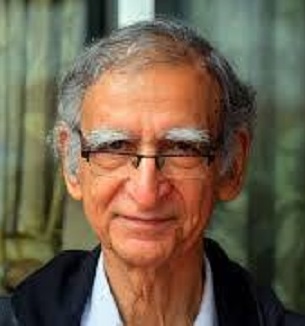
Ram Puniyani
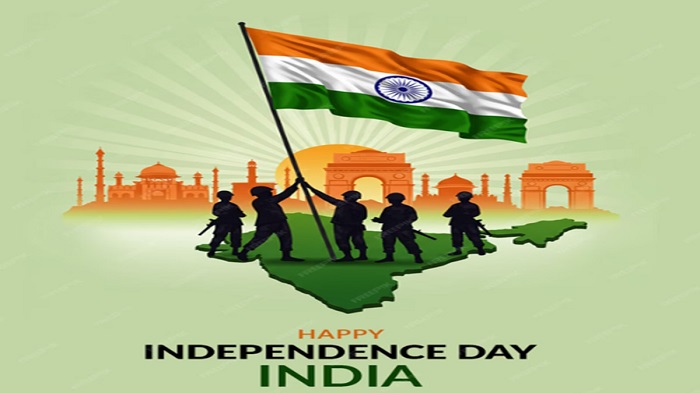
(Asian independent) Our Independence was the huge achievement of people’s struggle against the British. The Independence struggle had the participation of people of all religions, castes, genders, languages and ethnicities. The principles which guided our movement were Liberty, Equality, Fraternity and Social Justice. The likes of Bhagat Singh emphasized on the values of rights and liberty for all sections of society irrespective of the bondages of class and caste. Ambedkar focussed on Equality (social Justice) for the all the people, trying to break the bondages of Caste/Varna, and Gandhi who was overarching and leader of the movement emphasized on Fraternity. The people who supported them belonged to the rising classes industrialists, business men, workers, women and indigenous people. The triad of modern state was there in these three major icons, who left a deep impression on free India. It was these values of the Independence movement which form the foundational triad of Indian Constitution.
These rising classes, coming up due to industrialisation, communication and modern education, looked forward to a country where an inclusive nationalism will ensure the peace and progress of the country. Class-wise this was a broad generalization, while few exceptions were scattered here and there. To oppose or ignore these trends towards modern India, we also had the declining sections of earlier rulers/dominant sections of society who were steeped in the feudal values of hierarchy of caste and gender. Those; who were rooted in the values of patriarchy and glorified the times when the values of Kingdoms/feudalism prevailed. They mostly opposed the freedom movement and insisted on ‘glorious ancient’ times.
They imposed a method of looking backwards while walking forwards. These tendencies came from the landlords. Kings etc. who were scared of the ripples of empowerment of workers/Dalits/women and Adivasis. They typically glorified their kings of their religion and the social values related to those times. The Muslim League had mainly support from the nawabs and Landlords, while Hindu Mahasabha-RSS had supporters from Rajas, Landlords and clerics. They opposed the emerging values of democratic society, modern education for all and struggle against the British. These tendencies regarded religion as the base of Nation, well-articulated by Savarkar in his book, Hindutva or ‘Who is a Hindu’. This was a painful counter to the ongoing anti-British struggle of the national movement. The partition of the country on the basis of religion was the biggest stab in the back of Indian Nationalism.
The Constituent Assembly well represented the diversity of the country. Ambedkar who had burnt Manu smriti was asked to chair the crucial drafting committee. Soon after the Constitution was formed, the RSS mouthpiece Organiser came with a scathing criticism of this on the grounds that it does not have the ancient values of Manu smriti. The images of Ambedkar and Nehru were burnt by these elements.
The independent India had the twin leadership of Nehru-Patel, both staunch followers of Gandhi. While Patel successfully integrated most of the Princely states, Nehru implemented the vision of Modern India by ensuring that the Constitution is implemented in letter and spirit. ‘One person One Vote’ was implemented successfully and roots of democracy were planted deep with Nehru’s undying faith in democracy and secularism, which in a way are twins. His plan of Modern education (IITs, IIMs, AIIMS to name a few) laying the foundation of the public sector, focus on irrigation and implementation of reservation policy did ensure some march towards equality. Some commentators who compare Pakistan and India’s plight a few decades earlier stated that India’s achievements and Pakistan’s failure (In education, industrialization) can also be attributed to many factors, but the central factor was the presence of Jawaharlal Nehru in India.
Now from the last few decades the rise of Hindu right wing, RSS and its progeny have changed the direction of national goals and ideas. Now authoritarian politics in the name of Hindu religion is taking the CenterStage, and has undermining the idea of India which emerged during our freedom movement. Those who were standing on the by lanes and opposing the freedom movement and its values of inclusion and equality of all are now dominating and the development of the country has come to a halt. The walls of hate against religious minorities are out to demolish the values of fraternity in our society. The recently held movement against the failure of the examination system has definitely broken the arrogance of this regime, but the direction and goals of Hindu nationalism are very much intact. The battle to restore our democratic spirit and values of the Indian constitution needs a protracted and long struggle.
RSS combine has sowed hatred very deep in the society, it has also infiltrated all the facets of Indian state. The dissatisfaction due to its policies has peaked and surfaced strongly with the Cockroach movement. This has ensured that the inhibition imposed by the ‘elected autocratic’ regime may loosen up a bit for the time being. The deeper wound inflicted by the RSS combine may not be easily overcome. It has affected the body politics in a very deep manner. A regime change from the one committed to Hindu nationalism to the one devoted to the Indian Constitution is what is needed in the due course. The false hood-based narratives which have made a place in popular understanding need to be countered by the narratives built around love and friendship of Indian people from centuries, the narratives around which Bose, Gandhi, Patel and Nehru strove to instil them among the in the Indian people. The Jantar mantar phenomenon is the first step towards recovering India’s being as the centuries old civilization struggling to make its deserving place in the comity of nations.
The condition of minorities needs to be brought to the level of ‘equal citizenship’. The Authoritarianism of the Government needs to be undone and we need to resume nation building on a rational and scientific basis. The Jantar mantar initiative is just the beginning, a long way to go to restore the dreams of Gandhi and Ambedkar, Bhagat Singh and Subhash Bose, Maulana Azad and Sardar Patel. Wishing all a happy Independence Day.