Sumana Adak

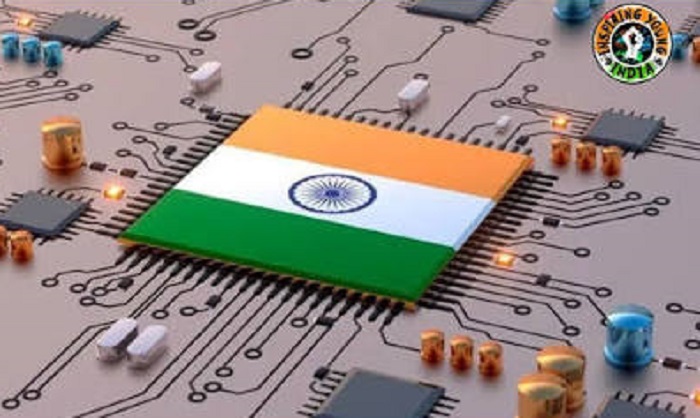
(Asian independent) The race for semiconductors is no longer confined to technology companies. From smartphones and electric vehicles to artificial intelligence, healthcare, telecommunications and defence, chips have become critical to modern economies. As countries seek to reduce vulnerabilities in global supply chains, India is positioning itself as an emerging destination for semiconductor manufacturing and technology.
The ambition was prominently showcased at SEMICON India 2026 in New Delhi, where global technology and semiconductor companies gathered to discuss investment, manufacturing and supply-chain opportunities.
Prime Minister Narendra Modi said India was preparing to meet growing global demand for reliable semiconductor manufacturing. He also highlighted the fact that chips produced at Indian facilities are beginning to reach both domestic and international markets.
The push comes against a backdrop of disruption in the global semiconductor industry. The Covid-19 pandemic exposed the risks of concentrated supply chains, while geopolitical tensions and trade restrictions have added further uncertainty. Major semiconductor production remains concentrated in a relatively small number of economies, making supply-chain resilience a strategic concern for governments and companies.
India’s response has been to combine financial incentives with infrastructure development, technology partnerships and skills training.
Under Semicon 2.0, approved by the Union government in July, an outlay of ₹1,27,500 crore has been announced. The programme covers semiconductor fabrication, packaging, equipment and materials, chip design, research and development, and the development of a wider semiconductor ecosystem.
The country’s industrial base is also beginning to take shape. Government data indicates that five semiconductor units have entered commercial production. Tata Electronics is developing a semiconductor fabrication facility in Dholera, Gujarat, alongside an outsourced semiconductor assembly and test facility in Assam. Micron has also commenced commercial production of DRAM and NAND at its Gujarat facility.
For India, the significance extends beyond factories. The semiconductor industry requires engineers, researchers, technicians, designers and highly specialised manufacturing professionals. The government says around 70,000 design engineers have already been trained over the past four years, with further expansion of technical education and skills development planned.
Global companies including Foxconn, Intel, Micron, ASML and Applied Materials have shown interest in India’s expanding semiconductor ecosystem. Their involvement reflects the importance of international technology, equipment and manufacturing expertise in building an industry that is technically complex and capital-intensive.
But the road ahead remains demanding.
Countries such as Taiwan, South Korea, Japan, the Netherlands and China have spent decades developing semiconductor expertise, supply chains and research capabilities. India is attempting to build several parts of this ecosystem at the same time.
The challenge will therefore be to move beyond individual projects and create a reliable, globally integrated semiconductor ecosystem from research and chip design to fabrication, packaging, testing and advanced manufacturing.
For India, the semiconductor opportunity is ultimately about more than producing chips. It is about becoming part of the infrastructure that powers the next generation of the global digital economy.
The foundations are now being laid. Whether India can convert policy support, investment and its large pool of technical talent into sustained global competitiveness will be determined by execution, technological capability and the ability to build an ecosystem at scale.