

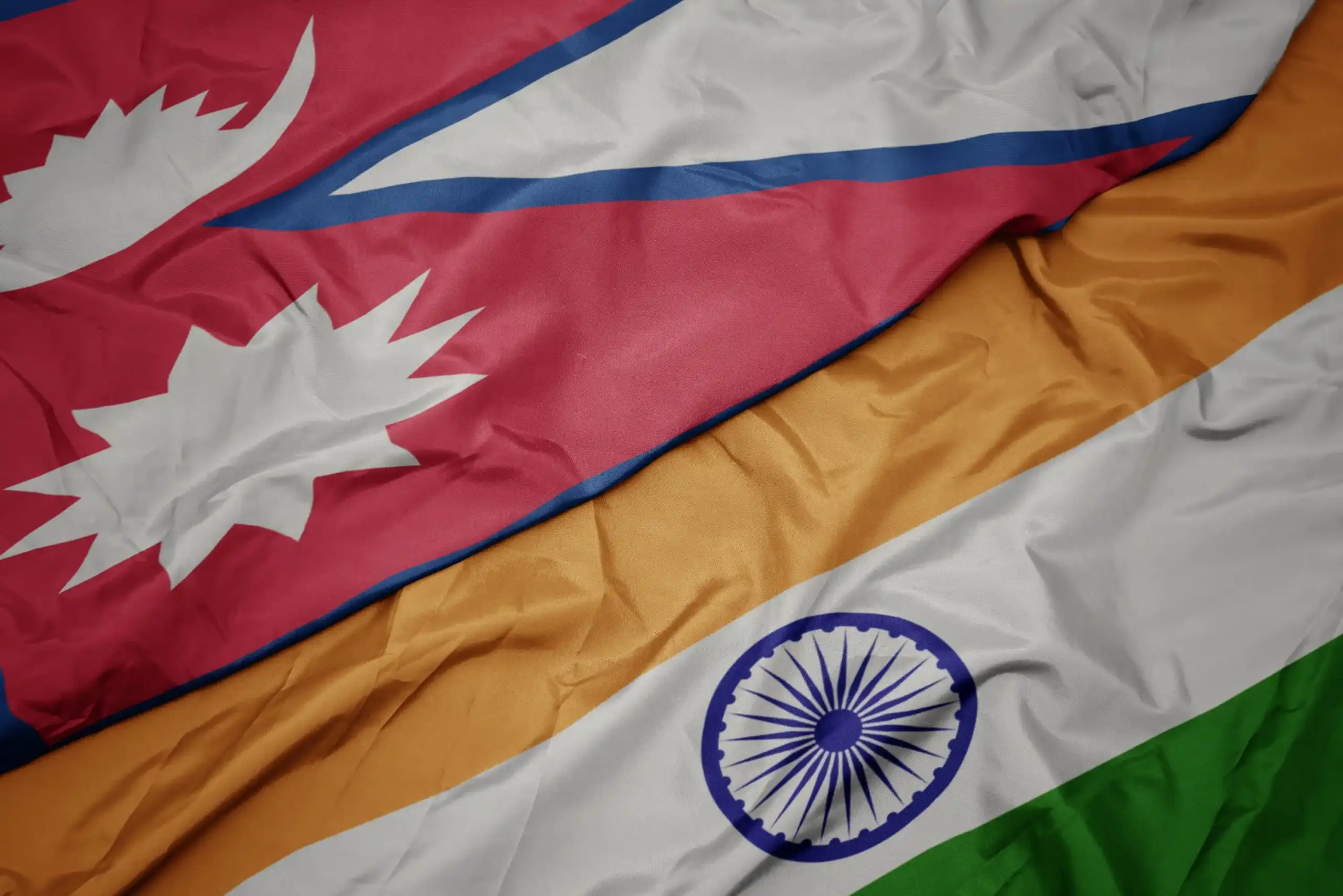

(Asian independent) India and Nepal rarely need reminding of their closeness. Geography, history, culture and generations of movement across an open border have created one of South Asia’s most distinctive relationships. Yet its next chapter should be shaped by a more practical question: can the two countries build institutions capable of managing their deep interdependence? For people on both sides, bilateral relations are not an abstract diplomatic exercise. The border is crossed for employment, education, healthcare, trade and family ties. Nepal’s access to Indian markets, ports and transport networks is economically important, while India has substantial interests in Nepal’s stability, hydropower potential and regional connectivity. The relationship should therefore increasingly be judged by what it delivers for ordinary citizens. An open border loses some of its value if legitimate travellers and traders encounter unnecessary administrative obstacles. A hydropower agreement achieves little without the transmission infrastructure required to carry electricity. A road or railway corridor has limited economic impact unless it reduces costs, delays and uncertainty.
The open India–Nepal border remains one of the relationship’s defining characteristics. But openness also presents challenges, including trafficking, smuggling, document fraud and other forms of cross-border crime. Stronger coordination is necessary, but excessive securitisation risks undermining the social and economic exchanges that make the border exceptional. A more effective approach would involve systematic cooperation among local administrations, police, customs authorities and governments on both sides. The objective should be clear: strengthen security while preserving legitimate movement and commerce.
Climate vulnerability presents an even stronger case for deeper cooperation. Floods, landslides and extreme weather do not respect national boundaries. Disasters in Nepal can affect downstream communities in India, while damaged roads and other infrastructure can disrupt trade, electricity transmission and cross-border movement. Disaster preparedness should therefore become a central pillar of bilateral cooperation. A Himalayan resilience framework could bring together real-time river and weather information, coordinated early-warning systems, pre-monsoon exercises, search-and-rescue protocols and joint training for disaster-response personnel. Such measures would give practical meaning to the frequently invoked idea of a special relationship. A timely flood warning reaching a vulnerable community can demonstrate the value of bilateral cooperation more powerfully than another diplomatic declaration.Making connectivity count
Infrastructure provides another important test of the relationship. Roads, railways, integrated check posts, electricity transmission lines and digital networks have the potential to transform bilateral economic relations. Their success, however, should be measured by outcomes rather than announcements. Customs-clearance times, border congestion, freight costs, transit reliability and the completion of agreed infrastructure are more meaningful indicators of progress than the number of agreements signed. Greater transparency over implementation would also strengthen accountability and public confidence.
A durable partnership does not require the absence of disagreement. Boundary questions, air connectivity, trade, transit and concerns over political interference will continue to test relations. But differences need not repeatedly develop into diplomatic crises. Sensitive disputes are better addressed through established diplomatic and technical mechanisms than through nationalist rhetoric. As the larger neighbour, India has a particular responsibility to demonstrate sensitivity, transparency and respect for Nepal’s political space. Nepal, meanwhile, can pursue strategic autonomy without defining it primarily through distance from India. Expanding its international partnerships and maintaining productive relations with its closest neighbour need not be contradictory objectives.
Future upper-level engagement should provide an opportunity to establish a longer-term bilateral agenda centred on disaster resilience, humane border governance, education and opportunities for young people, digital connectivity, trade and transit, and faster implementation of existing agreements. Crucially, commitments should be matched by institutions responsible for delivering them, realistic milestones and mechanisms for reviewing progress. India–Nepal relations have repeatedly passed through cycles of warmth, disagreement and reconciliation. Difficult periods are often followed by calls for another diplomatic “reset”. But another reset is no longer enough. The traditional vocabulary of friendship, specialties, misunderstanding and interference does not adequately reflect the challenges confronting two deeply interconnected societies in an era of climatic, economic and geopolitical uncertainty. India and Nepal do not need to rediscover their historical closeness. They need to modernise the institutions that sustain it.
Ultimately, success will be measured not by diplomatic declarations but by tangible outcomes: whether borders function more efficiently, infrastructure is completed, electricity reaches markets, young people find greater opportunities and disaster warnings reach vulnerable communities in time. That is the partnership India and Nepal now need: resilient, practical and equipped for the challenges of a changing region.