

Balram Sampla
A Political Analysis

Geopolitics
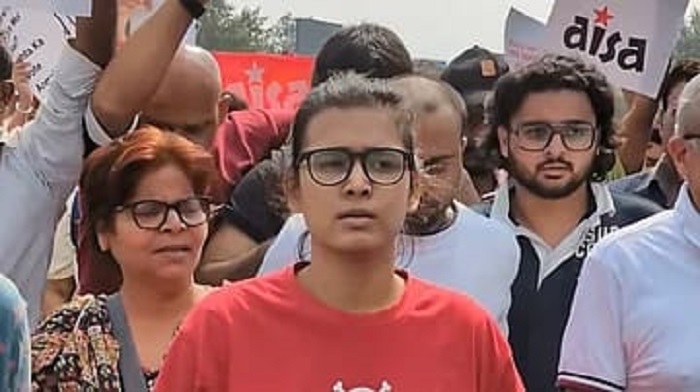
(Asian independent) The Cockroach Janta Party (CJP) and student groups such as All India Student Association (AISA) have been protesting in Delhi. It’s the student wing of the CPI(ML) Liberation, a left-wing political party in India, and it’s active mainly on university campuses.
They demanded the resignation of Chief Election Commissioner Gyanesh Kumar over alleged electoral roll irregularities and the Special Intensive Revision (SIR).
The police response has been heavy, and people disagree sharply about whether it was justified.
The Case For The Police
Supporters of the crackdown say protests in a capital city need rules. Delhi Police said they denied permission because the notice was filed late. Marching to a restricted site without permission can disrupt traffic and security, and a police force that lets every unapproved march proceed would lose control of public order. Protesters reportedly surrounded a police bus carrying detained leaders to stop it from leaving, which they see as obstruction.
Supporters also argue that detention, which usually means release within hours, is milder than arrest or force. Some writers go further and say activists exploit legal gaps to stir unrest.
The Case Against The Police.
Critics say the scale of the response was disproportionate to a protest over an election issue. One report says more than 7,000 protesters were detained at multiple locations in a single day, and journalists carrying ID cards were detained too. Critics note that three CJP leaders were detained on arrival at the airport, before they had joined any march, which suggests the aim was to prevent the protest, not manage it.
AISA also alleges that its president was taken in a vehicle without a number plate and with no female officer present. For critics, peaceful assembly is a constitutional right, and “no permission” can’t justify blocking an entire movement. They also point out that CJP leaders said they would ask police for a date for a peaceful protest, which hints that a negotiated route existed.
Conclusion
Both sides have a point. Police do have a duty to keep order, and permission systems exist for a reason. But the right to protest means little if permission can be withheld on a technicality and detentions are used to stop a gathering before it starts. The test is proportionality: whether the response matched the actual risk. Courts and independent inquiries are better placed to answer that than the activists or the government, since each has its own stake.
References
1.https://www.theweek.in/news/india/2026/10/10/aisa-leader-neha-bora-detained-near-dilli-haat.amp.html
2.https://dailypioneer.com/news/cjp-protest-over-200-detained-as-marches-defy-curbs
3.https://arynews.tv/delhi-police-releases-aisa-president-neha-bora-following-jantar-mantar-protest
4.https://www.deccanchronicle.com/amp/nation/union-govt-goes-all-in-to-thwart-cjp-protest-planned-on-saturday-1994798
5.https://www.newslaundry.com/2026/10/10/aisa-leader-neha-detained-during-delhi-protest-demonstrators-surround-police-bus