THE ASIAN INDEPENDENT UK
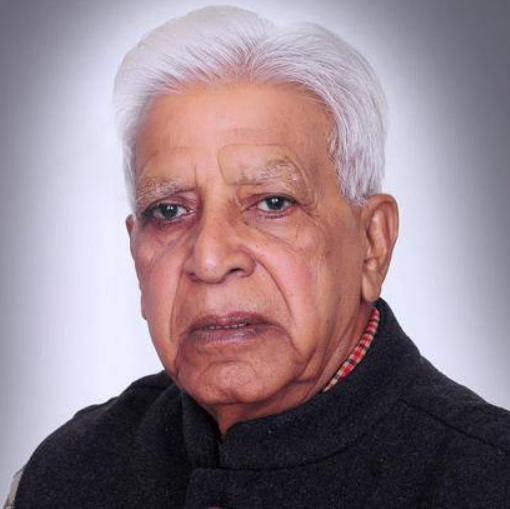
DR.Ramjilal, Social Scientist,
Former Principal, Dyal Singh College,
Karnal (Haryana, India)
Email: [email protected]
Currently, approximately 40% of teaching staff in Haryana’s colleges and universities are guest or ad-hoc contract teachers. Data from Kurukshetra University, Maharshi Dayanand University, and Chaudhary Devi Lal University indicate that in the academic year 2024-2025, over 3,200 teachers were employed under this system. Furthermore, 40% of Haryana’s government colleges are operating without regular principals, and more than 4,900 faculty positions remain vacant (source: https://indianexpress.com/…/haryana-govt-colleges…/). Notably, reservation policies do not apply to these positions, leaving qualified candidates from Scheduled Castes, Backward Classes, and Economically Weaker Sections excluded for years.
In the case of “Madan Singh vs. State of Haryana” on July 12, 1924, the Supreme Court upheld the validity of regularisation policies, stating, “backdoor entry without open competition is illegal.” The Supreme Court did not ban reservations; instead, it raised serious concerns about the process of “backdoor entry without open competition.” Anti-reservation advocates have misinterpreted this ruling to suggest that reservations cannot be implemented, which is incorrect and contrary to the principle of “social justice” enshrined in the Indian Constitution. On May 27, 2026, the Punjab and Haryana High Court ordered the regularisation of 12,700 guest teachers in Haryana government schools, affirming the validity of the regularisation policy and acknowledging that the petitioners met the necessary conditions. Justice Sandeep Moudgil’s bench emphasised that teaching is not a “stop-gap arrangement” ,but rather the foundation of society and the nation; teachers should not be treated as expendable resources (source: Dainik Tribune, Chandigarh, May 28, 2026, p. 1).
The Ad-Hoc Cycle: 11 Months + 1 Day Break:
A significant flaw in the current system is the “artificial break” imposed on ad-hoc teachers. Colleges typically issue appointment letters for 11 months. After showing a brief one or two-day break during the summer vacation, they rehire teachers for another 11 months. While the term “ad hoc” is used, many teachers have effectively been in these roles for years. Advertisements in newspapers clearly state that vacancies for the 2026-2027 academic year are only available for temporary contracts, with eligibility requirements mirroring those for permanent positions, yet salary details are not provided. This is where the exploitation of ad-hoc teachers becomes evident. The advertisements often do not mention reservations, leading to two significant issues. First, since the positions are classified as temporary, the reservation roster does not apply. Consequently, principals, heads of departments, and management committees tend to favor their preferred candidates for extended periods. Second, young candidates from SC, BC, and EWS categories miss out on opportunities, even when they possess qualifications such as NET or PhDs.
Constitutional Position: Reservation is Not Limited to Permanent Positions:
Article 16(4) of the Indian Constitution allows the state to provide reservations for adequate representation in state services. The Constitution does not state that reservations apply only to “permanent posts.” The term “post” encompasses any responsible role for which the government pays a salary. The Supreme Court’s ruling in the 1992 case “Indira Sawhney and Others vs. Union of India” highlighted that the purpose of reservations is to ensure participation from all social classes in administration. When a post has been filled ad hoc for three to four years, it should be considered permanent. Denying these posts reservations under the guise of temporality contradicts the spirit of social justice enshrined in the Constitution. The Punjab and Haryana High Court stated in CPW P 15 234-2023 that while reservation applies to sanctioned posts, the government can define what constitutes a “sanctioned post.” If the state cabinet decides that a post held for more than 11 months will be treated as sanctioned for roster purposes, this decision will be considered valid.
Suggestions to Address the Problem:
The Haryana Government’s Education Department should adopt the principle of reservation for ad hoc appointments. The following suggestions are proposed:
1. Definition of Approved Post: Any teaching or non-teaching position filled on an ad hoc, guest, or contract basis for more than 11 consecutive months, or a total of 11 months within three years, should be classified as an approved post for the roster. A break of less than 90 days will not be considered continuous, as it is deemed legitimate. The responsibility to provide evidence of this should lie with the principal of the college and the Vice Chancellor of the university.
2. Mandatory Open Advertising: All ad hoc, guest, and contract appointments should be advertised on the websites of colleges and universities and in at least one national newspaper. This measure will help prevent backdoor recruitment through walk-in interviews.
3. Diversity in the Selection Committee: The selection committee should include a nominated member from the SC/ST category and an expert for diversity. This approach will ensure a balanced perspective and reduce the potential for discrimination.
4. Implementation of a 100-Point Roster: The 100-point roster for direct recruitment should be applied to all ad hoc appointments. This would allocate 20% for SC, 11% for BC(A), 6% for BC(B), 10% for EWS, and 4% for disabled persons. Horizontal reservations should be provided, and the backlog should be calculated from April 1, 2026, with all future appointments filled accordingly.
5. Maximum Tenure and Obligation of Regular Recruitment: No individual should remain in an ad hoc appointment for more than two consecutive academic sessions. In its ruling on July 12, 2024, the Supreme Court stated that regularisation without adherence to due process was illegal. However, it also indicated in paragraph 53 that the appointment of qualified individuals could be considered, provided that the key elements of open advertisement, merit, and a transparent roster process are followed. Thus, this would align with the Supreme Court’s order, rather than violate it.
6. Ensuring Transparency: The Haryana Higher Education Department should establish a central portal to upload all advertisements for ad hoc appointments, roster points, and selection lists of every college and university, ensuring transparency throughout the process.
In summary, the manipulation of ad hoc appointments must be addressed, as these positions are not exempt from reservation. Education is a public good, and Article 16(4) of the Constitution applies to ad hoc appointments as well. Implementing reservations for ad hoc appointments in Haryana would be a significant step towards social justice. The Haryana Cabinet should take action and issue instructions to enforce this principle effectively.