THE ASIAN INDEPENDENT UK
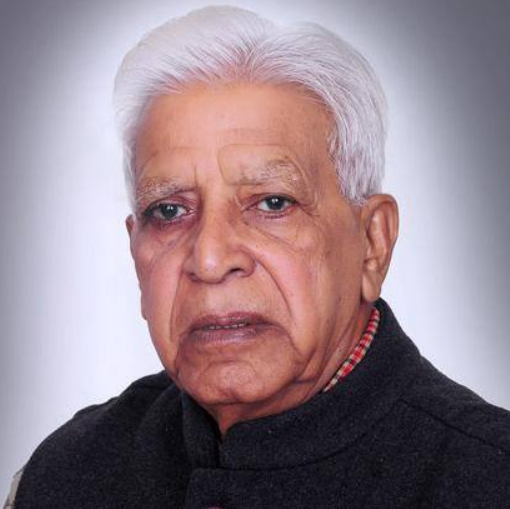
Dr RAMJILAL,
Social Scientist and Former Principal,
Dyal Singh College, Karnal (Haryana, India).
Email: id-[email protected]
Brief:
The history of subaltern movements in India from 1857 to 1946–1947 encompasses several critical uprisings that highlight the struggles of marginalised communities against oppression. Noteworthy events during this period include the Chuar Rebellion (1767–1809), Pahari Rebellion (1778), and the Bhil Rebellion (1817–1819, 1824). Other significant movements include the Kol Rebellion (1831–1832), Kutch Disturbance (1815), Kittur Rebellion (1824), and the Khasi Rebellion (1829–1833). Additional uprisings like the Singphos Rebellion (1830), the Mer Rebellion in Rajputana (1824), the Ho Rebellion in Chota Nagpur (1831), the Koli Rebellion in Bombay Presidency (1831–1832), and the Khond Rebellion in Orissa (1837–1856) also played vital roles in shaping resistance.
Key events from this era include the Santhal Hul Rebellion in Bihar (1855–1856) and the Indigo Rebellion (1859–1860). Later movements, such as the Deccan Agrarian Riots (1875), Koya Rebellion (1879–1880), and Munda Ulgulan (1899–1900), further contributed to the subaltern resistance landscape. The Tana Bhagat movement in 1919, the Moplah Rebellion in Malabar (1921), the Rampa Rebellion (1922–1924), and the Zeliangrong Movement in the 1930s are also significant in the context of India’s struggle for independence. The Warli Rebellion (1945–1947), Tebhaga Movement (1946–1947), and Telangana Rebellion (1946–1951) represented critical struggles as India approached independence.
Expansions:
Ongoing Struggles for Water, Forests, and Land:
For over a century, India’s Adivasi and farmer movements have grappled with crucial questions regarding the rights to water (Jal), forests (Jungle), and land (Zameen). This resistance has persisted from the Tana Bhagat movement in 1919 to current struggles in regions such as Hasdeo, Niyamgiri, Sijimali, Gadchiroli, and Bastar. Despite evolving methods of exploitation, the conflict over land, forest, water, and livelihood rights remains unresolved. The Tana Bhagat movement, alongside other tribal struggles during the colonial period, aimed to combat land alienation, excessive taxation, the influence of moneylenders, and restrictions on traditional forest rights. Similarly, Birsa Munda’s movement sought to challenge the colonial land system and reclaim tribal control over land and communal life. These movements have forged a lasting tradition wherein land for Adivasis represents more than mere property; it embodies livelihood, identity, culture, and collective existence.
Shifts: Post-Independence Era:
Following India’s independence, the nature of threats to Adivasi rights transformed. Large-scale projects such as dams, steel plants, mines, and industrial townships were promoted as conduits for national development. However, these initiatives displaced millions, disproportionately affecting Adivasi communities. The Narmada Valley stands as a significant example of resistance against displacement justified by development narratives.
The economic reforms initiated in 1991 marked a further shift. The era of liberalisation, privatisation, and deregulation amplified the influence of private capital in sectors like mining, energy, infrastructure, and industry. Adivasi-rich regions in Odisha, Jharkhand, Chhattisgarh, and Maharashtra have increasingly become targets for investment, driven by the rising commercial value of minerals such as coal, iron ore, and bauxite. This ongoing struggle underscores the resilience of Adivasi communities in advocating for their rights to resources essential for their survival and identity.
The process of land acquisition by corporations often involves various mechanisms, rather than simply purchasing tribal land outright. Companies may engage in activities such as auctioning or leasing mineral blocks, acquiring government land, obtaining private land, or diverting forest land with statutory approval. Additionally, they can operate mines through arrangements known as mine developer and operator contracts. This raises significant questions not only about land ownership but also about who controls the resources beneath and around the land, the duration of that control, and the terms associated with it.
The economic implications of these activities are substantial. Recent government coal auctions have opened up significant opportunities for commercial mining. For instance, by the 14th auction round, a total of 141 coal mines had been auctioned, with a projected annual production capacity exceeding 366 million tonnes. Regions such as Odisha, Jharkhand, Chhattisgarh, and Madhya Pradesh are major players in this expansion, highlighting the scale at which mineral-rich areas are being developed for commercial production.
However, the financial remuneration for land does not necessarily reflect the true value of the natural resources extracted. A notable case is the examination conducted by the Comptroller and Auditor General (CAG) regarding land acquisition linked to Vedanta at Lanji Garh in Odisha. Here, approximately 117.98 acres were sought for industrial development, with compensation reaching around ₹9.86 crore. This case raises broader issues about whether the compensation provided adequately considers the long-term value of the minerals, forests, water, and livelihoods affected by such industrial activities.
The Niyamgiri movement in Odisha stands as a pivotal example in this context. Communities such as the Dongria Kondh resisted the proposed bauxite mining operations associated with Vedanta. A Supreme Court ruling in 2013 reinforced the necessity for Gram Sabha consideration of religious, cultural, and customary rights, leading to the rejection of the mining proposal by the involved Gram Sabhas. The Niyamgiri struggle underscored the critical role that democratic community institutions can play in safeguarding tribal rights.
In Kalinganagar, Odisha, resistance from farmers and Adivasis against land acquisition for industrial projects, including a Tata Steel initiative, highlighted the conflict between industrial growth and the rights of people whose agricultural lands are being taken. The long-standing protests against the POSCO project in Jagatsinghpur similarly illustrated how local communities mobilised against potential loss of land, forests, and livelihoods due to industrial investments.
The situations in Singur and Nandigram in West Bengal expanded the discourse on land acquisition beyond tribal areas, as farmers opposed the confiscation of agricultural land for industrial projects, like the Tata Motors project in Singur. Intense local resistance in Nandigram against proposed land acquisitions also established the need to connect the issue of land to livelihood and democratic consent.
In Chhattisgarh, the movement has taken a pronounced form, particularly in the Hasdeo Arand region, recognised as one of India’s leading Jal-Jungle-Zameen movements. The Hasdeo forests are vital to Adivasi communities, providing resources for agriculture, forest produce, water, and livestock. Coal mining activities have fostered ongoing opposition from local residents, including women, farmers, environmental groups, and civil society organisations.
Furthermore, the case in Hasdeo illustrates the complexity of corporate relationships in major projects, as multiple legal entities may be involved in coal blocks, mining leases, power companies, and mine developer and operator arrangements. While Adani is associated with some of these projects, it is overly simplistic to characterise Adani as the owner of the Hasdeo forest. The primary concern lies in understanding how state-controlled resources, forest clearances, mining rights, and corporate operations interact within this system.
Similar conflicts have emerged in regions like Bailadila and Bastar, where iron-ore mining raises significant concerns regarding forests, land, and tribal livelihoods. In Maharashtra, Adivasi communities and Gram Sabhas in Gadchiroli and Surjagarh have opposed mining projects, seeking recognition of their community rights. In Odisha, places like Sijimali and Kashipur have become focal points of resistance against bauxite mining and its associated impacts.
Water issues are increasingly critical in this discourse. Industries such as mining, aluminium production, steel manufacturing, and thermal power generation consume significant quantities of water. The destruction of forests or extraction activities in hilly areas may disrupt springs, streams, and agricultural systems, further emphasising the intertwined nature of water, fo
Water issues are increasingly critical in this discourse. Industries such as mining, aluminium production, steel manufacturing, and thermal power generation consume significant quantities of water. The destruction of forests or extraction activities in hilly areas may disrupt springs, streams, and agricultural systems, further emphasising the intertwined nature of water, forests, and land. Therefore, the concepts of Jal, Jungle, and Zameen must be regarded as interconnected components of an ecological and economic system.
Legislative measures, such as the Forest Rights Act of 2006 and the Panchayats (Extension to Scheduled Areas) Act (PESA) of 1996, establish a legal foundation for community rights. The Forest Rights Act recognises both individual and community forest rights, including rights to community forest resources, while PESA assigns critical responsibilities to Gram Sabhas in Scheduled Areas. However, the implementation of these laws remains inconsistent, and conflicts over land acquisition continue to arise.
Understanding Resource Conflicts through a Marxist Lens:
The Marxist perspective on resource conflicts presents a complex view that goes beyond simply identifying disagreements over land. These conflicts often involve the transformation of communal resources into commodities that facilitate capital accumulation.
Central to this understanding is Karl Marx’s concept of primitive accumulation, which provides a historical framework for examining these dynamics. David Harvey further developed this idea with the term “accumulation by dispossession”, which describes contemporary processes that integrate land, natural resources, and communal assets into the capitalist economy. This perspective is particularly pertinent in the context of Adivasi regions in India.
For instance, a forest that is integral to an Adivasi community for sustenance, medicine, fuel, fodder, water, and cultural identity can be drastically re-evaluated when viewed from an economic standpoint. In this lens, the forest may be seen merely as a source of valuable minerals such as coal, iron ore, and bauxite ore. Consequently, natural features are reinterpreted: hills become categorised as mineral deposits, forests may be targeted for land diversion, water is regarded as an industrial resource, and agricultural land is often repurposed for industrial development.
The State (Government)-Corporate Nexus:
The state’s role is crucial in this transformation. Contrary to the belief that neoliberalism diminishes state influence, the state actively shapes the legal and administrative structures that facilitate the auctioning of mining blocks, the granting of leases, the acquisition of land, the diversion of forests, and the construction of infrastructure. This interconnectedness between corporate capital and state power plays a pivotal role in resource exploitation.
Dispossession often leads to proletarianisation, where Adivasis, having lost their land and forests, are forced into roles as agricultural labourers, wage workers, migrants, or precarious industrial workers. Households that once relied on a combination of cultivation, forest gathering, and livestock may transition to dependency on uncertain wage labour.
However, Adivasi struggles represent more than just class conflict; they embody multifaceted struggles encompassing issues of class, land, labour, culture, identity, gender, ecology, and self-governance. This richness underpins the democratic significance of movements like Jal-Jungle-Zameen.
Recommended Policy Changes:
To address these issues, India requires a development policy that recognises affected communities not as impediments to investment but as essential stakeholders. Full implementation of the Forest Rights Act and the Panchayats (Extension to Scheduled Areas) Act (PESA) is necessary, rather than merely procedural. Additionally, transparency regarding mining leases, auction processes, forest diversions, environmental clearances, rehabilitation packages, and corporate agreements is essential.
Compensation alone is not sufficient. Families that lose land must have access to sustainable livelihoods, adequate employment, housing, education, healthcare, and social security. Community rights over forests and water resources should be safeguarded, with particular attention given to women, who are often disproportionately affected by the loss of these resources and must be empowered in local decision-making processes.
Furthermore, the economic benefits derived from mining should be equitably shared with the communities and regions from which resources are extracted. Independent social and ecological audits should evaluate not only corporate investment and productivity but also the broader impacts, such as displacement, pollution, biodiversity loss, agricultural degradation, and water depletion.
The Legacy for the Future:
The historical context, ranging from figures like Tana Bhagat and Birsa Munda to movements in Narmada, Niyamgiri, Kalinganagar, Singur, Nandigram, Hasdeo, and Sijimali, illustrates that resistance has continually prompted Indian society to reevaluate the concept of development.
Looking ahead, a broader coalition comprising Adivasis, farmers (Kisans), agricultural labourers, workers, women, environmental organisations, and democratic entities is essential. Such unity can effectively align the struggle for land with the quest for fair wages, food security, employment, ecological advocacy, and social justice.
The central questions for India’s future are not whether development is necessary, but for whom it is intended, who exercises control over it, who benefits from it, and who bears its social and ecological costs. When natural resources are converted into private wealth while the communities that have historically maintained them lose access to their land, forests, water, and livelihoods, development transforms into a mechanism of dispossession.
The ongoing struggles of the Adivasi and Kisan movements offer a vision for a development model grounded in the principles of Jal, Jungle, Zameen, democratic consent, social justice, ecological respect, and public accountability. The collective struggles from 1919 to 2026 reflect not only a history of protests but also a continuous effort toward a more equitable future.
In summary, the current The current neoliberal system is characterised by significant issues such as exploitation, hunger, unemployment, poverty, and rising inequality between the wealthy and the impoverished. To address these critical challenges, a shift towards a socialist model of society may be necessary. This transformation aims to eradicate these social and economic disparities and protect the population from corporate exploitation, ultimately promoting a more equitable distribution of resources and opportunities.
References:
>Lal, Ramji.Dr.(17/05/2023)https://samajweekly.com/tebhaga-kisan-andolan/
>Lal, Ramji. Dr. (13/08/2026). https://samajweekly.com/marxism-and-the-women-farmers-movement/
> Lal, Ramji. Dr. (11/06/2023). https://samajweekly.com/telangana-peasant-armed-struggle-1946-1951/
>Lal, Ramji, Dr. (September 14, 2026). Role of Tribal Kisan Movements in India’s Freedom Movement (Pre-1857 and Post-1857–1947): A Marxist Perspective. //https://theasianindependent.co.uk/role-of-tribal-kisan-movements-in-indias-freedom-movement-pre-1857-and-post-1857-1947-a-marxist-perspective/
> Lal, Ramji, Dr. (September 14, 2026). Role of Tribal Kisan Movements in India’s Freedom Movement (Pre-1857 and Post-1857–1947): A Marxist Perspective. https://samajweekly.com/role-of-tribal-kisan-movements-in-indias-freedom-movement-pre-1857-and-post-1857-1947-a-marxist-perspective/
>Lal, Ramji, Dr. (16 September 2026 Pratibimb Media) /https://pratibimbmedia.com/water-forest-and-land-a-century-of-tribal-and-agricultural-resistance-1919-2026/
>Marx, Karl. Capital: Volume I. Penguin Classics.
Harvey, David. (2003).The New Imperialism. Oxford University Press.
>Baviskar, Amita. In the Belly of the River: Tribal Conflicts over Development in the Narmada Valley. Oxford University Press.
>Sundar, Nandini. Subalterns and Sovereigns: An Anthropological History of Bastar. Oxford University Press.
>Xaxa, Virginius. (2008.) State, Society and Tribes. Pearson, 2008.
>Government of India. (2006). The Scheduled Tribes and Other Traditional Forest Dwellers (Recognition of Forest Rights) Act, 2006.
>Government of India. (1996). The Panchayats (Extension to Scheduled Areas) Act, 1996.
>Supreme Court of India. ( 2006) .Orissa Mining Corporation Ltd. v. Ministry of Environment & Forests, 2013.
>Comptroller and Auditor General of India. Reports on Land Management and Land Acquisition in Odisha.
>Ministry of Coal, Government of India. Auction/Allotment of Coal Mines.
>Ministry of Tribal Affairs, Government of India. Forest Rights Act: Monthly Progress Reports.
>Government of Odisha. Reports on mining, land acquisition and rehabilitation.
>Government of Chhattisgarh. Reports relating to mining, forest diversion and tribal areas.
>https://frontline.thehindu.com/the-nation/battleground-bastar-maoist-insurgency-counter-operations/article69396194.ece