
S.R. Darapur, IPS (Retd.)
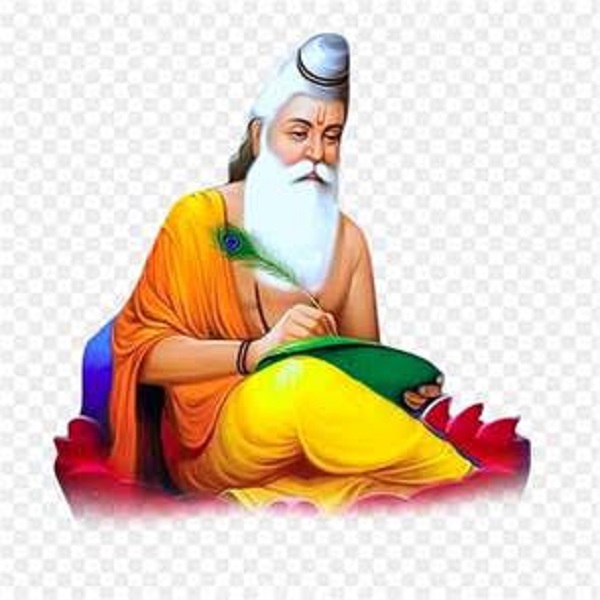
 (Asian independent) Today is Valmiki Jayanti. In my view, it is appropriate on this occasion to gain an accurate understanding of Maharishi Valmiki. Today, the sanitation worker community—a segment of which identifies as ‘Valmiki’—is likely celebrating Valmiki Jayanti with great fervor. It is fitting, therefore, to examine the connection between Maharishi Valmiki and the Balmiki community. Today, the Balmiki community regards Maharishi Valmiki as their spiritual leader and the *Valmiki Ramayana* as their sacred text.
First, regarding his origins: Maharishi Valmiki was neither an ‘untouchable’ nor a Shudra. In the *Ramayana*, he identifies himself as the son of Paracheta—who was the son of Varuna—and as the ninth son of the sage Kashyapa, who was a Brahmin. Thus, there is no doubt that Valmiki himself was a Brahmin. Furthermore, nowhere in the *Ramayana* does Valmiki advocate for the ‘untouchables’; instead, he portrays the indigenous tribes (Adivasis) as bears and monkeys (*vanaras*). In reality, the use of the name ‘Balmiki’ originated in Punjab, where the *Chuhra* caste is traditionally engaged in sanitation work. At that time, a large number of people from this caste in Punjab were converting to Christianity, leading to a decline in the Hindu population with each successive census. To halt this exodus, a Brahmin named Ami Chand Sharma authored a text titled *Balmiki Prakash*. He propagated the idea that Maharishi Valmiki was the spiritual leader of the *Chuhra* community and that the *Ramayana* was their sacred text. He urged them to identify themselves as ‘Balmiki’ rather than ‘Chuhra’ and to adopt ‘Balmiki’ as a surname. He very cunningly refrained from designating Valmiki as the primordial ancestor of the ‘Balmiki’ community—for had he done so, Balmikis could have laid claim to being Brahmins. In Bihar, a sub-caste of Brahmins, in fact, identifies itself as ‘Valmiki’.
It was from this point that the ‘Balmiki’ caste emerged; prior to this, they were known by names such as ‘Chuhra’, ‘Lalbegi’, and others. In his well-known book, *Main Bhangi Hoon* (‘I Am a Bhangi’), Shri Bhagwan Das—while tracing the history of ‘untouchable’ castes—writes: “In reality, to curb the influence of Christianity among the Chuhra community in Punjab, and to ensure that those engaged in sanitation work remained trapped in this degrading profession, Hindu leaders in Punjab bestowed the name ‘Balmik’ upon them; they even provided financial support to propagate this identity. ‘Chuhra’ was a derogatory term, so they came to be called ‘Jamadar’, and their caste identity was designated as ‘Balmiki’. However, the truth is that not all sanitation workers are ‘Balmikis’, nor are all ‘Valmikis’ sanitation workers. Those who perform sanitation work are known by various names.”
Therefore, today—on the occasion of Maharishi Valmiki Jayanti—it is appropriate, in light of the aforementioned facts, to reflect upon the connection between Maharishi Valmiki and the ‘Balmiki’ caste, as well as his role as the author of the *Ramayana*, a sacred religious text.