THE ASIAN INDEPENDENT UK

Bal Ram Sampla
Geopolitics
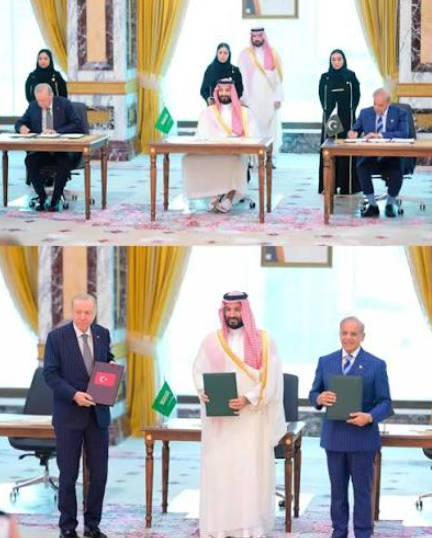
The signing of the Mecca Joint Defence Agreement by Saudi Arabia, Pakistan, and Turkey introduces a major shift in the security architecture of West and South Asia. While the pact is primarily framed as a defensive framework to address Gulf security challenges, its “attack on one is an attack on all” clause creates significant strategic considerations for India.
This will impact on India:
1. Increased Military Capabilities for Pakistan
The main concern for New Delhi is how this alliance strengthens Pakistan’s military standing.
(I) Defense-Industrial Boost: Combining Saudi capital with Turkey’s advanced military technology (such as drones, naval systems, and electronic warfare) significantly benefits Pakistan’s defense sector.
(II) Two-Front Technology Pipeline: India will have to monitor whether high-tech Turkish weaponry or joint production capabilities funded by Gulf capital enhance Pakistan’s conventional deterrence along India’s borders.
2. Complications for India’s West Asia Balancing Act
Over the last decade, India successfully built strong economic, security, and diplomatic partnerships with Gulf nations, particularly Saudi Arabia and the UAE.
(I) Diplomatic Delicacy: A formal Saudi commitment to defend Pakistan introduces friction into India’s efforts to isolate Islamabad diplomatically during South Asian crises.
(II) Seeking Assurances: India will seek quiet diplomatic guarantees from Riyadh that the agreement’s collective-defense mandate applies strictly to Middle Eastern contingencies and cannot be invoked by Pakistan in disputes over Kashmir or border tensions.
3. Shift in Maritime Security in the Indian Ocean
The pact emphasizes joint naval and security planning extending from the Red Sea into the Arabian Sea.
(I) Naval Vigilance: India relies heavily on these sea routes for its oil imports and commercial trade. A synchronized naval presence among Pakistan, Turkey, and Saudi Arabia forces India’s Navy to step up monitoring and presence in the Western Indian Ocean.
4. Pressure on Regional Trade Corridors (IMEC)
India has been a leading proponent of the India-Middle East-Europe Economic Corridor (IMEC), designed to connect India to Europe through the UAE, Saudi Arabia, Jordan, and Israel.
(I) Alternative Route Demands: Turkey has long sought to reroute trade through its own borders rather than bypassing Ankara. With Turkey now tied into a security agreement with Saudi Arabia, Ankara gains diplomatic leverage to push for modifications or delays to IMEC’s current layout.
Conclusion
India does not view the Mecca Joint Defence Agreement as an immediate direct military threat, as Saudi Arabia maintains deep economic reliance on India and has stressed the purely defensive nature of the deal. However, the agreement forces New Delhi to adapt by deepening security ties with alternative Gulf partners (like the UAE and Oman), closely tracking defense-technology flows between Ankara and Islamabad, and securing explicit diplomatic boundaries regarding South Asian security.
Conclusion
1.https://indianexpress.com/article/world/middle-east-mecca-joint-defence-agreement-saudi-arabia-turkey-pakistan-10823000/?hl=en
2.https://en.wikipedia.org/wiki/Mecca_Joint_Defence_Agreement?hl=en
3.https://www.ft.com/content/a988ae61-a218-4872-a4d7-a3061c6ca7ab?syn-25a6b1a6=1&hl=en-
4.https://www.commonspace.eu/node/14132?hl=en-
5.https://www.jpost.com/international/article-904833?hl=en-
6.https://timesofindia.indiatimes.com/toi-blogs/beyond-borders/why-the-houthis-are-no-longer-just-yemens-problem/articleshow/132819866.cms?hl=en-
7.https://breakingdefense.com/2026/08/saudi-arabia-turkey-pakistan-ink-joint-defense-agreement/?hl=en