THE ASIAN INDEPENDENT UK

Bal Ram Sampla
Geopolitics
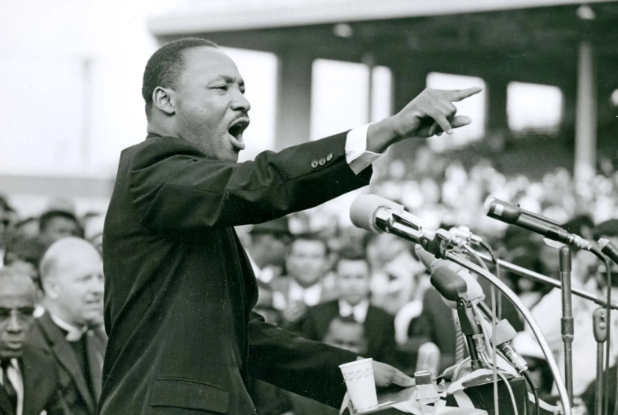
The version of Dr. Martin Luther King Jr. taught in schools and celebrated by major corporations is a myth. The political and corporate establishment has reduced his entire legacy to a single, safe sentence from 1963 about the “content of their character.”
This “whitewashing” was a tactical move born of deep fear. The elite urgently needed a safe, non-violent icon to quiet the rage of the Black masses and directly counter the revolutionary, uncompromised rise of Malcolm X.
To see the real history, we must confront a stark reality: the state-approved King is a fiction. Beneath the polished corporate image lies a deeply flawed human being whose private life, academic fraud, and late-career radicalism directly contradict the fairy tale of the perfect “man of God.”
1. The Weapon of Peace: Countering Malcolm X
In the 1960s, the ruling class faced an crisis: a boiling domestic rebellion led by a generation of Black Americans who were done waiting for basic rights. The ultimate symbol of this defiance was Malcolm X. Malcolm did not beg for integration; he demanded human rights, defended self-defense, and called white supremacy an incurable disease.
To crush Malcolm’s growing influence, the corporate and political elite elevated and distorted King. By promoting King’s early philosophy of non-violent, turn-the-other-cheek integration, the establishment signaled to Black America that this was the only acceptable way to protest.
However, this corporate sanitization entirely erased the radical King of 1967 and 1968. In his final years, King broke completely with the white liberal establishment. On April 4, 1967, at Riverside Church in New York, he delivered a searing anti-war speech, directly confronting his own government:
“I knew that I could never again raise my voice against the violence of the oppressed in the ghettos without having first spoken clearly to the greatest purveyor of violence in the world today: my own government.”
Dr. Martin Luther King Jr., “Beyond Vietnam: A Time to Break Silence” speech, Riverside Church, New York City (April 4, 1967).
By 1968, King shifted his focus from legal integration to a class-based war on economic inequality. He began explicitly attacking capitalism and organizing a multiracial coalition of the poor. In an interview published just days before his assassination, he stated plainly:
“In a sense you could say we are engaged in the class struggle.”
Dr. Martin Luther King Jr., interview with writer Jose Yglesias, published in The New York Times Magazine (March 1968, titled “The Dr. King You Don’t Know”).
By the time he was killed, King’s radical economic message had turned the country against him, polls showed nearly 75% of Americans viewed him unfavorably. The elite did not embrace King because he was safe; they killed his radical message and resurrected his ghost as a peaceful “corporate mascot”.
2. Plagiarism, Prostitutes, and Deception
To maintain this corporate myth, the establishment had to bury the deeply troubling realities of King’s personal life. For a man claiming divine authority as a Christian minister, King’s private record reveals a staggering double life.
First, his foundational intellectual achievements were built on deception:
(I) The Dissertation: In 1990, a formal investigation by the Martin Luther King Jr. Papers Project at Stanford University discovered that King had heavily plagiarized large sections of his 1955 doctoral dissertation at Boston University, systematically copying text from a fellow student, Jack Boozer, without proper attribution.
(II) The Speech: His iconic “I Have a Dream” speech heavily borrowed its imagery, structure, and the famous “let freedom ring” sequence from a 1952 address delivered by Black lawyer and politician Archibald Carey Jr. at the Republican National Convention in Chicago.
Second, declassified FBI surveillance files paint a picture of reckless personal behavior:
The Secret Tapes: Under J. Edgar Hoover’s COINTELPRO (Counterintelligence Program), the FBI heavily wiretapped King’s hotel rooms. Declassified intelligence summaries allege that King frequently hired both Black and white prostitutes. One specific memo details an incident in December 1964, claiming King’s entourage brought white prostitutes into their hotel rooms in Oslo, Norway, the night before he accepted the Nobel Peace Prize.
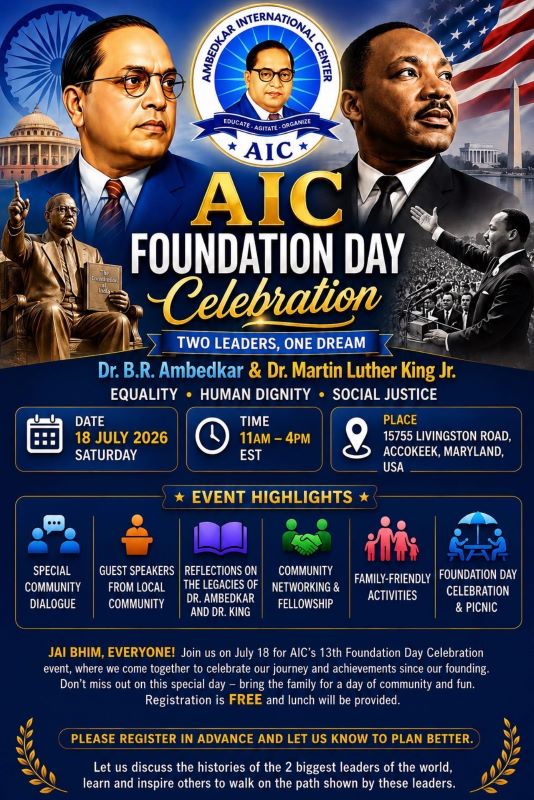 3. The Ambedkar Paradox: Is it a Wise Comparison?
When some organizations compare King with Dr. B.R. Ambedkar, they are engaging in a highly selective reading of history. While both led underclasses against ancient hierarchies (Jim Crow and the Hindu caste system), their structural attributes and lives were completely opposite.
Dr. Ambedkar was a man of uncompromising intellectual and personal discipline. He was a rigorous jurist, an economist, and a constitutional architect. Ambedkar knew that liberation would not come from appealing to the moral conscience of the oppressor. He famously rejected the spiritualized, non-violent persuasion tactics of Mahatma Gandhi, tactics very similar to King’s early methods. Instead, Ambedkar chose the path of hard legal engineering, codifying rights, quotas, and structural protections directly into the Indian Constitution.
Furthermore, Ambedkar’s personal life carried none of King’s moral compromises. When Ambedkar found the religious frameworks of his birth country structurally corrupt, he did not compromise; he formally renounced Hinduism and led millions of his followers to Buddhism
King, remained a Baptist minister while routinely violating his own theology in secret.
Historical Reality
(I) Primary Method
Dr. Ambedkar:
Constitutional law, institutional design, structural secession.
Dr. King :
Mass mobilization, moral persuasion, direct action.
(II) Intellectual Integrity
Dr. Ambedkar:
Rigorous academic; multi-disciplinary doctorates; original economic treatises.
Dr. King:
Heavily plagiarized PhD dissertation; borrowed core speech frameworks.
(III) State & Corporate
Dr. Ambedkar:
Treatment constantly resisted and marginalized by the ruling elite during and after his life.
Dr. King:
Sanitized post-death by the corporate state to serve as a pacifying historical icon.
Conclusion: Moving Beyond the Myth
The corporate sanitization of Martin Luther King Jr. serves the rulers, not the ruled. By erasing his late-stage critique of capitalism and amplifying his early calls for peace, the corporate elite created a narrative that instructs modern marginalized communities to wait patiently for justice.
Comparing King to Ambedkar is only wise if we strip away the state-sponsored mythology. The lesson of King is the lesson of the “flawed vessel”: a leader can be academically dishonest, personally compromised, and weaponized by the state, yet still possess a radical mass mobilization strategy that can be reclaimed by the oppressed.
Reference
1.https://en.wikisource.org/wiki/Page:FBI_File_104-10125-10133,_Martin_Luther_King_Jr.,_A_Current_Analysis.pdf/22?hl=en-
2.https://en.wikisource.org/wiki/Page:FBI_File_104-10125-10133,_Martin_Luther_King_Jr.,_A_Current_Analysis.pdf/22?hl=en-
3.https://mlk50.com/2019/06/06/concerning-david-garrows-allegations-against-dr-king/
4. https://www.businessinsider.com/fbi-tapes-allege-mlk-watched-rape-2019-5?hl=en-
5. https://www.wftv.com/unavailable-location/?hl=en-
6.https://features.apmreports.org/arw/king/d1.html?hl=en-
7.https://kinginstitute.stanford.edu/federal-bureau-investigation-fbi?hl=en