

THE ASIAN INDEPENDENT UK

Bal Ram Sampla
Geopolitics
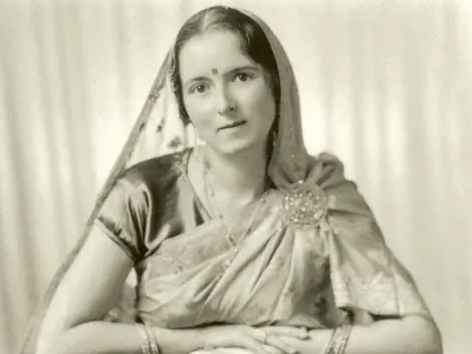
Savitri Devi was a European woman who became interested in Hinduism and Indian culture. Her real name was Maximiani Portas. She later moved to India and became interested in Hindu nationalism. At the same time, she strongly supported Adolf Hitler and Nazi ideas. Because of this, her political views were unusual and extreme.
Savitri Devi was critical of the Indian National Congress. She believed that India should be based on Hindu culture and that Hinduism was central to Indian national identity. She did not agree with the Congress idea of bringing Hindus, Muslims and other religious groups together as equal parts of one political nation.
Her attitude towards Indian Muslims was complicated. She did not simply say that all Muslims should leave India. Instead, she argued that Muslims could live in India if they placed India and Indian national identity above their religious or foreign loyalties. She believed that non-Hindus should become part of a mainly Hindu Indian culture.
Savitri Devi had a connection with Hindu nationalist leaders, including V. D. Savarkar. She also acknowledged the influence of Savarkar and other Hindu Mahasabha leaders. This shows that she was influenced by Hindu nationalist ideas during her time in India.
She had a more favourable opinion of Subhas Chandra Bose because Bose strongly opposed British rule and was willing to cooperate with Germany and Japan during the Second World War. However, Bose’s reasons were mainly political and anti-colonial, while Savitri Devi supported Nazi ideology itself. Therefore, it would be wrong to say that Bose and Savitri Devi had the same beliefs.
Her attitude towards Mahatma Gandhi was also complicated. She respected Gandhi as an important and powerful individual but strongly disagreed with his belief in non-violence. She believed that violence could sometimes be necessary.
Overall, Savitri Devi was a very unusual figure. She combined Hindu religious ideas, Hindu nationalism, European racial theories and Nazism. She was influenced by some Hindu nationalist thinkers, but her own views were much more extreme than those of ordinary Hindu nationalists. Her writings therefore show an unusual mixture of Indian nationalism and European fascist ideology.
Reference
1.https://savitridevi.org/savitri_devi_works/#books-as-maximine-portaz
2.https://www.yumpu.com/en/document/view/50214481/the-non-hindu-indians-and-indian-unity-savitri-devi-archive#google_vignette
3.Leidig, E. (2020). Hindutva as a variant of right-wing extremism. Patterns of Prejudice, 54(3), 215–237. https://doi.org/10.1080/0031322X.2020.1759861