SAMAJ WEEKLY UK
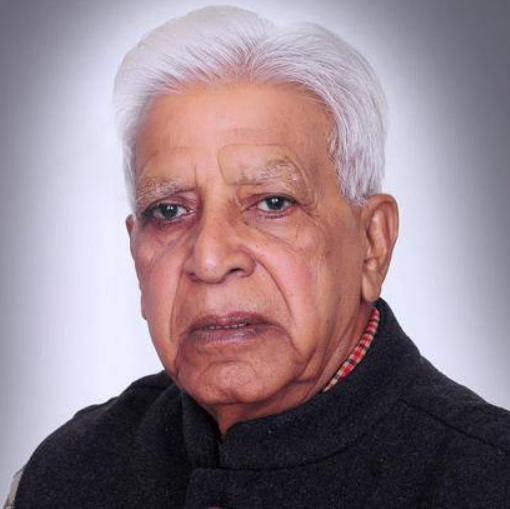
DR.Ramjilal, Social Scientist,
Former Principal, Dyal Singh College,
Karnal (Haryana, India)
Email: [email protected]
Introduction:
The Kamboja region, known in ancient history, was inhabited by Indo-Iranian Kshatriyas ,who occupied the southeastern part of the Iranian territories. This group represented the northernmost of the Iranian tribes that bordered the Indian subcontinent. The ancient homeland of the Kambojas encompassed areas such as the Pamirs, Badakhshan, and the Zeravshan Valley. Over time, they gradually expanded southward across the Hindu Kush into territories including Kunar, Swat, and Rajauri in Kashmir. The strategic location of the Kamboja region on vital trade and military routes connecting India with Central Asia fostered significant trade and cultural exchanges.
As noted in the Mahabharata, during his northern conquests, Arjuna defeated the Kambojas as well as the inhabitants of Dardars (or Dardistan) (Sabha 27, 25). Furthermore, the narrative details that Karna reached Rajpur and vanquished the Kambojas, subsequently establishing Rajpur as a city associated with them (Drona 4, 5).
The Kamboja Kingdom (Mahajanapada): A Martial Culture:
From approximately 600 BCE to 300 BCE, the Kamboja Kingdom emerged as a prominent and influential Mahajanapada, one of the sixteen great kingdoms of the time. This ancient kingdom spanned the northwestern region of India, and the Mahabharata depicts the Kambojas as a formidable and cohesively integrated warrior clan of the northwestern frontier. Historically, they were celebrated for their elite cavalry, distinct horse breeds, and resilient Kshatriya forces, as referenced in both the Mahabharata and a variety of Buddhist texts. The Bhishma Parva within the Mahabharata states, “The Kambojas live by weapons, and their horses are storms,” illustrating both their martial prowess and the cultural significance of their equestrian skills.
The Kambojas are characterised in the Mahabharata as residing in the cold, mountainous borders of the northwest, with their capital located in Rajapura (currently Rajouri in Jammu and Kashmir). Notably, the Mahabharata describes Kamboja as a republic (Ararashtra or Aratta), governed collaboratively by elected chieftains rather than a singular monarch. In the Drona Parva, their army is portrayed as an unstoppable force, likened to an overflowing river of marshal strength. Their bravery in battle, knowledge of the Vedas, strong unity, and formidable presence made them synonymous with danger, being described as “dangerous as a cobra”.
Kamboja warriors frequently offered their services as mercenaries to both the Kaurava and Pandava dynasties. The renowned white horses utilised in the Pandava army, including those used in Lord Krishna’s chariot, were sourced from Kamboja. These characteristics not only highlight their military strength but also underscore their unique social and political structure, as well as their significant contributions to the Mahabharata.
Prominent Kamboja Maharajas in the Indian Epic Mahabharata:
The Mahabharata identifies several notable Kamboja kingdoms and their rulers, among them:
1. Maharaja Kamath Kamboja: A distinguished Kshatriya known for maintaining amicable diplomatic relations with the Pandavas and for attending the grand inauguration of Yudhishthira’s palace in Indraprastha.
2. King Chandravarman Kamboja : Introduced in the early sections of the epic (Adi Parva), he is depicted as a handsome and renowned ruler, likened to “the moon, the king of stars.” He is mythologically recognised as one of the greatest “incarnations of the demon clan”.
3. Maharaja Sudakshina Kamboja: Mentioned as a key figure who attended Draupadi’s swayamvara, highlighting the Kamboja kingdom’s prominence and stature matched with Hastinapur (Adi Parva, Chapter 185, Verse 15). Sudakshina notably gifted a chariot drawn by white Kamboja horses to Yudhishthira for his royal Surya Yagna (Srota Sabha Parva, Chapter 53, Verse 5), emphasising the importance of these horses in the Pandavas’ military strategy.
4. Parama Kamboja: The Mahabharata also refers to another kingdom ruled by a prince named Parama Kamboja, identified in Greek sources as komedes.
These historical references illustrate the crucial role of the Kambojas with in the context of the Mahabharata, highlighting both their military significance and cultural impact.
Strategic Marriage Diplomacy Between Dynasties:
The narrative of strategic alliances during the epic tale of the Mahabharata unveils a fascinating tapestry of relationships and political maneuvering among ancient Indian dynasties. Central to this intricate web is Maharaja Sudakshina Kamboja, who formed a pivotal alliance with the Kauravas. His sister, Bhanumati—daughter of King Chitrang Kamboja and Queen Chandramudra Kamboja—stands out as a significant figure in the Kamboja Mahabharata. Bhanumati’s marriage to Duryodhana not only symbolises a union between their families , but also reflects the astute diplomatic strategies that characterised their era. This alliance fortified not just personal bonds but also entwined the political fates of the Kambojas and Kauravas.
Maharaja Sudakshina Kamboja’s resolve to support the Kauravas, especially Duryodhana and Jayadratha, during the tumultuous war against the Pandavas emanated from his unwavering commitment to the protection and dignity of his sister, who had become Duryodhana’s queen. This bond was steeped in familial loyalty and reinforced by their deep-rooted political connections, making their alliance formidable on the battlefield.
Conversely, within the Pandava camp, the ties of marriage continued to play a critical role in shaping allegiances. Shri Krishna’s sister, Subhadra, was united in matrimony with Arjuna, while Draupadi, the illustrious princess of the Panchala kingdom, became the wife of Arjuna as well. Folklore suggests that the five Pandavas shared a unique bond with her, further entwining the fates of these mighty clans. Through the diplomatic lens of familial connections, the alliance of Shri Krishna and the Panchalas with the Pandavas becomes crystal clear, as they joined forces in the great Kurukshetra war. Notably, Shri Krishna took up the crucial role of Arjuna’s charioteer, his chariot drawn by the noble Kamboja steeds, illustrating the intersection of kinship and martial strategy.
This episode from the Mahabharata transcends mere warfare; it delves into the complexities of relationships, alliances, and the delicate art of diplomacy. The interplay between heroes like Arjuna, known for his valour, and the sagacity of Shri Krishna, exemplifies how personal connections can influence the tides of war. Thus, this ancient saga unfolds not only as an account of conflict, but as an exploration of the profound significance of relationships, strategic diplomacy, and the intertwining threads of faith.
Were There Two Kamboja Kingdoms in the Mahabharata?: Maharaja Sudakshina Kamboja (South) vs Parama Kamboja (North):
The Mahabharata provides a captivating glimpse into the duality of the Kamboja kingdom, described through vibrant epithets such as “Tigmavega” (fast-moving), “Kurur Karman” (one with harsh deeds), and “Durmadada” (war-loving). This historical tapestry reveals \that Kamboja was not a singular entity ,but rather a province divided into two distinct realms: Maharaja Sudakshina Kamboja and Parama Kamboja.
The “Two Kambojas” theory elegantly reconciles apparent contradictions within the text and aligns the Mahabharata’s narrative with geographical realities. The southern Kamboja, led by Maharaja Sudakshina Kamboja, allied itself with the Kauravas, while its northern counterpart, Parama Kamboja, formed a bond with the Pandavas. This division is validated by historical references from Ptolemy, known as Komedes, and ancient Chinese sources, emphasising its significance in comprehending ancient Indian geopolitics.
Firstly, the principal Kamboja kingdom, under the leadership of Maharaja Sudakshina Kamboja, stood firmly with the Kauravas. A notable warrior in the epic, Maharaja Sudakshina commanded an entire akshauhini—a large military formation composed of Kamboja, Yavana, and Shaka warriors—to bolster Duryodhana’s forces. Positioned at the vanguard of Kaurava troops, he played a pivotal role in protecting key commanders. In a dramatic twist of fate during the 14th day of the Kurukshetra War, Sudakshina Kamboja clashed fiercely with Arjuna, landing a powerful blow that momentarily incapacitated him. However, Arjuna’s resilience led to a decisive victory, as he ultimately defeated and killed the formidable Kamboja king, highlighting the tension that persisted even after the war when Arjuna defeated Sudakshina’s son, Chandravarma.
On the other hand, Parama Kamboja, recognised for its elite cavalry, chose to align itself with the Pandavas. Several compelling factors influenced this choice, beginning with robust political ties formed between the Pandavas and Parama Kamboja, showcasing their united front against common adversaries.
Additionally, social dynamics played a crucial role, as the populace of Parama Kamboja harboured a favourable disposition towards the Pandavas, drawn by their valour and noble ideals. The economic landscape also favoured this alliance; Parama Kamboja’s prosperous territory provided an opportunity for enhanced resource utilisation alongside the Pandavas.
Furthermore, during their time of exile in the embrace of the Himalayas, Arjuna forged a significant friendship with Parama Kamboja. This bond fostered mutual trust and collaboration, illustrated through a treaty that would fortify their alliance.
Lastly, the strategic training provided by the Panchalas to Parama Kamboja’s cavalry enhanced their combat readiness. This critical preparation equipped them to face adversaries, bolstering their alliance as a formidable force on the battlefield. Thus, the intricate interplay of political, social, and military factors cemented a crucial alliance that would shape the outcomes of their shared struggles in a volatile historical landscape.
This strategy by Parama Kamboja proved to be a turning point in the Mahabharata war. Not only did he honour his friendship with Arjuna by sending his army and supplying it, but he also chose not to participate in the battle himself, marking a crucial moment in the conflict. Thanks to his sister Subhadra, Shri Krishna’s support provided a strong foundation for Arjuna. Additionally, because of Draupadi, the Panchalas stood by their son-in-law, Arjuna. Similarly, Shri Krishna rode into battle on a chariot drawn by Kamboja horses, wielding the Sudarshan Chakra as Arjuna’s charioteer. It is worth noting that Balarama did not participate in the war.
Kamboja’s decision illustrates that war is not merely a physical battle ,but also a complex game of strategy, friendship, and political dynamics. Thus, Kamboja not only protected his territory but also sought to influence the outcome of the Mahabharata war. The division of his army introduced new challenges, highlighting that every decision on the battlefield carries profound implications. Consequently, Kamboja’s choice and role became a significant chapter in the Mahabharata, reflecting the balance between friendship and policy.
The Kamboja Horses and the Mahabharata:
Regarding the Kamboja horses, the Mahabharata describes five characteristics that made them famous, earning them the title of “King of Horses”. Parama Kamboja’s cavalry rode horses of various colours, and their chariots displayed gold-painted flags. The entire army resembled a rainbow, adorned in colours like white, black, and spotted. According to the Drona Parva, these horses were not only colourful ,but also featured gold-painted chariot flags (Drona Parva 7.23.43).
In the Karna Parva, the Kamboja horses are renowned for their unparalleled speed. Their speed was such that even their manes, eyes, and ears remained unmoving while they ran. This suggests remarkable steadiness in their movements, as if they were tearing through the air (Karna Parva 7.36.36). These horses were distinguished not only by their swiftness ,but also by their strength and balance. Kamboja horses were known for their exceptional prowess on the battlefield, setting them apart from other horses. This characteristic served as a source of inspiration for warriors and demonstrated how a horse can fulfil its master’s desires.
Thus, the descriptions of the Kamboja horses’ speed and stability indicate that they were not only swift but also possessed a sense of dignity and power. The grandeur of Kamboja horses and the valour of their riders are unparalleled. These horses played a vital role in battle, and their decorations and ornaments gave them a unique identity. When Kamboja horsemen, adorned with gold ornaments, took to the battlefield (Drona Parva 7.23.42), the sight was akin to a grand fashion show. Their mere presence instilled fear in their enemies. The comparison to Yamaraja and Kubera (Drona Parva 7.23.42-44) emphasises their powerful and influential abilities. Kambojika horses were not just vehicles for riding; they were vital weapons in warfare. Their swiftness and might instilled fear in the enemy through their very presence.
In conclusion, the Mahabharata presents the historical Kambojas not merely as a regional tribe but as a foundation of geopolitical and marital influence in ancient India. Their story combines a unique frontier lifestyle with a deeply ingrained military doctrine that shaped the outcome of the Kurukshetra War. The Drona Parva vividly depicts Satyaki’s defeat of a powerful army comprising Kambojas, Yavanas, Shakas, Kiratas, and barbarians (Drona Parva 199, 45-48): ‘O King, Satyaki, slaying your (Dhritarashtra’s) army, filled the battlefield with the corpses of thousands of Kambojas, Shakas, Shabaras, Kiratas, and barbarians, causing a river of flesh and blood to flow there. The battlefield seemed to be filled with wingless birds with the heads of bandits, their shaved heads adorned with helmets and long beards.’
References:
1. Mahabharata, Gita Press, Sabha Parva, Bhishma Parva, Drona Parva, Ashvamedha Parva
2. Ptolemy, Geography, Book 6, Chapter 13
3. Strabo, Geography, Book 11.8.81
4. Arthashastra 2.30
5. Ashoka Edicts 5 and 13
• Lal,Ramji, Main Sources of the Ancient Indian Kamboja Mahajanapada: An Overview/https://theasianindependent.co.uk/main-sources-of-the-ancient-indian-kamboja-mahajanapada-an-overview/