THE ASIAN INDEPENDENT UK

Bal Ram Sampla
Geopolitics
History repeatedly proves that when a nation relies on moral persuasion instead of military strength, aggression is not prevented, it is invited. The classic example of this failure is British Prime Minister Neville Chamberlain, whose policy of appeasing Adolf Hitler in the 1930s led directly to the catastrophe of World War II. Two decades later, Indian Prime Minister Jawaharlal Nehru repeated Chamberlain’s mistakes with China, blinded by similar idealism. Nehru’s handling of Communist China was not pragmatic diplomacy; it was a policy of appeasement that traded real strategic security for a false sense of peace.
1. Surrendering Strategic Buffers for Promises
Appeasement begins when a leader surrenders concrete strategic assets in exchange for worthless verbal guarantees.
(1). Chamberlain at Munich (1938): Sacrificed Czechoslovakia’s Sudetenland to Hitler in exchange for a piece of paper promising “peace in our time.”
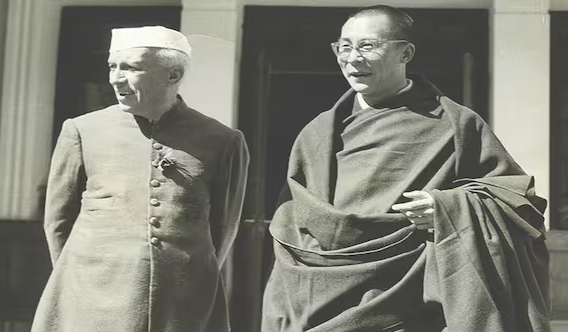
(2) Nehru’s 1954 Panchsheel Agreement: Handed over India’s inherited trade and military rights in Tibet to Beijing, formally recognizing Tibet as part of China. Nehru surrendered a crucial geographic buffer zone without securing a legally binding agreement on the border (the McMahon Line).
Both leaders gave away real leverage in exchange for empty pledges of goodwill.
2. Dismissing Internal Warnings
Neither leader failed due to a lack of warning; both actively chose to ignore realists within their own governments.
Chamberlain sidelined Winston Churchill and key military advisors who warned that Hitler understood only force.
Nehru ignored his own Deputy Prime Minister, Sardar Vallabhbhai Patel, who wrote a prophetic letter in November 1950 warning that Chinese expansionism in Tibet was a direct security threat to India. Dr. Ambedkar and others warned him. Nehru dismissed these concerns, preferring to believe that socialist China would never attack another Asian nation.
Comparison of Critical Failures
(1) Core Delusion:
Neville Chamberlain: Believed Hitler could be satisfied through rational negotiation.
Jawharlal Nehru: Believed China shared a brotherhood of anti-colonial unity (“Hindi-Chini Bhai-Bhai”).
(2) Concession
Chamberlain: Delayed full rearmament until it was almost too late.
Nehru: Starved the Indian Armed Forces of modern equipment and infrastructure.
(3) Military Readiness
Chamberlain: Allowed the annexation of Czechoslovakia’s defenses.
Nehru: Recognized Chinese sovereignty over Tibet, destroying the Himalayan buffer zone.
(4) Reality Check
Chamberlain: Invasion of Poland (1939).
Nehru: Sino-Indian Border War (1962).
3. Neglecting Defense in Favour of Moralizing
Appeasement is deadliest when combined with military neglect. While China actively built military roads—such as the highway through Aksai Chin—and fortified its forces in Tibet, Nehru focused on international moral leadership and global disarmament.
Under his government, the Indian military was left starved of modern weapons, winter clothing, and basic mountain warfare infrastructure. Nehru treated national defense as a secondary concern, convinced that his foreign policy would protect the border without the need for military readiness.
”We were living in an artificial atmosphere of our own creation.”
— Jawaharlal Nehru, addressing Parliament after the 1962 Chinese invasion.
Conclusion
The collapse of Nehru’s policy in October 1962 was as sudden and devastating as Chamberlain’s failure in 1939. When the People’s Liberation Army launched a massive assault across the Indian border, Indian troops were forced to fight without adequate weapons or supplies. The war ended in a humiliating defeat for India and destroyed Nehru’s reputation.
Nehru’s policy toward China was classic appeasement disguised as high-minded peacebuilding. By putting faith in declarations like Panchsheel over military deterrence, Nehru exposed India to strategic disaster. Like Chamberlain, he demonstrated that when leaders substitute wishful thinking for hard power, their nation pays the ultimate price.
Reference
1.https://en.wikipedia.org/wiki/1954_Sino-Indian_Agreement?hl=en-
2.https://tibetpolicy.net/indias-tibet-policy-time-to-turn-back-the-clock/?hl=en-
3.https://timesofindia.indiatimes.com/india/why-nehru-recognised-tibet-as-a-part-of-china-cds-anil-chauhan-explains/articleshow/128297244.cms?hl=en-
4.https://tibet.net/panchsheel-a-diplomatic-gimmick-or-strategic-surrender-a-tibetan-perspective/?hl=en-