Balram Sampla
Geopolitics

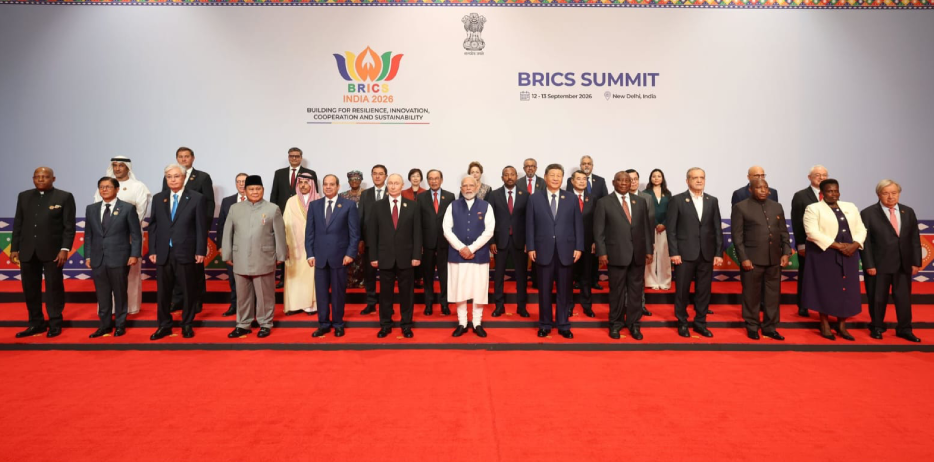
(Asian independent) The 18th BRICS Summit was held in New Delhi in September 2026 under India’s chairmanship. Leaders from Brazil, Russia, India, China, South Africa, Iran, Egypt, Ethiopia, Indonesia and the United Arab Emirates attended. The summit ended with the unanimous adoption of the 140-point New Delhi Declaration, covering trade, technology, global governance, security, health, energy and international cooperation.
For India, the summit was largely a diplomatic success.
India succeeded in bringing together countries with different political systems and interests. This was not easy because BRICS now includes countries with differing views on global issues, including China, Russia, Iran and the UAE. Despite these differences, India achieved consensus and presented itself as an important voice of the Global South.
India gained several advantages from hosting the summit.
(1) It increased India’s international influence. Prime Minister Narendra Modi met leaders such as Xi Jinping, Vladimir Putin and Masoud Pezeshkian, while India also continues strong relations with the United States, Europe and Japan. This reflects India’s policy of strategic autonomy.
(2) India promoted reforms of global institutions. BRICS supported greater representation for developing countries in organisations such as the United Nations, IMF and World Bank. India argues that countries of the Global South should become “rule-shapers” rather than merely “rule-takers”.
(3) The summit advanced practical cooperation. BRICS members agreed to continue work on local-currency trade, payment systems, digital infrastructure, technology cooperation and development finance. India also secured support for initiatives such as a BRICS Risk Lab in Gujarat and greater cooperation in industry, space and artificial intelligence.
Why did Western media give less attention to BRICS than to the G7?
One reason is that Western media naturally focuses more on organisations in which Western countries are members. The G7 consists of wealthy industrial democracies with close political and security ties, while BRICS is a more diverse group with different interests.
Another reason is that BRICS promotes a more multipolar world and often calls for reforms to institutions that have long been dominated by Western powers. These ideas do not always receive the same prominence in Western public discussion.
However, it would be wrong to say that Western media ignored the summit. Newspapers such as the Financial Times, Reuters and other international publications covered it. The issue is that BRICS still receives less sustained attention and prestige than the G7 in Western public discourse.
Conclusion
The 18th BRICS Summit was an important success for India. It strengthened India’s diplomatic position, enhanced its role in the Global South and demonstrated that India can work with both Western and non-Western countries. The summit also showed that the world is becoming more multipolar and that emerging countries increasingly want a greater voice in international affairs.