THE ASIAN INDEPENDENT UK
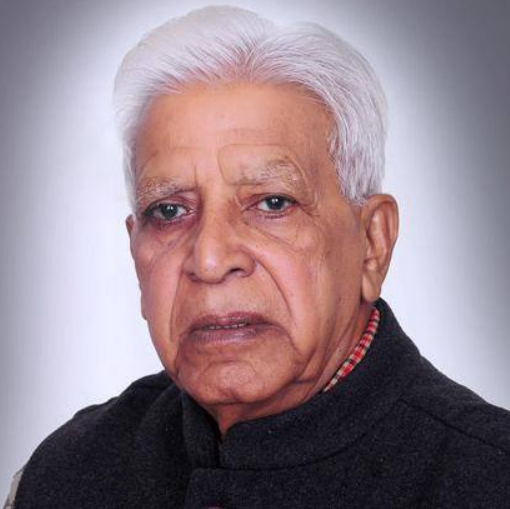
Dr. RAMJILAL,
Social Scientist and Former Principal,
Dyal Singh College, Karnal (Haryana, India).
Email: id-[email protected]
Brief: Decolonising History through a Class Lens:
The dominant historical narrative surrounding India’s liberation struggle often presents a perspective that is heavily influenced by bourgeois ideals. This narrative typically emphasizes a top-down approach, suggesting that India’s journey to independence was primarily driven by urban, English-educated elites and nationalist organisations. However, a thorough evaluation using a Marxist historiographical approach indicates that the true leaders of anti-colonial resistance were the subaltern masses. Long before the domestic bourgeoisie organised into political parties, India’s indigenous tribal (Adivasi) and peasant (Kisan) communities were engaged in persistent struggles against class exploitation and colonial capitalism.
From a Marxist viewpoint, the primitive accumulation of capital that occurred under the British East India Company—and subsequently the British Crown—necessitated the violent subjugation of India’s peripheral economies. The introduction of colonial legal frameworks into communal territories disrupted the self-sustaining tribal mode of production. As a result, there emerged a continuous chain of class conflict that extended through both the pre-1857 and post-1857 periods. This reality underscores the notion that “long before the urban bourgeoisie articulated abstract concepts of Swaraj, the tribal and agrarian proletariat were actively fighting on the forest paths to dismantle the material foundations of global imperialism.”
The Dialectics of Colonial Accumulation and the Diku Class (Outsider Class):
Before British colonisation, many tribal societies in India practiced collective land tenure systems, such as the Khun Katti system among the Munda community. The colonial administration dismantled these communal property arrangements to establish revenue systems designed for the extraction of resources for global markets. The introduction of cash crops, cash assessment of land revenue, and penetration of the Diku Class—the moneylenders at 50% to 100% interest—led to massive land alienation. The colonial census data shows between 1870 and 1930, tribal land alienation increased by over 40% in Bombay Presidency and Central Provinces. The Tribal Kisans faced triple exploitation: the colonial state extracting revenue and forest royalty, Zamindars extracting rent, and Mahajans extracting interest. This is what A.R. Desai calls the colonial-feudal-moneylender nexus. This transformation led to specific material grievances among the tribal populations. Consequently, the tribal revolts were against this nexus of colonial-feudal moneylenders. In the present context, it has taken a strong and powerful nexus of state (police, military, and paramilitary forces), corporate, contractors, bureaucracy, and politicians.
One notable aspect of this exploitation involved the ‘weaponisation of timber and forestry. The Indian Forest Acts of 1865, 1878, and 1927 allowed the colonial state to enclose forest commons, converting ancestral lands into state-owned commercial timber reserves. The scale of timber extraction was significant—by the early 20th century, the expansion of the British railway network to over 40,000 miles consumed millions of logs for railway sleepers. Between 1870 and 1920, revenues generated from colonial forestry increased by over 300%, directly contributing to the proletarianisation of the tribal communities by restricting their access to essential means of production. In other words, tribals became bonded labourers (Begari—forced labourers). This primitive accumulation is what Karl Marx called the expropriation of direct producers.
Additionally, the colonial legal framework facilitated the emergence of exploitative local structures. The state introduced and supported a triad of non-tribal intermediaries—Zamindars (feudal landlords), Mahajans (usurious moneylenders), and tax contractors—collectively known by the subalterns as Dikus. This arrangement further entrenched class disparities and facilitated the ongoing exploitation of tribal and peasant populations.
In summary, from a Marxist perspective, the Indian freedom movement was not merely a transfer of power in 1947 but a class struggle. Karl Marx, in ‘The Future Results of British Rule in India’ (1853), noted colonialism destroyed old modes without creating new productive forces. The tribal kisans (Adivasi peasants) represented the most exploited class—most dispossessed from their natural heritage rights—jal, jangal, and jameen (water, forest, and land). Consequently, their movements were proto-revolutionary.
The Reign of Feudal-Colonial Terror:
The extraction of wealth from rural hinterlands was not accomplished through administrative legislation alone; it was sustained by a deliberate, institutionalised reign of terror. An unholy alliance formed between the colonial military, local police, and the Zamindars, functioning as a unified apparatus of class suppression. When Kisans and Adivasis resisted illegal land seizures or extortionate taxes, they faced extreme violence.
Zamindars maintained private armies of thugs (known as lathiyals), who conducted midnight raids, burning entire villages, destroying crops, and subjecting peasant women to systemic sexual violence as a means of class subjugation. When these feudal methods encountered mass resistance, the colonial police and military intervened, employing the full power of the state. Peaceful gatherings were shattered by public floggings, summary executions, and mass hangings, all designed to instill terror in the survivors. Activists were shackled in heavy iron chains, their livestock confiscated, and entire villages subjected to punitive collective fines that drove them into absolute destitution. This systemic brutality demonstrated that colonial courts and law enforcement existed solely to protect elite property relations through the violent suppression of the agrarian working class.
Phase I: Pre-1857 Revolts: Confronting Early Primitive Accumulation:
The early phase of tribal resistance represents a direct response to the initial wave of British territorial annexation and revenue collection. These subaltern movements include the Chuar Uprising (1767–1809), Pahari Rebellion (1778), Bhil Rebellion (1817–1819 and 1824), Kol Insurgency (1831–1832), Kutch Disturbance (1815), Kittur Rebellion (1824), Khasi Rebellion (1829–1833), Singphos Rebellion (1830), Mer Rebellion in Rajputana (1824), Ho Rebellion in Chota Nagpur (1831), Kolis Rebellion in the Bombay Presidency (1831–1832), Khond Rebellion in Orissa (1837–1856), and the Santhal Hool Rebellion in Bihar (1855–1856). These uprisings were fierce attempts to defend local modes of production against early colonial capitalism. The following uprisings are particularly significant, as they were among the most vigorous resistances to colonial mercantilism and capitalism:
1. The Chuar Uprising (1767–1809): Following the East India Company’s acquisition of revenue rights (Diwani) in Bengal, the Chuar tribesmen of the Jungle Mahals revolted. Confronted with aggressive revenue demands and famine threats, these tribal cultivators and local militias launched a prolonged guerrilla campaign against colonial mercantilism.
2. The Kol Insurgency (1831–1832): The Kol uprising in the Chota Nagpur region illustrates class-based anger targeting property relations. The large-scale transfer of tribal lands to non-tribal outsiders sparked an organised armed revolt by the Ho, Oraon, and Munda populations. The rebels systematically targeted the economic symbols of their oppression, burning down landlords’ estates and moneylenders’ records.
3. The Santhal Hool (1855–1856) and 1857 Revolution: The largest pre-1857 explosion of subaltern resistance was the Santhal Hool, led by brothers Sidhu and Kanhu Murmu. The rebellion mobilised 60,000 Santhals in present Jharkhand and West Bengal against the permanent settlement revenue system, usurious moneylenders, and East India Company officials. Although the colonial state used martial law to brutally suppress the uprising, the struggle forced the administration to establish the Santhal Parganas as a protected district. reign of terror. An unholy alliance formed between the colonial military, local police, and the Zamindars, functioning as a unified apparatus of class suppression. When Kisans and Adivasis resisted illegal land seizures or extortionate taxes, they faced extreme violence. The reign of terror—declaration of martial law—crushed the movement, and 15,000 Santhal were killed. The Hool directly inspired the 1857 people’s revolution. During the 1857 people’s revolution, Santhals of Hazaribagh, Chhota Nagpur,Bhils of Khandesh under the leadership of Bhau Singh and Kartar Singh. Gonds of Chhindwara, and Kols of Singhbhum also revolted. Karl Marx, in his Notes on Indian History, clearly recognised these revolts as people’s war.
Phase II: Post-1857 Movements—The Convergence of Class and National Struggle:
The year 1857 marked a significant turning point in Indian resistance against colonial rule, as outlined by Karl Marx, who referred to it as a revolutionary peasant war. Following this watershed moment, tribal resistance adapted to confront a more organised and bureaucratic state capitalism. Several notable movements emerged during this period, including the Indigo Revolt (1859–1860), the Deccan Agrarian Riots (1875), and the Koya Rebellion (1879–1880). Additional important uprisings include the Munda Ulgulan (1899–1900), the Moplah (Malabar) Rebellion (1921), the Rampa Rebellion (1922–1924), and the Zeliangrong Movement (1930s). Here is a brief overview of these movements:
1. The Munda Ulgulan (1899–1900): This movement, also known as the Great Tumult, occurred in the Chota Nagpur region and was led by Birsa Munda (15 November 1875–9 June 1900). He was educated by missionaries, but rejecting them, he gave the slogan, ‘Let the kingdom of the queen be ended and our kingdom be established.’ In other words, it was like the ‘quit India’ slogan. While some colonial historians characterised it as a religious or messianic uprising, a materialist perspective highlights it as a clear class struggle against land alienation. Birsa Munda emerged as a revolutionary leader, mobilising the peasantry by intertwining the defence of their cultural identity with the reclamation of their collective land rights (Khuntkatti). The uprising notably targeted police stations, money lenders, Christian missionaries (churches), British, and landlords—a dialectical unity of anti-feudal and anti-colonial struggle. Birsa Munda was captured by the British and poisoned in Ranchi jail on 9 June 1900. He was not only a freedom fighter but also a martyr at the age of 24 years and the spirit and pride of the tribal movement. His martyrdom led to the enactment of the Chota Nagpur Tenancy Act of 1908.
2.The Moplah (Malabar) Rebellion (1921): This rebellion represented a significant agrarian class conflict in which Muslim tenant cultivators, known as Moplahs, rose against upper-caste Hindu landlords (Jenmis) and British authorities. Triggered by issues such as insecure tenancies, unjust evictions, and high rents, the peasants successfully challenged colonial authority across South Malabar before facing severe military repression, culminating in the tragic Wagon Tragedy.
3. The Rampa Rebellion (1922–1924): This uprising was a direct response to the Madras Forest Act of 1882, which criminalised the traditional Podu (shifting/slash-and-burn) cultivation practices in the Eastern Ghats. The rebellion was led by Alluri Sitarama Raju, who organised the local population into a disciplined guerrilla force. Raju’s strategy included targeted raids on colonial police outposts to acquire modern firearms.
4. The Zeliangrong Movement (1930s): Originating in the Northeast frontier, this movement was marked by unique class dynamics and was initially led by Haipou Jadonang and later succeeded by the young revolutionary Rani Gaidinliu. The movement evolved from a cultural defence association into a political revolt against colonial taxes and house duties.
In summary, the historical trajectory of tribal resistance in India illustrates a shift from localised messianic movements to highly organised guerrilla warfare aimed at challenging the broader networks of global trade and domestic landlordism.
Phase III: Late Colonial Radicalization—Peasant-Worker Solidarities and Women’s Vanguard:
As the national movement approached its climax, tribal and peasant movements experienced a significant ideological transformation, adopting Marxist-Leninist principles and forming alliances with the urban working class under Communist leadership. Key movements during this phase included:
1. The Warli Revolt (1945–1947): This uprising, organised by the Kisan Sabha and led by Godavari Parulekar, saw Warli tribal peasants in Maharashtra resist the oppressive systems of forced labour (veth-begar) and debt slavery imposed by landlords. The revolt ultimately dismantled landlord authority in the region, achieving notable milestones such as land reclamation, the abolition of forced labour, and the establishment of a minimum wage.
2. The Tebhaga Movement (1946–1947): Spearheaded by the Communist-supported Kisan Sabha in Bengal, this significant movement featured sharecroppers (Bargadars), including many from tribal and lower-caste backgrounds, who demanded to retain two-thirds (tebhaga) of their harvest instead of the customary half. A prominent aspect of this movement was the active involvement of women workers, who formed local armed defence committees known as Nari Bahinis to protect the crops from police and landlord syndicates. Bimal Majhi is renowned for her role in the peasant movement, particularly the Tebhaga movement, where women were also prominent. She was held by police for a month, facing 140 cases, and ultimately sentenced to two and a half years in prison.
3. The Telangana Insurgency (1946–1951): Representing the apex of armed subaltern revolt, this insurgency was led by the Communist Party of India in the Hyderabad Nizamate. Tribal and peasant guerrilla forces successfully liberated over 3,000 villages from feudal control, affecting approximately 3 million people across an area of 16,000 square miles. Prominent women leaders, such as Mallu Swarajyam, played critical roles, leading guerrilla squads against the Nizam’s paramilitary forces, the Razakars, thus establishing a groundbreaking model for gender and class liberation.
This collective effort included guerrilla squads numbering around 2,000 and a people’s militia of 10,000, which safeguarded villages and facilitated the distribution of about 1 million acres of land to the landless.
Among the reforms instituted by the revolutionary leadership were the reduction of exorbitant interest rates, the prohibition of forced labour, and the establishment of a minimum wage. This movement represented a profound alternative to bourgeois landlord rule in the countryside. Its significance was underscored by the potential for a qualitative transformation that could have merged the agrarian revolution with the national liberation movement, potentially altering the course of history.
Marxist Assessment—Significance of the Tribal Peasant Movements:
The tribal peasant movement has exposed the true nature of colonialism. While moderates continued to petition for councils, Tribal peasants continued to suffer the daily hardships of colonialism, facing injustice and exploitation in the form of eviction. A Marxist perspective exposes the dual nature of the Congress party. Initially, to maintain elite unity, the Congress avoided strong opposition and struggle against the landlord-, feudal-, and British alliance, instead appealing for some reforms. However, the tribal peasant movement attacked both colonial and local feudal forces and the Congress Party. Throughout British rule, tribal areas remained unregulated or disturbed. The British imperial government permanently deployed additional military battalions to suppress the movements in Chhota Nagpur, Bastar, and the Northeast. Localised communities, organised on tribal identity rather than class identity, were able to suppress them locally until the 1930s due to their lack of connection with the industrial proletariat.
Today’s struggles of tribal communities against displacement due to mining and dam projects, such as those in Narmada and Hasdeo Anand, reflect a continuing contradiction—the premature accommodation to neoliberalism. The slogan “Jal, Jungle, Jameen,” first raised by Komaram Bheem, remains highly relevant from a Marxist perspective. The freedom achieved in 1947 was incomplete for tribal people because feudalism, semi-feudalism, and land alienation persisted despite the abolition of the Zamindari system. The Forest Rights Act of 2006 serves as a delayed acknowledgement of their historical claims. The persistent challenges faced by tribal farmers are largely due to corporate exploitation, which is often backed by government policies. This situation highlights the ongoing conflict between the rights of indigenous agricultural communities and the interests of large corporations.
Ultimately, the demand for “land to tillers and dwellings to dwellers” encapsulates the centrality of land rights in this ongoing struggle, emphasising the interconnections between social equity and ecological sustainability.
For Further References
>Lal, Ramji.Dr.(17/05/2023). https://samajweekly.com/tebhaga-kisan-andolan/
>Lal, Ramji. Dr. (13/08/2026). https://samajweekly.com/marxism-and-the-women-farmers-movement/
> Lal, Ramji. Dr. (11/06/2023).https://samajweekly.com/telangana-peasant-armed-struggle-1946-1951/
>https://en.wikipedia.org › wiki › Chuar_Rebellion
>https://en.wikipedia.org/wiki/Birsa_Munda
>https://en.wikipedia.org/wiki/Malabar_rebellion
https://www.jstor.org/stable/4375596
>Dhawale, Ashok. (2020). https://peoplesdemocracy.in/2020/1025_pd/maharashtra-75th-anniversary-warli-adivasi-revolt-state-kis
>https://en.wikipedia.org › wiki › Zeliangrong
>https://ras.org.in/index.php/index.php?Article=the_kisan_sabha_and_adivasi_struggles_in_thane_district_after_1947
> Surjeet , Singh. Harkishan.( April-June, 1986The Marxist Volume: 04, No. 2
). Fifty Years of the Peasant Movement/ https://cpim.org/fifty-years-peasant-movement/
>Guha, Ranajit.(1983). Elementary Aspects of Peasant Insurgency in Colonial India. Oxford University Press.
>Desai, A.R. (1948). Social Background of Indian Nationalism. Popular Prakashan.
>Desai, A.R. (1979). Peasant Struggles in India. Oxford University Press.
>Guha, R. (1983). Elementary aspects of peasant insurgency in colonial India, Oxford University Press .
>Kosambi, D.D. (1956). An Introduction to the Study of Indian History. Popular Book Depot.
>Marx, K. (25 June 1853). The British rule in India, New York, Daily Tribune.
>Marx, K. (8 August 1853), The future results of British rule in India. New York, Daily Tribune.>Singh, K.S.Dr. (1982). Tribal movements in India (Vols.1-2), Manohar Publications.
>Singh, K.S. Dr. (1983). Birsa Munda and His Movement (1874-1901). Oxford University Press.
>Sarkar, Sumit. (1983). Modern India: 1885–1947. Macmillan, 1983.
>Habib, Irfan. (1995). Essays in Indian History: Towards a Marxist Perception. Tulika Books.
>Dhanagare, D.N.(1983). Peasant Movements in India 1920–1950. Oxford University Press..
>Parulekar, Godavari. (1975). Adivasis Revolt: The Story of Warli Peasants. National Book Agency.
>Sundarayya, Puchalapalli.(1972). Telangana People’s Struggle and Its Lessons. Communist Party of India (Marxist.
>Government of India (2006). Scheduled Tribes and Other Traditional Forest Dwellers (Recognition of the Forest Rights) Act.
>Lal,Ramji. Dr. (7 November 2025Pratibimb Media)
https://pratibimbmedia.com/the-long-red-journey-march-6-2018-march-12-2018-an-unparalleled-vast-sea-of-tribal-farmers/
> Lal, Ramji. Dr. (30 August 2026 Pratibimb Media). https://pratibimbmedia.com/the-evolving-nature-of-indian-farmers-movements-2000-to-2026-a-review/