

THE ASIAN INDEPENDENT UK
 Dr Ramjilal,
Social Scientist and Former Principal,
Dyal Singh College, Karnal (Haryana, India).
Email ID: [email protected]
Brief:
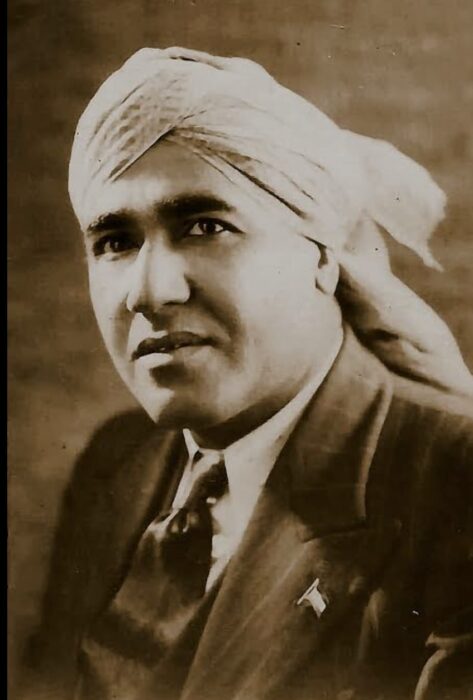
On the morning of 31 July 1940, amidst the struggle for India’s independence, a charismatic 40-year-old Indian stood smiling on the gallows at London’s Pentonville Prison; his name was Udham Singh. On 13 March 1940, he shot Michael O’Dwyer, the former governor of Punjab, at Caxton Hall. The British believed the matter ended with his execution. However, Udham Singh was not merely an individual; he was a symbol of an idea of resolve born from the soil of Jallianwala Bagh on 13 April 1919. As we observe Martyrdom Day on 31 July, it is crucial to view Udham Singh not just as a nationalist driven by revenge ,but also as a socialist, revolutionary, nationalist, secularist, internationalist, and advocate for the eradication of the caste system. His life and ideals embody the spirit of a true hero, serving as an inspiration for the current generation.
Expansion:
Birth and Early Life:
Udham Singh was born on 26 December 1899 in the Pilbad neighbourhood of Sunam, located in the Princely State of Patiala (now in Punjab). He belonged to the Jammu *Gotra* (clan) of the Kamboj community. His mother, Smt. Narayani Kaur, and father, S. Tehal Singh Kamboj, originally named him Sher Singh. After the deaths of his mother in 1901 and his father in 1907, Sher Singh and his brother, Sadhu Singh, were admitted to the Central Khalsa Orphanage in the Putli Ghar area of Amritsar. According to the orphanage’s official records, both underwent a naming ceremony in accordance with Sikh traditions on 28 October 1907. After the ceremony, Sher Singh was renamed Udham Singh (Serial No. 1308), while Sadhu Singh became Mukta Singh. The name ‘Udham Singh’ signifies a lion capable of stirring up a storm. Following the death of Mukta Singh, Udham’s life became solitary. He passed his matriculation examination in 1918, left the orphanage, and twice enlisted in the army.
Personality and Influences Shaping His Life:
Udham Singh’s personality and values were shaped by various influences throughout his life. Pivotal experiences, such as losing his parents and his brother Mukta Singh during childhood, along with growing up amidst deprivation, loneliness, and poverty, played a significant role in moulding him into a courageous and determined individual. The exploitation of Indian resources by British imperialists, the atrocities committed against Indians, and the widespread poverty, starvation, and unemployment deeply affected his worldview. A crucial turning point in his political ideology came with the Jallianwala Bagh massacre in Amritsar on 13 April 1919, which was a defining event in his life.
Udham Singh was influenced by several prominent figures, including Swami Shraddha Nand and revolutionaries from the Ghadar Party, such as Lala Har Dayal, Professor Mota Singh, and Sardar Basant Singh. He drew inspiration from various movements and ideologies, including the Babbar Akali movement, Marxism, Leninism, and Bolshevism. His friendship with Bhagat Singh had a profound impact on him, as Bhagat Singh was his mentor and closest companion. Several revolutionary organisations, such as the Babbar Akali Movement, the Hindustan Socialist Republican Association (HSRA), the Electricians’ Union (England), the Indian Workers Association (IWA), and the Ghadar Party (USA), played a pivotal role in shaping his worldview.
He established contact with the Irish Republican Army, learning how to manufacture bombs from them. Udham Singh believed that British imperialism was not merely an Indian issue, as Ireland and Africa were also enduring subjugation, and that the struggle against it should, thus, have an international scope. To unite Indians for revolutionary activities, he formed the “Azad Party” in London. His association with Bhagat Singh and the HSRA further inspired him to embrace socialist revolutionary ideals; as a result, he is often referred to as a “Sikh Punjabi Marxist”. He was also influenced by Baba Jwala Singh’s book, Ghadar. After his release from prison in 1931, where he served a five-year sentence for revolutionary activities, Udham Singh travelled to Germany via Kashmir, successfully evading the Intelligence Department and the Punjab Police, eventually arriving in London in 1934. In London, he worked as a mechanic for an engineering company and appeared as an extra in films to earn money.
Aliases: London Metropolitan Police Report (File):
Revolutionaries often adopt various disguises and aliases to evade capture. To conceal his identity, Udham Singh frequently changed his name and attire. Like Bhagat Singh, he abandoned the traditional symbols of Sikhism, became clean-shaven, and began wearing hats and smart suits. According to the London Metropolitan Police file (Police file MEPO 3/1743), he used numerous aliases throughout his relatively short life to hide his identity, including Ude Singh (an affectionate diminutive and a variant used during his early life and travels), Sher Singh, Uday Singh (in the Ghadar Party), Frank Brazil (in Africa), Ude Singh (in films), Udban Singh, Udham Singh (in his passport), Udham Singh Kamboj, Mohammad Singh Azad (in London), and Ram Mohammad Singh Azad (during court proceedings and while in custody).
The Metropolitan Police report (File MEPO 3/1743, dated March 16, 1940 describes him as an active, widely travelled, politically motivated, and secular-minded young man with lofty life goals and a deep hatred for British rule in India. While in custody at Brixton Prison on April 6, 1940, he identified himself as Ram Mohammad Singh Azad, a name symbolising India’s three major religions and the concept of freedom. However, on the same day, he wrote from Brixton Prison stating that Chamberlain (the then Prime Minister of the UK) had referred to him as “Mohammad Singh” in the House of Commons. As a result, he was registered in the prison records as “Mohammad Singh” rather than “Ram Mohammad Singh Azad.”
Assassination of Michael O’Dwyer at Caxton Hall, London (March 13, 1940:
On March 13, 1940, while Michael O’Dwyer was delivering a speech at a meeting of the Royal Central Asian Society, Udham Singh—who had concealed a revolver inside a hollowed-out book kept in his coat pocket—rose from his seat and fired six shots. He shot Michael O’Dwyer, the former Lieutenant Governor of Punjab, twice, killing him instantly. He also targeted Lord Zetland, Sir Louis Dane, and Lord Lamington, but they survived. Shouting the slogan “Down with British Imperialism”, Udham Singh surrendered to the police. His action drew global attention to the failures of the British Empire’s bureaucracy and intelligence agencies.
According to a report titled “The Caxton Hall Outrage” by the Intelligence Bureau of the Home Department, Government of India, dated April 16, 1940, “A diary found in his possession immediately after his arrest contained entries revealing that he had noted down Sir Michael O’Dwyer’s personal addresses. The diary also included notes such as ‘Action’, ‘Only the way to open the door’, ‘My last month’, and ‘I have seen the world. The only ambition I have left is to see India free.’ Against the date of March 13, it was written: ‘3 PM Caxton Hall S.W.1 Meeting.’ (Source: National Archives of India, Government of India, New Delhi; Political, General, 1940, File No. 41-G/40). Waris Shah’s Punjabi epic *Heer Ranjha* is a book upon which oaths are sworn. Udham Singh wrote a letter to his friends asking them to arrange for a copy of *Heer Ranjha,* stating, “If you can arrange for the book *Heer Waris Shah,* I would like to take it with me to the Old Bailey to swear an oath upon it.” (M. Singh, Letter from Brixton Prison, dated April 6, 1940).
Trial, Hunger Strike, and Execution:
During his trial, Udham Singh undertook a 42-day hunger strike and insisted that his actions were part of his duty towards his country. After being found guilty of murder, he was executed by hanging at Pentonville Prison in London on July 31, 1940.
Primary Sources of Thought:
The primary sources of Udham Singh’s thought include statements made in court and letters written from prison (including those from Brixton and Pentonville). These letters were addressed to officials and friends and reveal his ideological connections with figures like the martyr Bhagat Singh. Early members of the Ghadar Party and associates of Udham Singh sometimes looked towards the Russian Soviet regime or the ‘Third International’ for international solidarity against British imperialism.
Udham Singh’s ideology remains relevant in today’s socio-political landscape:
Following the end of British imperialism, the disintegration of the Soviet Union led to the proliferation of various ideologies, such as neoliberalism, privatisation, globalisation, and commercialisation. This shift has given rise to new forms of neo-imperialism and economic and cultural subjugation, affecting numerous aspects of life, including education, which is increasingly dominated by profit-driven entities often referred to as “Merchants of Education”. Udham Singh’s ideology encourages resistance against these trends.
The Jallianwala Bagh massacre on April 13, 1919, was a pivotal moment in Indian history, resulting in the deaths of approximately 1,800 individuals from various communities, including Hindus, Muslims, Sikhs, and Christians. In honour of this diverse heritage, Singh adopted the name “Ram Mohammad Singh Azad”, symbolising unity among different faiths. In the face of rising communalism, religious extremism, and superstition today, it is essential for Indians to reflect on Udham Singh’s vision of unity. His chosen name serves as a reminder of the importance of transcending religious divisions and fostering a secular identity in India.
Additionally, Udham Singh displayed remarkable patience and determination in pursuing his mission, waiting twenty-one years to act. In contrast, the current generation often seeks immediate results in their endeavours. This shift raises concerns about the diminishing appreciation for qualities such as patience, determination, and sacrifice, which Udham Singh exemplified. In a democratic society, there is no justification for violence; the electorate plays a crucial role in choosing both ruling and opposition parties through the electoral process.
Singh’s views on caste also hold considerable importance. Echoing the sentiments of figures like Bhagat Singh and other socialists, he advocated for an egalitarian society. Similar to Ambedkar, Singh believed that true freedom could not be achieved without dismantling the barriers of caste and religion—an assertion that remains relevant in contemporary society. The most fitting homage to Udham Singh would be the establishment of a free India, where citizens are not discriminated against based on caste or religion, where hunger and poverty do not exist, and where everyone has access to education and healthcare. His vision was for a society free from exploitation. Realising this dream would serve as the ultimate tribute to Shaheed-e-Azam Udham Singh, also known as Ram Mohammad Singh Azad. Long live the revolution!
Read at:
>Lal Ramji. (15 August 1981). “A Glorious Chapter of the Freedom Struggle: Martyr Udham Singh—the Moth of Independence”,Dainik Tribune” (Chandigarh), 15 August 1981, pp. 5–6
>Lal. Ramji., (26 December 1988), “The flame of revolution burned within the very personality of Udham Singh”, Dainik Vishwa Manav’ (Karnal), 26 December 1988, P.5.
>Lal. Ramji. (31 July 2008), Immortal Martyr Udham Singh: Personality and Thought (Panipat), Dainik Bhaskar, 21 July 2008, p. 6.
>Lal. Ramji. (13 April 2019).”A special feature on the immortal martyr Udham Singh, who avenged the Jallianwala Bagh massacre”, (Karnal), Amar Ujala My City Karnal, 13 April 2019.
>Lal. Ramji. (31 July 2025). “Shaheedi Diwas: Udham Singh—The spark of freedom turned into a flame through sacrifice”, Dainik Tribune (Chandigarh), 31 July 2025, p. 4.
>Lal. Ramji. (31 July 2025).”Sada Yaad rehinge shaheed Udham Singh”, (Jalandhar), Danik Jagran Punjabi Sankaran (31 July 2025, p..6,
>Lal. Ramji. (31 July 2025) Martyr Udham Singh Will Always Be Remembered, (Jalandhar), Dainik Jagran Punjabi Edition,31 July 2025, p. 6.
>Lal. Ramji. (25December 2025).//https://pratibimbmedia.com/shaheed-e-azam-udham-singh-a-realistic-socialist-revolutionary/
>Lal. Ramji. (26December,2026). https://samajweekly.com/shaheed-e-azam-udham-singh-3/,
>Lal. Ramji.(31 July 2025). Special feature on the death anniversary of Shaheed-e-Azam Udham Singh – ‘Krantikari Aakashganga ke Prakash Punj’ (Beacon of the Revolutionary Galaxy) ,Jag Marg.(Chandigadh ),31 July 2025),p.6.
>Lal. Ramji.(2026). https://theasianindependent.co.uk/shaheed-e-azam-udham-singh-a-socialist-revolutionary/
>Lal. Ramji. (18 September 2020) .”Madan Lal Dhingra’s Illustrious Place in the Indian Revolutionary Movement”:(Jalandhar), Uttam Hindu, 18 September 2020, Editorial Page.
> Lal. Ramji. (14 April , 2026).https://pratibimbmedia.com/baisakhi-festival-social-religious-and-historical-significance/
> Lal Ramji. (13/04/2026). https://samajweekly.com/baisakhi-festival-society/
>Lal.Ramji.(13/04/2026).https://theasianindependent.co.uk/the-festival-of-baisakhi-social-religious-and-historical-significance/
>Lal.Ramji.https://samajweekly.com/shaheed-e-azam-bhagat-singh-thoughts-on-terrorism-and-revolution-a-reappraisal/
>Lal. Ramji. (29/04/2023 )https: ://samajweekly.com/shaheed-e-azam-bhagat-singh/
>Lal. Ramji. ( 30/09/2025). https://samajweekly.com/bhagat-singh-is-a-great-source-of-inspiration-for-students-and-youth/
Lal. Ramji. (2025). https://hastakshep.com/aapki-najar/bhagat-singh-youth-inspiration-scientific-vision-269507
>Lal. Ramji. (2025). Shaheed-e-Azam Udham Singh: A Socialist Revolutionaryhttps://samajweekly.com/shaheed-e-azam-udham-singh-a-socialist-revolutionary/#google_vignette
>Lal. Ramji.( July 18, 2026). https://theasianindependent.co.uk/i-pay-tribute-to-the-great-martyr-and-revolutionary-shaheed-e-azam-udham-singh/
>Lal. Ramji. (14.4.2026). https://samajweekly.com/jallianwala-bagh-pre-planned-massacre/
>Aliases: London Metropolitan Police Report (File).
>The Metropolitan Police report (File MEPO 3/1743, dated March 16, 1940
> National Archives of India, Government of India, New Delhi; Political, General, 1940, File No. 41-G/40. >https://en.wikipedia.org/wiki/Udham_Singh.
>metropolitan police (file mepo 311743).
>https://www.nationalarchives.gov.uk/help-with-your-research/research-guides/london-metropolitan-police-british-transport-police-railway-police/
>https://www.empirefaithwar.com/blog-entries//original-file-on-udham-singh
>https://crimereads.com/udham-singh-orphan-assassin-hero-
>https://www.facebook.com/NationandBeyondRitam/videos/on-13-march-1940-inside-caxton-hall-in-london-indian-freedom-fighter-sardar-udha/4287810
>https://www.darpanmagazine.com/news/india/uk-has-31-articles-not-4-of-shaheed-udham-singh-reveals-rti/
>https://crimereads.com/udham-singh-orphan-assassin-hero-spy/#
>https://en.wikipedia.org/wiki/HM_Prison_Pentonville#:
>M. Singh. (6.4.1940) 1010 Brixton Jail (Hospital H.M. Brixton Jail, London) letter, dated 6.4.1940, PTO, Appendix, p. 294)
>Navtej .Singh(1988). Challenge to Imperial Hegemony: The Life Story of a Great Indian Patriot Udham Singh, University of Illinois at Urbana-Champaign, 1998, Appendix, pp. 293-294.
>Singh, Sikander (1998). Udham Singh, alias, Ram Mohammed Singh Azad: a saga of the freedom movement and Jallianwala Bagh. B. Chattar Singh Jiwan Singh.