

THE ASIAN INDEPENDENT UK
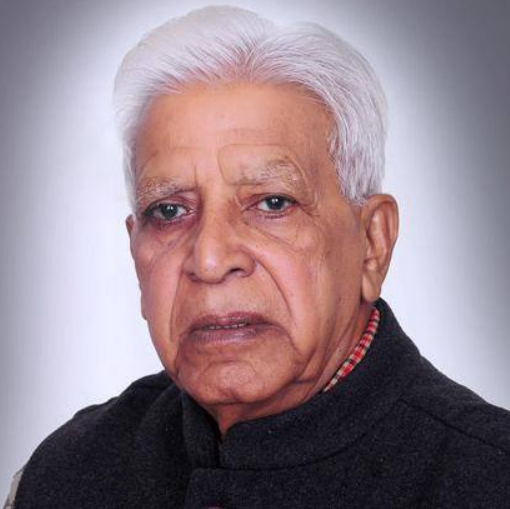
Dr Ramjilal
Social Scientist and Former Principal,
Dyal Singh College, Karnal (Haryana, India)
Email: [email protected]
Overview
In India, reservation encompasses much more than just allocation of seats in educational institutions or appointments in government services; it serves as a crucial constitutional tool aimed at rectifying historical exclusion, social discrimination, unequal educational access, and inadequate representation. The framers of the Indian Constitution acknowledged that simply declaring legal equality would not effectively eliminate the long-standing inequalities rooted in centuries of social and economic disadvantage.
The Supreme Court of India has been instrumental in shaping the constitutional framework surrounding reservation. The court’s decisions—from the pivotal Indra Sawhney v. Union of India case in 1992 to the recent Janhit Abhiyan v. Union of India ruling in 2022, and the landmark State of Punjab v. Davinder Singh judgement in 2024—illustrate the evolving interpretation of equality and reservation.
Expansion:
Constitutional Foundations of Reservation
The concept of reservation is primarily anchored in Articles 14, 15, and 16 of the Constitution. Article 14 ensures equality before the law and equal protection of the laws. Article 15 allows for special provisions to be made for socially and educationally backward classes, as well as for Scheduled Castes (SC) and Scheduled Tribes (ST). Article 16 guarantees equality of opportunity in public employment while enabling special provisions for groups that are under-represented.
This constitutional philosophy does not equate equality with uniform treatment. When social conditions vary, applying the same treatment can perpetuate existing disparities. Thus, reservation is recognised as a means by which the Constitution strives to achieve substantive equality.
The Indra Sawhney v. Union of India (1992)
The landmark ruling in Indra Sawhney v. Union of India (1992) is foundational for India’s reservation jurisprudence. This case emerged from the implementation of the Mandal Commission’s recommendations concerning Other Backward Classes (OBCs). The Supreme Court upheld the constitutional validity of OBC reservation while establishing important constraints, notably the principle that reservations should generally not exceed 50%. However, it acknowledged that exceptional circumstances might warrant deviations from this limit.
The judgement also underscored that the purpose of reservation should be to uplift genuinely backward groups rather than to sustain privileges indefinitely.
Reservation in Promotions
The issue of reservation in promotions for SCs and STs has led to significant legal scrutiny. Cases like M. Nagaraj v. Union of India and Jarnail Singh v. Lachhmi Narain Gupta have scrutinised the interplay between affirmative action, equality, representation, and administrative efficiency. The Supreme Court has generally aimed to ensure that reservation policies are constitutionally sound and aligned with addressing under-representation.
A crucial aspect of this discourse includes the “creamy layer” principle, which examines whether individuals who have significantly advanced within a reserved category should continue to receive benefits designed for the less privileged. This reflects a key tenet: reservation should act as a catalyst for social advancement rather than a permanent entitlement disconnected from the issues it aims to remedy.
EWS Reservation: A New Dimension
The 103rd Constitutional Amendment marked a significant chapter in the reservation debate by introducing provisions for Economically Weaker Sections (EWS). Following this, the ruling in Janhit Abhiyan v. Union of India on November 7, 2022, saw a five-judge Constitution Bench affirming the constitutional validity of this amendment by a narrow 3:2 majority. This amendment allowed for reservation based on economic criteria, establishing a new framework for a 10% reservation.
The judgement was noteworthy, as it validated the idea that economic disadvantage could serve as a basis for affirmative action within the constitutional parameters established by the amendment. This development has broadened the discourse on reservation by moving beyond traditional considerations of caste and social backwardness.
The Landmark Davinder Singh Judgment
A significant recent development in reservation jurisprudence is the Supreme Court’s judgement in State of Punjab v. Davinder Singh, delivered on August 1, 2024. A seven-judge Constitution Bench, by a 6:1 majority, held that sub-classification within the Scheduled Castes and Scheduled Tribes is constitutionally permissible. The court overruled the earlier position in E.V. Chinnaiah v. State of Andhra Pradesh, which maintained that Scheduled Castes constituted a homogeneous class for reservation and could not be further sub-classified.
The case originated from Punjab’s policy that provided preferential treatment within the Scheduled Caste reservation framework to Balmikis and Mazhabi Sikhs. The central constitutional question was whether all communities listed as Scheduled Castes must necessarily receive the benefits of reservation in the same manner, regardless of their actual level of representation and disadvantage.
Equality Within the Reserved Category
The significance of Davinder Singh lies in its recognition that inequality can exist within a reserved category. Suppose a reservation category includes multiple communities, but one group consistently captures a disproportionately large share of available educational or employment opportunities while another group remains severely under-represented. Treating both groups identically may appear equal in form but fail to produce substantive equality.
The court’s reasoning, therefore, opens the door to what can be described as “equality within equality”. The purpose of reservation is not simply to create a broad category; it is to ensure that historically disadvantaged citizens actually receive meaningful opportunities.
However, this does not grant state governments unlimited power to divide reserved categories. The court stressed the need for empirical evidence and a rational basis for identifying inadequate representation. Sub-classification cannot simply be a product of political convenience.
The Importance of Empirical Data
One of the valuable lessons from Davinder Singh is the importance of reliable data. Governments should ascertain which communities are represented in schools, universities, public employment, and higher administrative positions. They should also determine whether the benefits of reservation are reaching the most disadvantaged sections.
Without such data, reservation policy risks becoming a matter of political assertion rather than an evidence-based social policy. The Supreme Court’s approach thus places a considerable responsibility on governments. If a state wishes to create subclassifications, it should be able to demonstrate why a particular group is inadequately represented and how the proposed measures address that issue.
Reservation and the Idea of Merit
A persistent criticism of reservation is that it compromises “merit”. However, this debate often overlooks the unequal conditions under which merit is produced. A student with access to an excellent school, private coaching, books, computers, stable family income, and an educated environment does not start a competitive examination from the same social position as a student who lacks these resources.
This does not mean standards or administrative competence should be ignored. Instead, the challenge is to create a system in which social disadvantage does not automatically lead to educational and professional exclusion. Therefore, reservations should be accompanied by robust public education, scholarships, skill development, employment creation, and measures against discrimination.
The Road Ahead
The future of reservation policy should increasingly rely on transparent data, periodic reviews, and measurable outcomes. Governments should regularly examine the representation of different communities within reserved categories, considering education, public employment, higher education, and other relevant indicators.
At the same time, India must avoid treating reservation as the sole solution to inequality. A child who benefits from reservation after completing school has already endured years in which quality education, nutrition, economic security, and a supportive social environment were inadequate.
References:
>Lal. Ramji.DR.(June 20, 2026)Reservation and Social Justice. A Review https://theasianindependent.co.uk/reservation-and-social-justice-a-review/
>Lal. Ramji.DR.obc-reservation-in-west-bengal-reduced-from-17-to-7-an-overview-of-cast
>Indra Sawhney v. Union of India, 1992 Supp (3) SCC 217. Supreme Court of India.
>M. Nagaraj v. Union of India, (2006) 8 SCC 212.
>Jarnail Singh v. Lachhmi Narain Gupta, (2018) 10 SCC 396.
>Janhit Abhiyan v. Union of India, judgement dated 7 November 2022, Supreme Court of India.
>State of Punjab v. Davinder Singh, 2024 INSC 562, judgement dated 1 August 2024.
>Constitution of India, Articles 14, 15, 16, 46, 335 and 341.
>Supreme Court Observer, “Validity of Sub-Classification Within Reserved Categories”
>Supreme Court of India, judgements and constitutional case materials.