SAMAJ WEEKLY UK
by Dr Suresh Khairnar
17/09/2026
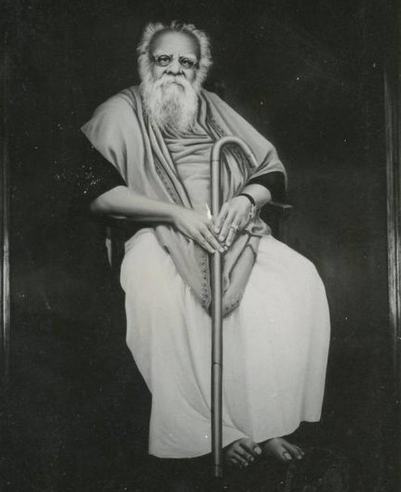
Today, on the occasion of the 147th birth anniversary of Ramasamy Periyar and the 76th birthday of Prime Minister Shri Narendra Modi, some free thoughts.
In Erode, Tamil Nadu, on 17 September 1879, Venkatappa Naidu, a wealthy merchant, was the father of a boy named Venkat Ramasamy. Therefore, bhajans, kirtans, and continuous recitations of the Hindu epics Ramayana, Mahabharata, and the Puranas used to take place at home. Tired of this, at the age of fifteen, Ramasamy ran away from home and set out on the road to Kashi (Banaras) in the north. But upon seeing the religious hypocrisy of Banaras, whatever little faith he still had left was burnt to ashes. Therefore, he returned to Erode and became the municipal chairman of Erode.
 In contrast, our country’s current Prime Minister, Shri Narendra Damodardas Modi, in his home in Vadnagar in the state of Gujarat, raised a Muslim child named Abbas Ramsada. This fact was revealed by Narendra Modi himself in a blog post he wrote on the 100th birthday of his mother Heeraba, which I am quoting exactly as it is. Due to the untimely death of a close Muslim friend of Narendra Modi’s father, Damodardas Modi, Abbas was taken into their home by his father in Vadnagar along with his other children. Abbas’s education was arranged, and he was kept in the house for several years, exactly like the other children of the family. Abbas was a classmate of Narendra Modi’s younger brother Pankaj Modi. According to Narendra Modi, mother Heeraba took care of Abbas just like her other children. She even prepared his favourite dishes for him every Eid. Later, Abbas worked as a Class II officer in the Food and Civil Supplies Department of the Gujarat government. At present, he lives in Sydney, Australia, with his young child. In fact, Narendra Modi’s caste, Modh Ghanchi Teli, was included in the OBC category in the Gujarat state list in 1994 and in the central government list on 27 October 1999 — that is, before he became the Chief Minister of Gujarat (2001).
A person born 146 years ago in the OBC community in Erode, Ramasamy Periyar, even though he was born in a traditional orthodox Hindu family, became fed up with this religious hypocrisy and fought against it till the age of 92. On the other hand, a person born in a secular Hindu household of an OBC caste, who from childhood witnessed the unique experiment of his parents raising a Muslim child as a member of their own family, why has Narendra Modi, for the last 26 years, prepared himself to do politics solely around religious polarisation as an aggressive Hindutva leader of Indian politics, making claims such as “Hindu Hriday Samrat” and “56-inch chest”? This question keeps coming to my mind repeatedly today on the occasion of his 76th birthday.
Ramasamy Periyar joined the Congress at the inspiration of Chakravarti Rajagopalachari during the famous Vaikom Satyagraha in Kerala. He also participated in the Non-Cooperation Movement and went to jail. In 1922 he became the president of the Madras Presidency Congress and put forward a proposal for reservations in government jobs, which the Congress rejected. Therefore, disillusioned with the Congress, feeling that the party was insensitive to Dalits, he left the Congress in 1925. In support of Dalits, he founded the Justice Party in 1944. But after seeing the party’s crushing defeat in elections, he founded the Dravida Munnetra Kazhagam party and himself stayed away from power politics and began fighting for the rights of women and Shudras.
In 1937, when Chakravarti Rajagopalachari became the Chief Minister of Madras Presidency and declared Hindi compulsory, Periyar led the anti-Hindi movement, for which the government imprisoned him in 1938. For the first time, he gave the slogan “Tamil Nadu for Tamils.” In 1925 he started the Self-Respect Movement. In 1929 he travelled to Europe, Soviet Russia and Malaysia. In 1929 he renounced his Naicker surname and adopted the name Periyar, meaning “Great Soul.”
In 1938, he gave the slogan “Tamil Nadu for Tamils.” In 1944 he changed the name of the Justice Party to Dravida Munnetra Kazhagam (DMK). In 1948, at the age of 69, he married a girl forty years younger than him who was his personal assistant (his first wife had passed away). This decision caused considerable controversy, but he paid no heed to it and went ahead with the second marriage.
In 1949, differences arose between Periyar and Anna Durai, leading to the first split in the DMK. On 24 December 1973, at the age of 94, he passed away. But because of the powerful movement he launched for the first time to promote self-respect based on Dravidian culture in Tamil Nadu, governments of the DMK continue to rule in Tamil Nadu by turns even today. And the foundation of this politics was laid by Ramasamy Periyar himself.
It is because of that same Dravidian identity that Udhayanidhi Stalin, son of the Chief Minister of Tamil Nadu and a young minister, while speaking about Sanatan Dharma, compared it to diseases like malaria or dengue. Because when Udhayanidhi Stalin criticised Sanatan Dharma at a programme organised on the occasion of the 144th birth anniversary of Ramasamy Periyar — the pioneer who started the movement against Manusmriti and Sanatan Dharma in Tamil Nadu a hundred years ago — the Rashtriya Swayamsevak Sangh and its political unit, the BJP, immediately launched a campaign of lavish praise for Sanatan Dharma.
The Rashtriya Swayamsevak Sangh was founded in 1925 for the protection of the so-called Sanatan Dharma (Brahminical religion). It wants to run society according to the thousands-of-years-old Manusmriti. So much so that after Dr. Babasaheb Ambedkar announced the Indian Constitution in the Constituent Assembly on 26 November 1949, the English mouthpiece of the RSS, Organiser, in its editorial of 30 November 1949, said: “This Constitution has been made like a patchwork quilt by copying constitutions of various countries. There was no need for it when we already have Manusmriti — the finest constitution in the world, which existed even before Lycurgus of Sparta and Solon of Persia — containing the cultural and spiritual rules and laws of our country that have been followed for thousands of years. Manusmriti is our Hindu law.”
In that Manusmriti, it is written that women and Shudras were born from the toe of the foot. They were forbidden from studying the Vedas; if they happened to hear a Vedic mantra, molten lead was to be poured into their ears. The sole duty of the Shudra castes was to serve the higher castes.
Keeping only the Bengal elections in mind, Narendra Modi suddenly left the Bengal election campaign midway, returned to Delhi, and, contrary to parliamentary tradition, with just one day’s notice, convened a two-day session of Parliament solely to pass two bills — 33% reservation for women in the Assemblies and Lok Sabha, and delimitation of constituencies — thereby putting on a show of hypocrisy. The political unit of the RSS, the BJP, which after the promulgation of our Constitution had advocated Manusmriti as the ideal constitution of India, follows the same Manusmriti. And what are the rules for women in that Manusmriti? In childhood a woman must remain under the protection of her father, in youth under her husband, and in old age under the mercy of her son. She cannot live alone because she is weak and must always remain under the grace of men. Even the so-called women’s reservation bill in the Lok Sabha is a farce of the same Shudra political trickery of men. Because for this bill to actually come into force, another twenty years will be required. The Home Minister clearly stated in the Lok Sabha that “until the census is conducted and thereafter the delimitation of constituencies is carried out, this entire process will take at least fifteen to twenty years from today.”
This means, in the language of Dr. Ram Manohar Lohia: “The greatest battle in Indian history — the battle between liberalism and orthodoxy within Hinduism — has been going on for more than the last five thousand years, and its end is still not in sight. The attempt that should have been made has never been made. Looking at the history of Hindustan in the light of this battle, a very large part of whatever happens in the country happens because of this.”
Sometimes the orthodoxy prevails; sometimes the liberals. At present, since 1985, under the cover of the Babri Masjid, the orthodoxy has succeeded in polarising the country religiously through its rath yatras and campaigns of shila puja, shilanyas and other religious blind devotion all over the world. Thanks to that, Narendra Modi, for the first time in Indian parliamentary history in 2014, and before that at the beginning of the new century by stitching together an alliance of 26 different parties under the so-called NDA, first made Atal Bihari Vajpayee Prime Minister. From 2014 onwards Narendra Modi succeeded in forming a government with a full majority, and again in 2019 with even more seats. On the day of Ganesh Chaturthi — which is contrary to the Constitution of India — the programme of entering the new Parliament was held by bringing a hundred Brahmins from South India and installing a sengol, which the former Chief Minister of Tamil Nadu, Anna Durai, had opposed by writing a letter to Jawaharlal Nehru, calling the sengol a symbol of feudalism. The reason behind bringing Brahmins from South India for election campaigns in South India, from the Vice-President to the inauguration ceremony of the new Parliament, is also the desire of the Sangh and the BJP for political gain in South India. However, the religion of the Sangh-BJP is nothing more than a tactic of political polarisation.
How has Sanatan Dharma been treating the backward castes for thousands of years? This is something that Erode Venkat Ramasamy Naicker — born 144 years ago on 17 September 1879 in the house of a wealthy merchant named Venkatappa Naidu in Erode in the South, the social reformer Shri Ramasamy Naicker — who passed away on 24 December 1973 after a long life of 94 years, had already begun his historic work against Sanatan Dharma after becoming an atheist upon seeing the extremely hypocritical atmosphere of Kashi at the age of fifteen, following a quarrel with his father.
The Rashtriya Swayamsevak Sangh and its political unit, the BJP, are the representatives who support the same Sanatan Dharma which, from the practice of Sati to untouchability and the treatment meted out to women and Shudras for thousands of years, has been opposed by Mahatma Jyotiba Phule, Raja Ram Mohan Roy, Ishwar Chandra Vidyasagar, Ramasamy Periyar and Dr. Babasaheb Ambedkar through their tireless efforts. It is because of the hierarchical practices of this Sanatan Dharma that the economic and social backwardness of women and Shudras exists today. They have come forward enthusiastically to protect that Sanatan Dharma.
Two hundred years ago, Sanatan Dharma used to force widows to be burnt on their husband’s funeral pyre. One should feel ashamed while defending it. Likewise, according to the same Sanatan Dharma, the tradition of prohibiting Shudras from entering temples and making them walk with a pot around their neck and a broom tied to their waist — which human religion does this belong to? Periyar Ramasamy Naicker, who a hundred years ago raised his voice against the anti-human and anti-women evils of Sanatan Dharma, is merely being reminded of by Udhayanidhi. It is surprising to see people who send spacecraft to the Moon and the Sun openly supporting the evils of their own religion. Two hundred years ago, Mahatma Jyotiba Phule, Raja Ram Mohan Roy, Pandit Ishwar Chandra Vidyasagar, Keshav Chandra Sen, Debendranath Tagore, Ramasamy Periyar and Dr. Babasaheb Ambedkar also kept these very things in mind and spent their entire lives propagating against them. People who set out to make India a Vishwa Guru are, at the same time, sending spacecraft for research on the Moon and the Sun, while, on the other hand, talking about protecting an old religion full of inequalities like Sanatan Dharma. There can be no greater hypocrisy than this.
And by bringing hundreds of Brahmins from South India at the expense of the Government of India to the capital Delhi, performing puja-path in the new Parliament building and installing the sengol, the method of conducting parliamentary business that has been started for the last 12 years is an audacity against democracy that is being done for the first time in the history of Indian parliamentary politics. And the havan, which is against the Constitution of our country, is being forcibly imposed on government programmes under the shadow of the Rashtriya Swayamsevak Sangh. The Prime Minister, who has been nurtured in the Sangh’s regimentation since the age of 17, has now crossed the age of 76. According to Sanatan Dharma he is counted among the Shudras. But because of the Sangh’s regimentation, Narendra Modi has performed hypocrisies such as entering the Parliament building on the day of Ganesh Chaturthi.
Today, on the 147th birth anniversary of Ramasamy Periyar, revolutionary salutations.
And on the 76th birthday of our country’s Prime Minister Shri Narendra Modi — because of the liberal outlook of his parents who raised a Muslim child along with their own children after the child’s parents were no more (a fact that Narendra Modi himself made public in a blog post on 18 June 2022 on the occasion of his mother’s 100th birthday, mentioning the upbringing of his childhood friend Abbas) — on the completion of 76 years of Narendra Modi’s life, I pray that he may be granted the wisdom to treat the more than 20 crore Muslims in India with the same affection and love as Abbas.