SAMAJ WEEKLY UK

Bal Ram Sampla
Geopolitics
The history of Dalit resistance in India is defined by a fundamental question: how best to dismantle a social hierarchy that historically denied lower-caste communities basic human rights and dignity? Over the last century, this struggle has largely split into two powerful, distinct strategies: leaving the traditional fold through religious conversion, or staying within Hinduism to aggressively claim equal rights, representation, and access to public spaces. Both paths reflect a search for self-respect and social justice, though they approach the problem from opposing philosophies.
The Radical Break: Rejection and Conversion
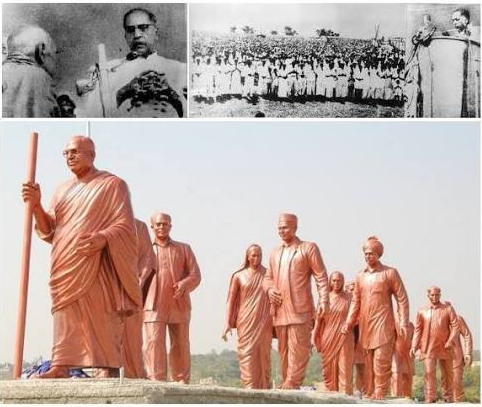
 The first path argues that caste discrimination is too deeply woven into orthodox social structures and religious texts to ever be truly reformed from within. Spearheaded by Dr. B.R. Ambedkar, a key architect of the Indian Constitution and a fierce critic of the caste system, this strategy views seeking acceptance in a discriminatory framework as a losing battle.
After years of leading unsuccessful temple entry satyagrahas in the 1920s and 1930s, Ambedkar concluded that social equality required a clean break. In 1956, he led over 300,000 followers in converting to Navayana Buddhism, rejecting Hindu rites, scriptures, and caste identity entirely. For those who follow this path, conversion offers an immediate psychological and spiritual liberation, allowing communities to build a new identity anchored in principles of equality, rationality, and human dignity outside the caste ladder.
The Claim to Equal Ownership: Resistance from Within
The second path approaches the issue as a matter of civil rights, constitutional law, and local power dynamics. Rather than stepping away, many Dalit communities choose to remain and fight for their rights within their ancestral villages. From this perspective, public and state-regulated spaces, including local temples like the Moongil Ayyanar temple in Tamil Nadu—belong equally to all citizens.
 For these communities, demanding entry and ritual participation (mandagapadi) is not merely about religious devotion; it is a direct challenge to local caste hegemony. Village temples often serve as the centers of rural social, economic, and political life. By asserting their legal right to enter temples and lead festival processions, Dalit activists use the Indian Constitution—specifically Article 17, which abolishes untouchability—to strip dominant castes of their exclusive authority. Leaving, in their view, would mean surrendering their ancestral culture and yielding public spaces to those who seek to exclude them.
A Modern Flashpoint: Valavampatti
This fight to reclaim public space is not merely historical , it plays out continuously across rural India today. A clear example occurred in July 2026 at the Moongil Ayyanar temple in Valavampatti, Tamil Nadu. When local Dalit devotees attempted to participate in the annual car festival, offer pongal, and pull the temple chariot, traditional caste Hindu organizers (karaikarars) physically blocked them and halted the procession.
Refusing to back down, the Dalit community launched public protests and filed a legal complaint. In response, police booked 41 caste Hindus under the Scheduled Castes and Scheduled Tribes (Prevention of Atrocities) Act for blocking access to a public place of worship. This event highlights how the strategy of staying and fighting uses state law to directly challenge local caste dominance on the ground.
Conclusion
Ultimately, whether through the radical break of conversion or the direct assertion of civil rights within local communities, both strategies pursue the exact same goal: the “total eradication of caste-based subjugation”. While one path seeks liberation by stepping outside a broken system, the other seeks equality by forcing that system to bend to the law. Together, they form the bedrock of modern Dalit political thought and ongoing social reform in India.
References
1.https://www.newindianexpress.com/states/tamil-nadu/2026/Jul/31/41-caste-hindus-booked-in-row-over-temple-fest-in-pudukottai
2.https://www.thehindu.com/news/cities/Tiruchirapalli/tension-in-village-in-pudukottai-district-over-temple-ritual-issue/article71269979.ece?hl=en-