THE ASIAN INDEPENDENT UK
An Obituary by Sat Pal Muman
Early Life
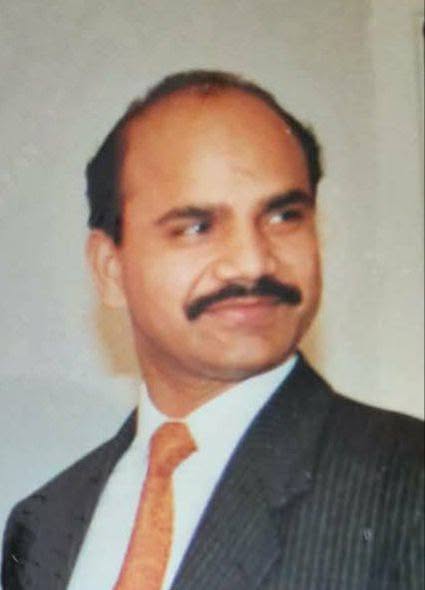
Naresh Banga passed away in the early hours of Wednesday, 24th June 2026, at the age of seventy. He leaves behind a legacy that defies easy categorisation—a man who was at once a rebel and a seeker, a poet and a pragmatist, an Ambedkarite to some and a Buddhist to all who truly knew him.
Naresh Banga was born on 1 June 1956 in India and arrived in England at the age of ten in 1967, following his father, Sundar Lal, who had come to England in 1962. At that tender age, Naresh was not particularly knowledgeable about the world around him, and his early years in England were marked by confusion and a quiet curiosity he was afraid to express.
When he first arrived in England, the house he went to had a photograph of Babasaheb Dr Ambedkar belonging to Mr Magi Ram at Beaconsfield Road, Southall. After some time, young Naresh asked whose photo it was. He was told it was Dr Ambedkar and that Dr Ambedkar was equal to the six great men in the world. Naresh took this literally, believing it meant Dr Ambedkar was equal to six men, and wondered how this could be possible. Being poorly educated, he could not grasp the significance and was afraid to ask questions, fearing others would laugh at him. He recalls that there are two types of “nalayak”—those who simply do not understand—and those who deliberately choose not to understand.
His parents grew frustrated with him. As he grew older, he learned that his father had met Dr Ambedkar in Delhi. This revelation sparked arguments between father and son, as Naresh believed meeting Dr Ambedkar was a matter of great honour. Many who met Dr Ambedkar would speak proudly of their encounters, and Naresh felt his father should have been on the front line of advocacy. Around the age of eighteen, these conversations began, and Naresh grew increasingly angry that his father was not very interested despite having met such a great figure.
His father knew many other people from Delhi, including Magi Ram and Faqir Singh Virdee, but they would only say they had seen Dr Ambedkar and nothing more. When Naresh once questioned why Dr Ambedkar embraced Buddhism, someone replied that it was because it was the easiest way to meet God—a claim Naresh found laughable, knowing that Dr Ambedkar never believed in such things. When he questioned further, he was dismissed with the typical Indian attitude: “I wasn’t born yesterday; how can you teach us anything?”
Discovering Dr Ambedkar and Buddhism
It wasn’t until he was around twenty-five or twenty-six that Naresh truly began to discover Babasaheb. He read “Federation vs Freedom” but did not understand it. He then turned to Punjabi translations by LR Balley, Bhagwan Dass, and Surendra Ajnat, which helped him gain some knowledge. The process took a long time, but his interest was genuine, and he persevered.
His introduction to Buddhism came through an unexpected route: Zen Buddhism. While at the library, he found a book on Zen Buddhism and initially confused it with Jainism. He was struck by a story about a man who went to a Zen Master and claimed God takes care of him. When he asked the Zen Master to explain the easiest way to God, the Master held the man’s head underwater. When the man gasped for air, the Master explained that when he needed God more than oxygen, then he would show him God. This story fascinated Naresh, and he began reading more about Zen Buddhism, finding many such interesting stories.
Much later, he read “Buddha and his Dhamma,” by Dr Ambedkar, though he found it challenging, requiring a handy dictionary to understand. He read it five or six times and discovered something new each time. When he asked his father about it, he was told to ask someone else. The beauty of “Buddha and his Dhamma,” Naresh believed, is that you can open any page and learn something new. He once told Dr Shrikant Borkar, his associate, who holds a PhD in Anthropology, that you could do a PhD on just one sentence from the book. For example, the concept that we were not created by God but evolved, which traces back to Darwin’s theory.
He also read “Ranade, Gandhi and Jinnah” by Dr Ambedkar, which was equally demanding, with an unending stream of references. Despite the challenging writing style, he never gave up. Unlike many other texts, “Buddha and his Dhamma” has no references—that work, according to Naresh, was done by Bhadant Dr Anand Kausalyan in the Hindi translation. Naresh considered Dr Ambedkar the greatest teacher and often wondered whether people would be able to understand his teachings.
Naresh’s formal introduction to the Ambedkarite community came through the Dr Ambedkar Buddhist Association, formed in Southall in 1976 at Mansell Road, Greenford, Middlesex. Harbans Lal Virdee, Mr Bakshi Birdi, Mr Prabh Dyal, Mr Madan Saroye, Mr Kishore Saroye, Mr Chaman Lal Virdee, Mr Ramesh Klair, Mr Bakshi Dhanda, and Mr Mohinder Birdi were among the early founders.
In 1981, Bhaiya Saheb, Dr Ambedkar’s son Yashwant Rao, visited England and stayed at Naresh’s family home at 4 Trinity Road, Southall. Naresh recalls that Bhaiya Saheb was drinking heavily during his stay.
His father did not participate in the Dr Ambedkar Buddhist Association, as, according to Naresh’s young mind, he was not interested in Buddhism. Naresh’s Dhamma guru was Venerable Dr Saddhatissa, who gave him the Deeksha and issued a card that Naresh kept in his pocket for the rest of his life. Dr Saddhatissa was a Sri Lankan Buddhist monk present at the Historic Deeksha ceremony when Dr Ambedkar embraced Buddhism in Nagpur, India, on 14th October 1956.
Naresh’s path to Buddhism was influenced by several key figures. Mr Jagdish Leal, K.C. Leal’s son, was instrumental in inspiring and supporting him. In 1973, when Naresh was seventeen, he took Deeksha on May 13th, before the larger Deeksha ceremony in West Bromwich on June 3rd, 1973. He became a Buddhist before becoming an Ambedkarite, a distinction he maintained. Mr K C Leal, his father’s cousin, wrote a book about the pioneers of the Buddhist movement in the UK, edited by Nanak Chand Rattu, Dr Ambedkar’s private secretary and published by the Dr Ambedkar Memorial Committee GB.
Embracing Buddhism
His entire family took Deeksha: Mr Sundar Lal (father), Mrs Chanan Kaur (mother), Mr Yashpal Banga (elder brother), Miss Urmilla Banga( younger sister), Miss Sangeeta Banga ( younger sister) Shekhar Banga (younger brother), also known as Shekhar Bodhkar, was living in India at the time. When Jagdish came to live in Southall, he made a strong impression on the entire family, and Naresh believes that without Jagdish, he would not have embraced Buddhism.
In 1977, Naresh held the first Buddhist wedding in his family and among relatives. There were no rituals, as he had asked for an explanation about rituals but received none. There was no dowry either. He was an adamant young man who never followed orders, refused to study in the conventional way or go to university, and defied his parents.
As a young man, Naresh was interested in communism because communists did not believe in God. He never believed in God and never went to any religious place of worship. His rebellious nature was evident from an early age. In school, during Christian assemblies, he used to walk out. The headmaster wrote a letter to his father, and when asked what difference it made whether he attended, he insisted it made a difference to him.
Rebel Truant
His religious teacher at school once fell ill, and when the headmaster took over the class, Naresh declared he was not interested and was told to stand outside. Jagdish came to his rescue, and the school demanded a letter from his parents to exclude him from religious instruction. Naresh forged his father’s signature and stopped going to assemblies, instead playing truant. Once, when a lady religious teacher asked who Jesus was, Naresh replied bluntly, “Jesus was a ******.” The teacher corrected him, saying he was the son of God, but Naresh insisted he didn’t believe in God. He was expelled from school at around sixteen or seventeen. He again contacted Jagdish, approached the school, and agreed not to disrupt class, though he continued to disagree with Christians, Sikhs, Hindus, and Muslims and anyone who believed in God in school.
The school regularly wrote to his parents about truancy, and he forged his father’s signature in reply. Once, he didn’t attend school for two weeks, and Mr Mukherjee, a Bengali teacher, came to their house. When Naresh arrived home at the same time, the teacher slapped him, but Naresh insisted he didn’t want to study. Strangely, he became interested in poetry despite being dull in most subjects.
Once, when he was sick and requested a letter from his father, a mismatch in his forged signature was caught, and he came clean about his deceptions. He was told to attend school regardless of whether he failed. He felt he was forced into studying Radio and TV engineering, which he didn’t understand at all. Under pressure to study, he took his books into the garden and burned them. Again, Jagdish came to his rescue, telling his parents that Naresh was not interested in studying and that he had begun looking for a job.
Naresh studied Koans in Zen Buddhism very early on, which may have influenced his rebelliousness. He connected with communists because of their atheism. After embracing Buddhism, he became interested in Vedas and Puranas, finding the Shiv Purana sexually explicit and seeing no spirituality in them. He read “Critique of Vedas” by Surendra Ajnat in the late 1980s, which greatly influenced him, along with “Hinduism—Dharam ya Klunk” (meaning Hinduism—religion or disgrace), by L.R. Balley, in three volumes.
He spent three years at Ambedkar Centre, Featherstone Road, Southall, helping with renovation after the building was damaged by fire. Mr Gautam Chakraborty had promised to acknowledge his work, but Naresh insisted he was doing it because he wanted to, not for recognition. Naresh oversaw the library and was available 24 hours a day. The only acknowledgement he received was none, and he left the group around 1988 due to a lack of transparency.
Poet, Artist and Activist
His involvement in the film industry began through Mr Firdaus Ali, an Asian Arts Director and poet, who had the power to make anyone famous. If a film or drama needed a dancer, Firdaus Ali had the CVs of many artists. Naresh and Firdaus Ali became good friends.
Naresh’s artistic sensibility extended to poetry. As a young man, he attended poetry symposia in Hindi, Punjabi, and Urdu. He taught himself Urdu. He wrote poems about Dr Ambedkar, though he was never fully satisfied with them. At poetry symposia, he recited Urdu poetry, moving in circles that included figures such as Gulzar, whom he had met at Firdaus Ali’s house.
He met Jabbar Patel through Firdaus Ali when Jabbar Patel came to make a film about Dr Ambedkar. Naresh studied the script all night, taking notes and providing feedback. He objected to several points, including a scene in which advice was attributed to Sardar Patel when Dr Ambedkar went to the USA, which was incorrect. Another scene showed Ramabai, Dr Ambedkar’s wife, going before the gods for aarti, which Naresh opposed and was deleted. Regarding Deeksha Day, he requested that the twenty-two vows Dr Ambedkar gave at the mass Buddhist conversion in Nagpur be included, but Jabbar Patel explained that the film was financed by the Indian Government and that it wouldn’t go down well, though he agreed to include two or three vows.
Naresh also became involved in other films, including Dev Anand’s “The Gangster” and “Bandit Queen.” He suggested displaying a photo of Dr Ambedkar in Indian films, which have appeared in several, though he does not take credit for it. While the Gandhi film was being made, he questioned why Dr Ambedkar was excluded, but Richard Attenborough remained quiet and made no comments.
Asserting His Intellectual Agency
Once, he was invited to India House, London, for an annual Ambedkar Jayanti event organised by the Federation of Ambedkarite and Buddhist Organisations (FABO). His Excellency, L M Singhvi, the High Commissioner of India, gave a talk and said that Buddha was the 9th/10th incarnation of Vishnu. Naresh asked why FABO was not objecting to Singhvi’s statement?
Later, Naresh was introduced by Mr S L Ginda to India’s High Commissioner, L M Singhvi, as an “Ambedkarite.” Naresh corrected him: “I am not an Ambedkarite; I am a Buddhist.” When Singhvi asked what the difference was, Naresh replied, “When you have a PhD, you don’t say I am a BA or an MA.”
Beyond his intellectual pursuits, Naresh was an accomplished artist. In his living room, he personally hand-painted an image of the Buddha on the wall—a quiet, enduring testament to his faith and creative spirit. The painting was not merely decorative but devotional, a daily reminder of the path he had chosen.
Dedication, Moral Courage and Generosity
Naresh will be remembered for his good humour, dedication, moral courage, generosity and unwavering commitment to the Ambedkarite and Buddhist movement.
He was also a close confidant of Mr Surinder Jhalli, former president of the Dr Ambedkar Memorial Committee GB. The two were in regular contact, often speaking for hours on the phone. In his final will, Naresh left his house in Southall as dana to the Dr Ambedkar Memorial Committee GB. Naresh was honoured by the Committee at a public event held on 14th April 2024.
Journey’s End
Naresh’s journey from a rebellious, confused young man to a committed Buddhist and advocate for Dr Ambedkar’s teachings is marked by intellectual curiosity, personal struggle, and a determination to understand the world on his own terms. His story reflects the broader experience of many Indian immigrants in the UK who found in Buddhism a path to dignity and self-respect, and in Dr Ambedkar’s teachings a framework for understanding their place in the world.
Naresh Banga is survived by his wife, Mohinder, his family, and the countless lives he touched through his quiet activism, his art, and his unwavering commitment to the truth as he understood it.