

THE ASIAN INDEPENDENT UK

Bal Ram Sampla
Geopolitics
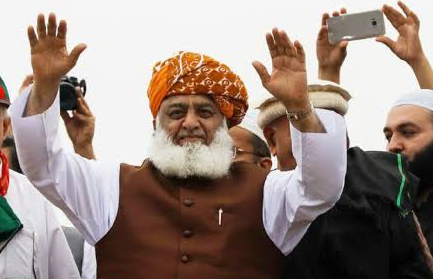
In Pakistani politics, the relationship between civilian leaders and the military establishment has historically been intertwined. However, the recent, highly public criticisms made by Jamiat Ulema-e-Islam (F) chief Maulana Fazlur Rehman mark a significant and aggressive departure from this status quo. By openly declaring that the Pakistani government has lost control of Balochistan and directly challenging Army Chief Field Marshal Asim Munir to “take off the uniform” and enter electoral politics, Rehman has laid bare the deep-seated frustrations regarding political meddling and failing regional security.
Reclaiming State Duty: The Reject of Civil Militias
The catalyst for Rehman’s sharpest remarks was a call by Field Marshal Asim Munir for ordinary citizens to form local militias (or Lashkars) to assist the military in combating rising militancy. Rehman’s rejection of this proposal was both pragmatic and biting. He argued that national defense is the sole, paid constitutional responsibility of the state, not tax-paying civilians:
”Why do you throw the favour of your blood on me? You are taking your salaries from the taxes earned through our blood and sweat… I will not form any Lashkar.”
Rehman warned that arming civilians to fight state enemies would only result in endless local vendettas and lawlessness, effectively signaling that the military’s demand was an admission of its own failure to secure regions like Balochistan.
The “Uniform” Dare: Exposing Political Legitimacy
Perhaps the most provocative aspect of Rehman’s speech was his direct challenge to the military’s behind-the-scenes political engineering. In Pakistan, the military is widely viewed as the “kingmaker,” heavily influencing which civilian governments rise to power and which are dismantled.
Rehman addressed this political meddling head-on by daring Munir and other military officials to resign, shed their institutional protection, and form a political party:
”If you want to do politics, then take off the uniform and come; participate in the elections, and it will become clear what votes people give to those in uniform.”
This dare cuts to the heart of democratic legitimacy. Rehman’s argument is simple: if the military truly believes it commands the trust and support of the Pakistani public, it should test that popularity at the ballot box rather than ruling through coercion, manipulation, or institutional shadow-plays.
Losing Grip
Rehman’s criticisms are deeply tied to the deteriorating security landscape in Balochistan and Khyber Pakhtunkhwa. He pointed out that the civilian government has effectively ceded control in these areas, rendering security operations ineffective. By highlighting the state’s inability to govern its borders, Rehman exposed a stark reality: military action has failed to address the root political and economic grievances of Baloch separatists and local populations.
Furthermore, Rehman targeted the inconsistency of Pakistan’s regional strategy. He questioned how Pakistan’s military can justify launching unilateral counter-insurgency operations across the Afghan border while simultaneously crying foul when neighboring countries (like India) take similar cross-border actions against targets inside Pakistan.
Conclusion
Maulana Fazlur Rehman’s public defiance is highly significant. As a veteran politician who historically preferred backroom deals to outright rebellion, his transition to fierce critic highlights how unsustainable military dominance over civilian structures has become. By challenging Field Marshal Asim Munir to step onto the electoral battlefield, Rehman has voiced what many in Pakistan’s political class believe but rarely dare to say: true political authority belongs to those chosen by the people, not those backed by the gun.
Reference
1. https://www.orfonline.org/expert-speak/mian-and-maulana-versus-the-military-in-pakistan-74497?hl=en
2.https://www.indiatoday.in/world/story/pakistan-fazlur-rehman-asim-munir-contest-election-militias-lashkar-2946494-2026-07-13?hl=en
3.https://youtu.be/yTW3csLPAqE?si=ayrvB0CMG_B-8FBx