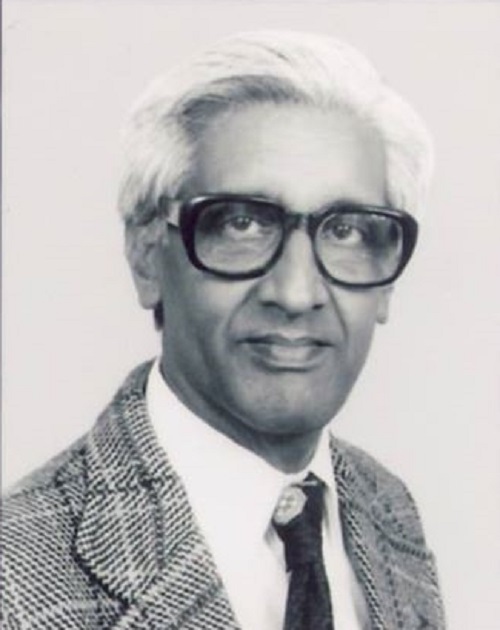
SR Darapuri I.P.S.(Retd)
(Special in birthday of Bhagwan Das on 23 April)
Introduction

(Asian independent) The history of modern India’s struggle for social justice is inseparable from the life and thought of B. R. Ambedkar. Yet, the survival and transmission of Ambedkar’s ideas across generations have depended not only on political movements but also on dedicated scholar-activists who preserved and interpreted his intellectual legacy. Among them, Bhagwan Das occupies a unique and distinguished position. He was not merely a follower but one of the most committed interpreters and custodians of Ambedkarite thought.
This essay examines Bhagwan Das’s life, his intellectual contributions, his engagement with Buddhism, and his broader mission within the Ambedkarite movement. It argues that Bhagwan Das represents a model of “intellectual Ambedkarism,” characterized by fidelity to ideas, commitment to scholarship, and dedication to social transformation through knowledge.
Early Life and Social Background
Bhagwan Das was born in 1927 (23 April) in India into a socially marginalized community. His early life was marked by the pervasive realities of caste discrimination, which deeply influenced his intellectual and moral development. Like many Dalit thinkers of his generation, he encountered systemic exclusion in education and social life. These experiences shaped his lifelong commitment to the eradication of caste-based inequality.
The turning point in his life came with his exposure to Ambedkar’s writings. Ambedkar’s emphasis on education, rationality, and social justice provided Bhagwan Das with both a framework for understanding oppression and a roadmap for liberation. Ambedkar’s call to “Educate, Agitate, Organize” became a guiding principle for his intellectual journey.¹
Influence of Dr. B. R. Ambedkar
Bhagwan Das had the rare opportunity to interact (as Research Assistant) with Ambedkar during the latter’s lifetime. This association played a crucial role in shaping his intellectual orientation. He absorbed key elements of Ambedkarite philosophy, including:
- The primacy of liberty, equality, and fraternity
- The critique of caste as a system of graded inequality
- The importance of constitutional morality
- The need for rationalism and scientific temper
Ambedkar’s seminal work Annihilation of Caste left a lasting impact on Bhagwan Das.² It convinced him that caste was not merely a social anomaly but a deeply entrenched system requiring radical transformation.
Preservation of Ambedkar’s Writings
One of Bhagwan Das’s most significant contributions lies in his efforts to preserve Ambedkar’s intellectual legacy. After Ambedkar’s death in 1956, many of his writings were scattered and inaccessible. Bhagwan Das played a pioneering role in collecting, editing, and organizing these materials.
His work contributed to the compilation of the monumental series:
“Thus Spoke Ambedkar” Vol. I- IV
This multi-volume collection has become the primary source for scholars studying Ambedkar. Without such efforts, much of Ambedkar’s work might have remained unavailable to future generations.
Interpretation and Dissemination
Bhagwan Das was not only an archivist but also an interpreter of Ambedkar’s ideas. He sought to present Ambedkar as a comprehensive thinker whose contributions extended beyond Dalit politics to include political philosophy, economics, religion, and constitutionalism.
Through works such as Thus Spoke Ambedkar, he made Ambedkar’s ideas accessible to a broader audience. He emphasized clarity, accuracy, and fidelity, ensuring that Ambedkar’s thought was not distorted or diluted.
His efforts in translation further expanded the reach of Ambedkarite ideas across linguistic boundaries in India.
Engagement with Buddhism
A significant dimension of Bhagwan Das’s intellectual life was his engagement with Buddhism, particularly following Ambedkar’s historic conversion during the Deeksha Ceremony at Nagpur 1956 Bhagwan Das embraced and promoted Ambedkar’s reinterpretation of Buddhism, often referred to as Navayana Buddhism.
He viewed Buddhism as: A rational and ethical system, A means of achieving social equality and A foundation for moral and social transformation
Ambedkar’s The Buddha and His Dhamma served as a central text in this intellectual project.³ Bhagwan Das contributed to its interpretation and dissemination, emphasizing its relevance to contemporary struggles against caste oppression.
Role in the Ambedkarite Movement
Unlike many leaders who entered electoral politics, Bhagwan Das chose the path of intellectual activism. His role in the Ambedkarite movement can be understood through the following dimensions:
- Intellectual Leadership
He provided theoretical clarity and direction to the movement.
- Critique of Symbolism
He opposed the reduction of Ambedkar to mere iconography, insisting on engagement with his ideas.
- Advocacy of Education
He emphasized education as the primary tool of liberation.
- Defence of Ideological Integrity
He resisted attempts to dilute or misinterpret Ambedkar’s philosophy.
Core Elements of His Mission
Bhagwan Das’s life and work can be summarized through several core principles:
- Fidelity to Ambedkar’s Thought: Ensuring accurate representation of ideas
- Annihilation of Caste: Upholding caste abolition as the central goal
- Rationalism: Promoting scientific temper and rejecting superstition
- Social Democracy: Advocating equality in social and economic life
- Education as Emancipation: Viewing knowledge as the key to liberation
Recognition and Legacy
Bhagwan Das’s contributions were recognized when he was awarded the “Ambedkar Ratan” by Delhi Government.
However, his true legacy lies in his intellectual contributions. He played a crucial role in institutionalizing Ambedkarite scholarship and ensuring the preservation of Ambedkar’s writings.
Today, his work continues to serve as a foundation for scholars, activists, and students engaged in the study of social justice and caste.
Critical Evaluation
While Bhagwan Das’s contributions are immense, certain limitations can be noted. His focus on intellectual work meant limited engagement with grassroots mobilization. As a result, his influence remained stronger in academic and ideological circles than in mass politics.
However, this should not be seen as a weakness but as a reflection of his chosen role. Social movements require both intellectual and political leadership, and Bhagwan Das fulfilled the former with exceptional dedication.
Conclusion
Bhagwan Das stands as one of the most authentic representatives of Ambedkarite thought. His life demonstrates that the struggle for social justice is not only fought in the streets or in political arenas but also in the realm of ideas.
By preserving, interpreting, and disseminating the thought of B. R. Ambedkar, he ensured that Ambedkar’s vision of a just, rational, and egalitarian society continues to inspire future generations.
His mission was clear: to uphold truth, promote equality, and advance human dignity through knowledge and reason. In this sense, Bhagwan Das remains a true Ambedkarite in both spirit and practice.
References
- Ambedkar, B. R. Annihilation of Caste. In Dr. Babasaheb Ambedkar: Writings and Speeches, Vol. 1.
- Ambedkar, B. R. The Buddha and His Dhamma. BAWS, Vol. 11.
- Omvedt, Gail. Ambedkar: Towards an Enlightened India. New Delhi: Penguin, 2004.
- Jaffrelot, Christophe. Dr Ambedkar and Untouchability. New York: Columbia University Press, 2005.
- Zelliot, Eleanor. From Untouchable to Dalit. New Delhi: Manohar, 1992.
- Rodrigues, Valerian, ed. The Essential Writings of B. R. Ambedkar. Oxford University Press, 2002.
- Das, Bhagwan. Thus Spoke Ambedkar. New Delhi: Buddhist Publishing House.