THE ASIAN INDEPENDENT UK

Bal Ram Sampla
Geopolitics
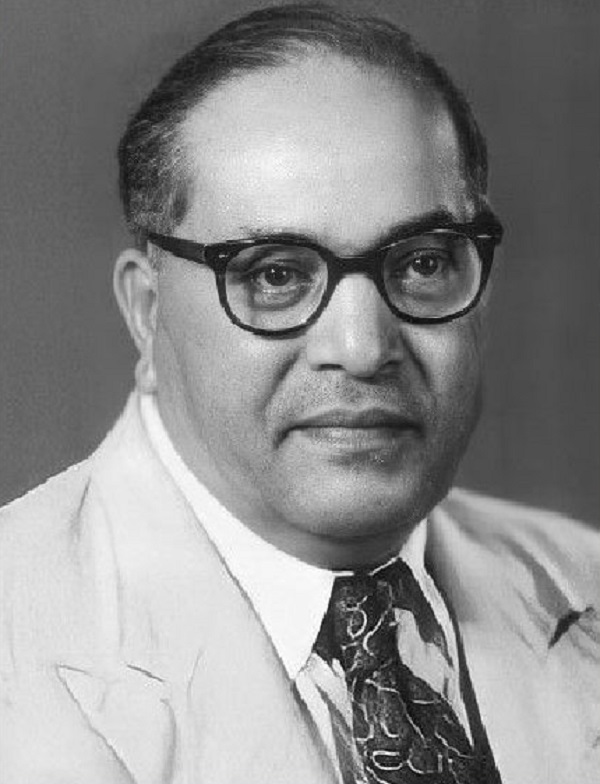
Dr. B.R. Ambedkar was one of the most remarkable human beings India has ever produced. Born into the Dalit community —he faced humiliation and discrimination from childhood. Yet he went on to become one of India’s greatest scholars, the chief architect of India’s Constitution, and the most powerful voice for the rights of those society had crushed underfoot.
His message was clear and uncompromising: the caste system is evil, Hinduism as practised perpetuates it, and Dalits must educate, agitate and organise to free themselves.
He was so disillusioned with Hinduism that in 1956, shortly before his death, he publicly converted to Buddhism along with hundreds of thousands of his followers. He famously declared: “I was born a Hindu, but I will not die a Hindu.”
This is the man the BJP now claims as one of their own.
The Party That Opposed Everything He Stood For
To understand how breathtaking this appropriation is, you need to know what the BJP and its parent organisation, the RSS, actually stood for — and what they stood against.
The RSS opposed Ambedkar’s greatest achievement: the Indian Constitution. Their ideological leader Golwalkar believed India’s constitution should be replaced.
The RSS opposed the Hindu Code Bill — Ambedkar’s landmark effort to give women equal rights in marriage and inheritance. They called it an attack on Hindu culture.
When Ambedkar converted to Buddhism, Hindutva leaders called it a “useless act.” Savarkar, the founding father of Hindutva ideology, was openly critical.
Ambedkar wrote that Hindu nationalist groups like the Hindu Mahasabha “had no interest in addressing the social question of caste and untouchability.”
In short: Ambedkar spent his life fighting exactly the kind of upper-caste Hindu nationalism that the RSS and BJP represent.
So Why Are They Now Building Statues of Him?
Simple. Votes.
Dalits and Other Backward Classes (OBCs) make up roughly 60–65% of India’s population. You cannot win elections in India without them. And since coming to power in 2014, the BJP has pursued a calculated, well-resourced strategy to win their support — not by changing its policies, but by changing its image.
The strategy works like this:
Step 1: Wrap yourself in Ambedkar’s name.
Modi’s government built grand Ambedkar memorials — the BR Ambedkar International Centre in Delhi, the Ambedkar National Memorial, even an Ambedkar memorial in London. Ambedkar Jayanti, his birthday, was rebranded as Samrasta Divas — “Harmony Day.” His photograph appears everywhere. His name is invoked in every speech about social justice.
Step 2: Use selective quotes to make him look like one of yours.
Ambedkar was also critical of Islam and of Congress politicians. He was no friend of the Muslim League. The BJP and RSS seize on these quotes, strip them completely of context, and present Ambedkar as an “anti-Muslim Dalit icon” — someone who would have supported Hindutva nationalism.
This is deeply dishonest. Ambedkar criticised Islam and Hinduism equally as systems that oppressed people. He criticised Congress because it failed Dalits — not because he supported Hindu nationalism. Being critical of Congress does not make you a BJP supporter.
Step 3: Redirect anger away from caste and towards Muslims.
This is the most sophisticated part of the strategy. Many lower-caste Hindus have every reason to be angry — centuries of oppression, poverty, discrimination, denial of opportunity. That anger is legitimate. The BJP channels it away from the upper-caste structures that created those conditions and points it firmly at Muslims, at Pakistan, at “anti-national” forces.
The question “Why do Brahmins and Banias still dominate India’s judiciary, media, bureaucracy and business?” is never asked. Instead the question becomes: “Why are Muslims getting special treatment?” The misdirection is masterful.
Who Is Actually Benefiting?
Upper-caste Hindus — primarily Brahmins, Banias (merchant castes) and allied groups — make up roughly 15–20% of India’s population depending on the state. Yet they dominate:
The senior ranks of the BJP itself
Corporate media ownership
The judiciary and senior bureaucracy
Academic institutions
Major business houses
Under Modi, this dominance has largely continued or deepened — while lower castes have been given symbolic representation through carefully selected figureheads. Droupadi Murmu, a tribal woman, was made President of India — a largely ceremonial role. This is brilliant optics. It costs nothing in real power while generating enormous goodwill among tribal and Dalit communities.
Meanwhile, demands for a caste census — which would expose exactly how concentrated power and resources remain among upper castes — have been resisted for years. You don’t need a conspiracy theory to understand why.
The Ambedkar Contradiction Nobody Wants to Talk About
Here is the central irony that the BJP hopes nobody notices.
Ambedkar’s core message was that Dalits must think for themselves, organise independently, challenge power and never trust those who have historically oppressed them. He warned specifically that Dalits who aligned with Hindu nationalist organisations would be used as foot soldiers and then discarded.
A Dalit former RSS member, Bhanwar Meghwanshi, documented exactly this in his book I Could Not Be Hindu. He described how Dalits inside the RSS were treated as lesser members — welcome to do the work of Hindu mobilisation, but never truly equal. When he sought to rise within the organisation, he was blocked because of his caste.
The BJP’s use of Ambedkar’s name and image to win Dalit votes is precisely the kind of manipulation Ambedkar himself warned against. They have taken the icon of Dalit liberation and turned him into a tool of upper-caste political consolidation. The statue is built. The votes are harvested. The caste hierarchy remains.
How the Media Machine Makes It Work
None of this would be possible without a ‘media ecosystem that amplifies the message and suppresses the contradiction’.
The majority of India’s major television channels are now effectively aligned with the BJP. Critical investigative journalism — into caste atrocities, into the concentration of power among upper castes, into the gap between Ambedkarite rhetoric and ground reality — is marginalised, defunded or actively harassed.
Journalists who ask difficult questions are labelled “anti-national.” Academics who publish inconvenient research are targeted. The Hindutva ecosystem online — millions of social media accounts — floods the information space with the approved narrative.
The result is that hundreds of millions of people receive a version of Ambedkar that has been carefully edited to remove everything he actually stood for.
What Would Ambedkar Actually Think?
We do not have to guess. He left a vast body of writing. His own newspapers documented his views on the RSS. His speeches, his books, his constitutional debates — all are publicly available.
He believed the caste system must be annihilated, not reformed or softened. He believed religion had been used as a weapon against the poor and marginalised. He believed independent political organisation — not alignment with upper-caste parties — was the only path to Dalit liberation. He believed in a genuinely secular state where no religion dominated politics.
On every one of these points, the BJP and RSS stand in direct opposition to what Ambedkar actually believed and fought for.
Building statues of a man while betraying everything he stood for is not honour. It is theft.
The Bigger Lesson
India under BJP/Modi is one of the world’s most powerful examples of selective advocacy on a massive scale. Real facts are used — Ambedkar’s criticism of Congress, his rejection of conversion to Christianity and Islam, his insistence on constitutional order — but assembled into a portrait that is the opposite of the truth.
It works because most people do not read the full record. They see the statue, hear the name, watch the ceremony, and conclude that the party must be on their side.
The antidote Ambedkar himself prescribed remains the best one: Educate. Agitate. Organise.
Read the full record. Ask who benefits. Notice what is left out.
References
1.https://www.outlookindia.com/national/politics-of-appropriation-why-ambedkar-s-legacy-matters-news-230605
2.https://www.outlookindia.com/national/ambedkar-row-appropriating-the-messenger-and-not-the-message
3.https://www.roundtableindia.co.in/how-can-they-say-they-are-above-caste/
4.https://theprint.in/opinion/forget-about-dalit-voters-tell-us-why-upper-caste-hindus-voted-for-bjp-like-never-before/249420/
5.https://liberation.org.in/detail/appropriating-ambedkar
6.https://swarajyamag.com/ideas/the-unresolved-hindutva-on-ambedkar-savarkar-and-rss
7.https://moderndiplomacy.eu/2021/01/12/casteism-inside-rss-and-its-abhorrence/
8.https://countercurrents.org/2022/04/attempts-by-rss-to-present-ambedkar-as-a-hindutva-supporter/