

SAMAJ WEEKLY UK
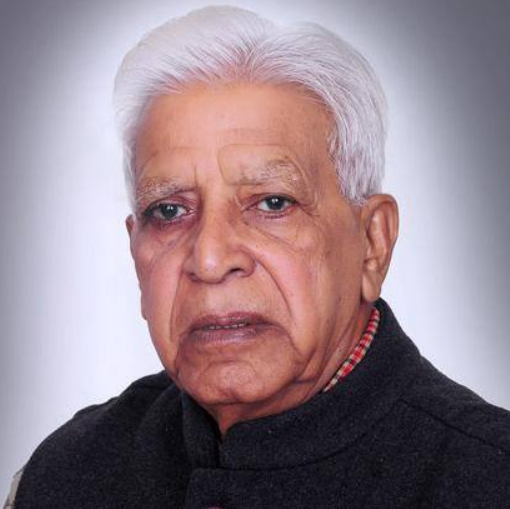
Dr Ramjilal, Social Scientist and Former Principal,
Dyal Singh College, Karnal (Haryana, India).
Email ID: [email protected]
Brief:
Gender equality is often discussed in terms of statistics, such as the number of girls in schools, women in the workforce, women in Parliament, and the proportion of women in senior positions. While these statistics are important, they do not capture the full picture. A more critical question is whether women have equal access to economic resources, social security, property, political influence, and justice. Therefore, a meaningful assessment of gender equality must go beyond numbers to examine the conditions under which women live and work.
The latest World Economic Forum (WEF) Global Gender Gap Report 2026, now in its twentieth edition, serves as an important international benchmark. The report encompasses 145 economies and measures gender parity across four dimensions: economic participation and opportunity, educational attainment, health and survival, and political empowerment. It includes 14 indicators that assess how much of the gender gap has been closed.
Expansion:
The global landscape reveals both progress and ongoing challenges. In 2026, 69.2 per cent of the measured global gender gap has been closed. However, at the current rate of progress, achieving full parity is still approximately 120 years away. The most significant remaining gaps are in economic participation and political empowerment, with only 61.7 percent of the economic gap and 22.1 per cent of the political gap closed. In contrast, education and health are much closer to achieving parity.
India vividly illustrates this contradiction. The country has closed 64.5 per cent of its measured gender gap and ranks 131st among 145 economies. Its educational attainment parity stands at 96.6 per cent, while economic participation and opportunity are only at 41.2 per cent. Labour force participation parity is 44.1 per cent, and women’s representation among legislators, senior officials, and managers is just 13.1 per cent.
This raises a fundamental question: if women are increasingly educated, why does equality remain so elusive in terms of employment, income, ownership, leadership, and political power? To answer this, we must consider the limitations of measuring gender equality solely through national averages.
What Does the Global Gender Gap Index Measure?
The WEF index is based on four primary dimensions. Economic Participation and Opportunity includes labour force participation, wage equality for similar work, estimated earned income, professional and technical employment, and representation among legislators, senior officials, and managers. Educational attainment covers literacy and enrolment in primary, secondary, and tertiary education. Health and survival include the sex ratio at birth and healthy life expectancy. Political empowerment measures women’s representation in Parliament, ministerial positions, and periods with a woman as head of state.
These indicators are useful for making comparisons over time and among countries. However, they do not encompass every aspect of women’s lives. Factors such as land ownership, inheritance, unpaid care work, migrant status, caste and tribal disadvantages, and access to justice and representation in the judiciary are not included as separate components in the WEF’s 14 indicators. These gaps are particularly significant in the Indian context.
India and the International Picture:
India’s position must be understood both in relation to the international context and its own social structure. The WEF reports that Iceland has closed 93 percent of its gender gap, Finland 87.2 percent, and Norway 85.7 percent, while India stands at 64.5 percent.
These comparisons should not be interpreted merely as competition between countries; historical, economic, demographic, and institutional conditions vary widely. Nevertheless, international comparisons demonstrate that economic development alone does not automatically eliminate gender inequality.
India’s educational achievements are notable. Educational parity stands at 96.6 percent, yet economic participation parity is only 41.2 percent. Although parity among professional and technical workers has improved significantly to 49.9 percent, women remain severely under-represented in senior managerial, legislative, and official positions.
Thus, India’s central gender paradox is evident: educational progress has advanced much more rapidly than economic and institutional power.
From Education to Employment:
Women’s participation in the labour market has improved in recent years, but we must examine employment figures carefully. According to the Periodic Labour Force Survey, while female labour-force participation has increased, participation alone cannot be equated with economic equality.
We need to consider the type of employment women obtain, the wages they receive, whether the employment is secure, the availability of social security, and whether women have control over their earnings. A woman working as an unpaid family worker, a casual agricultural labourer, or a domestic worker cannot be considered economically equal to a woman who has secure employment, a regular salary, social security, and control over productive assets, merely because both are categorised as economically active. The objective must therefore be to achieve decent, secure, and fairly remunerated employment, rather than simply any form of employment.
The Rural-Urban Divide:
The gender gap also has a significant rural-urban dimension. Rural women make tremendous contributions to agriculture, livestock, family enterprises, and household production, much of which remains unpaid or poorly compensated.
While urban women may have greater access to higher education and professional jobs, they still face barriers such as childcare responsibilities, occupational segregation, unsafe transportation, and insecure employment contracts. As a result, higher participation rates in rural areas do not necessarily translate to greater economic independence. A woman working long hours in family agriculture without ownership or control over income may still find herself economically dependent. Thus, participation must always be evaluated alongside the quality, security, and economic value of work.
Regional Inequalities Within India:
The national average also hides significant differences between states and districts. Women’s access to education, healthcare, employment, transportation, digital technology, and political institutions varies greatly across the country. The situation of a woman in a metropolitan area cannot automatically be viewed as representative of a woman living in a remote rural or tribal district. A national gender index should, therefore, provide state-wise and district-wise measurements. Without such detailed analysis, progress in relatively developed regions can mask persistent deprivation in others.
Adivasi Women and Multiple Disadvantages:
The status of Adivasi women demands special attention. The World Economic Forum’s national score for India does not provide a separate gender gap score specifically for Adivasi women, meaning that the national average may obscure the combined effects of gender, poverty, geographical isolation, and limited access to public services.
For many Adivasi women, achieving equality involves not only access to education and employment but also access to land, forest resources, healthcare, markets, roads, digital connectivity, secure jobs, and political participation. The same principle applies to women from other marginalized communities. Gender cannot always be examined in isolation; social and economic disadvantages often overlap and reinforce one another.
Women on the Periphery of the Economy:
Millions of Indian women work outside the protected formal economy—as domestic workers, agricultural labourers, construction workers, street vendors, home-based workers, sanitation workers, and casual labourers. Their challenges differ from those of women working in large corporations. For a senior professional, gender discrimination may manifest in terms of promotion, remuneration, or access to leadership roles. For a casual worker, the immediate concerns may include receiving the promised wage, protection against illness, maternity security, or job continuity.
Both scenarios reflect issues related to gender, but the policy responses needed cannot be identical. Achieving gender equality requires attention to both the glass ceiling at the top, and the insecure floor at the bottom.
The Migrant Woman Worker:
Migration adds another layer of complexity to gender inequality. Women migrating for domestic work, construction, garment production, and other occupations may encounter insecure employment, inadequate housing, weak social protection, and dependence on labour intermediaries. A woman should not lose access to social protection solely because she crosses a state boundary. Therefore, portability of welfare benefits, safe housing, healthcare, childcare, and labour protection must become vital components of gender policy. The migrant woman worker must be recognised not just as a source of labour, but as a citizen entitled to dignity, security, and social protection.
The Land Ownership Gap:
One critical dimension missing from the conventional Global Gender Gap Index is the ownership of productive assets, particularly land. According to NFHS-5 data cited by the Government of India, 31.7 percent of women aged 15–49 owned land alone or jointly, compared to 42.3 percent of men. For house ownership, the corresponding figures were 42.3 percent for women and 60.1 percent for men.
This distinction is crucial. Millions of women work in agriculture, yet agricultural labour does not necessarily guarantee ownership or control over land. The essential questions are: Who works the land? Who owns it? Who receives the income? Who obtains institutional credit? Who makes decisions regarding the property? Without ownership of productive assets, economic empowerment remains incomplete.
Inheritance and Property Rights:
India has made significant legal advances in recognising women’s inheritance and property rights. However, legal rights and actual ownership do not always align. Social practices, family pressures, lack of awareness, and difficulties in accessing legal institutions can prevent women from fully exercising their rights.
A comprehensive gender index should therefore assess not only whether women possess legal inheritance rights but also whether property is actually inherited and registered in women’s names, whether they possess joint ownership, and whether they have effective control over productive assets. Legal equality must ultimately become material equality.
Corporate Women and Ordinary Women:
The increasing presence of women in professional occupations represents a significant social change. However, leadership roles remain unequal. According to the World Economic Forum (WEF), women are still under-represented in positions with the highest economic influence. Globally, women hold only 19.1 percent of chief executive positions, while in India, women’s representation among legislators, senior officials, and managers stands at only 13.1 percent.
While increasing women’s participation in corporate leadership is essential, it should not be the sole definition of women’s empowerment. India’s gender agenda must simultaneously address the needs of corporate professionals, teachers, nurses, agricultural workers, domestic workers, factory employees, and self-employed women. The success of a few women cannot compensate for the lack of security and dignity faced by millions.
Women and the Judiciary:
Gender equality must also extend to representation in the justice system. As of March 17, 2026, 113 of the 803 working High Court judges in India were women. Earlier data from February 10, 2026, indicated 116 women among 813 working High Court judges, with only one woman serving among the 33 working Supreme Court judges.
This discrepancy highlights institutional representation rather than suggesting that women judges decide cases differently from men. The judiciary plays a critical role in interpreting laws related to property, employment, violence, discrimination, and constitutional rights. A comprehensive gender index for India should therefore evaluate women’s representation in district courts, High Courts, the Supreme Court, and senior judicial leadership roles alongside the legal profession.
Political Empowerment:
Political empowerment remains one of the weakest aspects of global gender equality. According to the WEF, India’s political empowerment score is just 24.5 percent, with a parliamentary parity score of 16.1 percent and ministerial parity at only 5.9 percent.
Political representation is crucial, as political institutions shape laws, public spending, and social priorities. However, representation should be assessed not just numerically but also in terms of which women have access to political power. It is essential to consider whether women from rural, Adivasi, working-class, and other marginalized communities can engage effectively in political processes.
The Unpaid Work Gap:
One of the largest invisible gender gaps is unpaid care work. Women disproportionately bear the responsibility for cooking, cleaning, childcare, and caring for elderly and dependent family members. As a result, women may seem economically inactive, even when they spend many hours working daily.
Addressing this issue requires investments in childcare, healthcare, and elder care, along with maternity protection, parental leave, safe transport, and a more equitable distribution of domestic responsibilities. Otherwise, increased female employment may lead to a double burden rather than true equality.
The Digital and Technological Divide:
The next significant gender gap is technological. Access to smartphones, internet services, digital payments, online education, artificial intelligence, and technological skills increasingly determines access to economic opportunities. The WEF’s 2026 report notes that women remain substantially under-represented in AI-related occupations, making up fewer than one in five AI engineers globally.
If women are excluded from emerging technologies, today’s educational advancements may fail to ensure tomorrow’s economic equality. Therefore, digital access and technological skills must be integral to any future framework for gender equality in India.
Beyond the WEF Index:
The Global Gender Gap Index provides a valuable international framework for comparing countries over time; however, it does not offer a complete picture of women’s social and economic conditions. The index primarily measures the relative gaps between women and men and does not sufficiently capture India’s internal inequalities involving caste, tribal status, regional differences, rural-urban divisions, migrant status, informal employment, unpaid care work, land ownership, and representation in the judiciary.
As such, the WEF index should be regarded as an important international bechmark, but not as the comprehensive definition of gender equality in India.
Towards a Broader Indian Gender Equality Index:
India requires a more comprehensive framework that combines the 14 indicators used by the World Economic Forum (WEF) with those that reflect its own social realities.
This index should encompass various economic indicators, including employment rates, wages, income levels, professional employment, management roles, and corporate leadership positions. Additionally, it should include educational indicators, such as literacy rates, enrolment figures, completion rates, and access to STEM and digital education. Health indicators must cover aspects like life expectancy, reproductive health, nutrition, and healthcare availability.
Political indicators should reflect representation in Parliament, state assemblies, ministries, local governments, and decision-making roles. Asset indicators should evaluate land and housing ownership, inheritance rights, agricultural assets, and access to credit. Moreover, social indicators should address unpaid care work, instances of violence, social security, and access to justice.
The framework must also assess spatial inequalities betweenrural and urban areas, different states and districts, and examine the status of Adivasi, Scheduled Castes, minority groups, migrants, and other marginalised women. Lastly, institutional indicators should measure representation in the judiciary, administration, universities, research institutions, and corporate leadership.
This comprehensive approach would answer three crucial questions that a simple ranking cannot adequately address: How large is the gender gap? Where does it exist? And which women are being left behind?
Conclusion: From Statistical Equality to Social Justice:
The latest Global Gender Gap Report indicates that the world is moving closer to gender parity, but progress remains uneven. Globally, 69.2% of the measured gender gap has been closed; however, economic participation and political empowerment continue to reveal significant inequalities. India reflects this same contradiction: while educational parity has reached 96.6%, economic participation parity remains only at 41.2%.
The national average often conceals substantial differences among Indian women. Therefore, gender equality must be measured not only between men and women but also among women themselves.
The ultimate goal should not be merely to improve India’s standing in global rankings but to ensure equal access to education, decent work, fair wages, land, property, technology, social security, justice, and political power.
Ultimately, gender equality is a matter of who owns resources, who works, who earns, who makes decisions, and who holds power. Statistical Progress will remain incomplete until equality is fully realised in the everyday lives of women across India.
References:
>(September 17, 2026). https://www.dainiktribuneonline.com/news/topnews/global-gender-equality-will-take-120-years/ September 17, 2026,p.1
>World Economic Forum (2026), Global Gender Gap Report 2026, Geneva, 16 September 2026. World Economic Forum — Global Gender Gap Report 2026
>World Economic Forum (2026), “Twenty Years of Progress on Gender Parity Now Fragile, WEF Report Finds,” 16 September 2026. WEF Press Release, 16 September 2026
>Ministry of Women and Child Development, Government of India (2026), NFHS-5 data on women’s and men’s ownership of houses and land, PIB, 5 August 2026. Government of India — NFHS-5 Asset Ownership Data
>Ministry of Statistics and Programme Implementation (MoSPI), Government of India, Periodic Labour Force Survey (PLFS), 2025. MoSPI — PLFS September 2025
>Department of Justice, Ministry of Law and Justice, Government of India (2026), Lok Sabha material on women judges in High Courts, data as of 17 March 2026. Department of Justice — Women Judges in High Courts
>Department of Justice, Ministry of Law and Justice, Government of India (2026), Lok Sabha Unstarred Question No. 2418, Representation of Women in the Judiciary, 13 February 2026. Department of Justice — Representation of Women in Judiciary
>लाल,रामजी, डा. (25 अप्रैल, 2021). भारतीय न्यायपालिका में प्रतीकात्मक महिला प्रतिनिधित्व,जगमार्ग ,चंडीगढ़ 25 अप्रैल 2021, पृ.6(Token Women Representation in the Indian Judiciary, Jagmarg Chandigarh, April 25, 2021, p. 6.
>लाल,रामजी,डा.(10 अप्रैल, 2021). भारत में महिलाओं को अच्छे दिन आने में 135 साल लगेंगे, जगमार्ग, चंडीगढ़, 10 अप्रैल, 2021, पृ. 6 (Lal, Ramji, Dr. (April 10, 2021). It will take 135 years for women in India to see better days, Jagmarg, Chandigarh, April 10, 2021, p.6)
>Ministry of Women and Child Development, Government of India, National Family Health Survey-5 (NFHS-5), 2019–21,Ministry of Health and Family Welfare.
>(https://www.hindustantimes.com/india-news/global-hunger-index-2023-centre-finds-fault-in-methodology-as-india-ranked-below-pakistan-101697165071570.html)
>https://www.livemint.com/news/india-slips-in-global-hunger-index-new-delhi-slams-report-11697131298856.html
>International Labour Organization (ILO), research and reports on women workers, informal employment and internal labour migration in India.
>Government of India, Ministry of Statistics and Programme Implementation, Periodic Labour Force Survey, various rounds.
>World Economic Forum, Global Gender Gap Reports, 2006–2026, for long-term comparative trends.
>Lal,Ramji,Dr.( (October 12, 2023).Democratic countries at the Global level: Women’s Representation and India’s place – Reappraisal https://theasianindependent.co.uk/democratic-countries-at-the-global-level-womens-representation-and-indias-place-reappraisal/
>Lal,Ramji,Dr.(October 12, 2023)>Democratic countries at the Global level: Women’s Representation and India’s place – Reappraisal https://samajweekly.com/democratic-countries-at-the-global-level-womens-representation-and-indias-place-reappraisal/
>Lal, RamJi, Dr. (13March,2023).https://samajweekly.com/dr-bhimrao-ambedkars-vision-towards-women-empowerment/
>Lal, RamJi, Dr. (23 June 2021). ‘Description of the Status of Women in Ancient India’, Artha Prakash( Chandigarh), 23June2021, P. 4.
>Lal, Ramji, Dr. (17 June 2021). ‘Analysis of the Status of Women in Ancient India’ ,Jag Marg (Chandigarh), 17 June 2021 ,P.6
>Lal, Ramji, Dr. ( (October 18, 2023). Global Hunger Index Report 2023: A Critical Assessment https://theasianindependent.co.uk/global-hunger-index report-2023-a-critical-assessment/
>Lal, Ramji, Dr .(3 December 2025Pratibimb Media)
चार केंद्रीय श्रम संहिताओं के विरुद्ध राष्ट्रव्यापी आंदोलन : एक विश्लेषण https://pratibimbmedia.com/nationwide-agitation-against-the-four-central-labour-codes-an-analysis/
>Lal, Ramji, Dr .(22/08/2023). Mook Deprived Castes in Haryana: A Reviewhttps://samajweekly.com/deprived-castes-in-haryana-a-review/
>Lal, Ramji, Dr .(02/12/2025.)
Nationwide Movement Against instructs Four Central Labour Codes: An Analysis https://samajweekly.com/nationwide-movement-against-instructs-four-central-labour-codes-analysis/
> Parate, Sanjay .( May 1, 2024)https://janchowk.com/pahlapanna/special-on-labor-day-trade-union-movement-and-challenges-in-todays-times/
>.Roy, Sanjay.(8 March,2026).New Technology: Unpaid and Unused Labour https://peoplesdemocracy.in/2026/0308_pd/new-technology-unpaid-and-unused-labour
>.Lal, Ramji, Dr .( 2 March 2026 Pratibimb Media).No-land-for-women-invisible-and-non-existent/://pratibimbmedia.com/no-land-for-women-invisible-and-non-existent/
>Lal, Ramji, Dr .( 06/06/2026https The most disadvantaged migrant population: problems and solutionshttps://samajweekly.com/the-most-disadvantaged-migrant-population-problems-and-solutions/
>Lal, Ramji, Dr. ( 06/06/2026).सर्वाधिक वंचित प्रवासी आबादी : समस्याएं और समाधान
https://samajweekly.com/most-disadvantaged-migrant-population/
>Lal, Ramji, Dr. (7 June 2026Pratibimb Media).सर्वाधिक वंचित प्रवासी आबादी : समस्याएं और समाधान/https://pratibimbmedia.com/the-most-deprived-migrant-population-problems-and-solutions/
>Lal, Ramji, Dr. (10 अक्टूबर 2020 ).’महिलाओं के विरुद्ध के ग्राफ में निरंतर वृद्धि’, जग मार्ग चंडीगढ़/कुरुक्षेत्र.पृ.6 (Continuous increase in the graph of crimes against women, Jag Marg, Chandigarh, Kurukshetra, October 10, 2020. P. 6)