
By Surjit Singh Flora

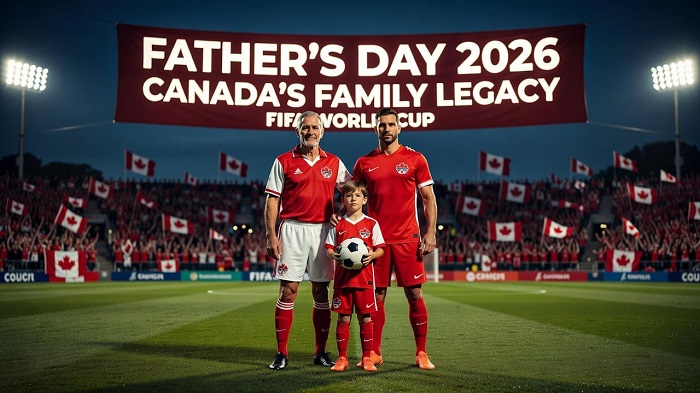
(Asian independent) Father’s Day 2026 arrives in a season packed with public meaning. Canada Day follows soon after, and FIFA World Cup 2026 matches will bring global attention to Toronto and Vancouver. The calendar is full of maple leaf, crowds, and national pride. It also raises a harder question about what lasts after the music fades.
The answer begins at home. Fathers build legacy not through grand speeches or expensive gifts, but through repetition, patience, and presence. The work is plain and constant. It shows up in the early ride to school, the shared meal, the promise kept, the tone used when tempers rise.
A father shapes far more than a household budget. He shapes a child’s physical habits, sense of order, emotional steadiness, social instincts, and moral outlook. That influence does not depend on status. It depends on whether he shows up and whether he stays steady when the day turns difficult.
Children learn more from that kind of attention than from lectures. They watch how a father handles frustration, how he treats strangers, and how he speaks when money is tight. They notice whether respect is real or only spoken about. These lessons become part of a child’s habits long before they become part of a child’s words.
Meals, homework, errands, games, and short conversations in the car often teach more than long talks. A father who is present during ordinary hours gives a child a model for discipline and care. A child may forget the exact sentence, but the pattern stays. Consistency leaves a deeper mark than performance.
That lesson matters even more now, when screens sit at the center of many homes. Smartphones, gaming, and endless scrolling can fill a room without building real contact. Families can sit together and still drift apart. A father does not need to fight technology at every turn. He needs to stay close enough to guide it.
When a father knows what his children watch, play, and share, he can set boundaries without turning the home into a battlefield. The point is balance. Children need to understand that online life has limits, and that family life comes first. Rules matter, but so does trust.
National celebrations can also carry a family lesson. Canada Day is more than fireworks and flags. The FIFA World Cup is more than a schedule of matches. In 2026, Toronto will host six games and Vancouver seven, while Canada shares the tournament with Mexico and the United States. The country will be on view in a way that is rare and public.
That moment gives fathers a chance to speak about belonging. A child who hears why Canada matters, and why good citizenship matters, is more likely to keep those ideas close. Pride in country should not be built on noise alone. It should rest on conduct, on fairness, and on the habit of respect.
Good citizenship begins in the home. It appears in the way a father greets neighbors, listens before judging, and treats newcomers with dignity. It also appears in the way he speaks about people who look, speak, or worship differently. Children learn quickly whether a parent means what he says about fairness.
A Canada Day picnic or a World Cup match watched together can become part of a child’s memory. So can the story that follows it. A father who explains why the day matters gives his child more than a holiday. He gives context, and context helps children understand that they belong to a wider civic life.
Legacy is not only money or property left behind. It is the kind of person a father helps shape. In many homes, the father is still seen as the one who keeps the lamp full and protects the flame when the weather turns rough. That image still fits modern life, because modern life brings real strain.
Money worries, social pressure, drugs, violence, and confusion about parental roles can shake a child’s sense of safety. A house may look stable from the outside and still feel unsure inside. In that setting, faith, discipline, tradition, and honest family stories matter. They give children a map when the world feels loud.
Those stories matter because children trust fathers more when they hear the full picture. A polished success story can feel distant. A story about school trouble, hard work, migration, marriage, sacrifice, or failure feels real. It teaches that adults have struggled, learned, and changed. It also teaches that honesty builds closeness.
Children grow stronger in homes that are steady and affectionate. Love without order can drift. Order without love can harden. When both are present, children tend to step into the world with clearer minds and firmer hearts.
Father’s Day 2026, Canada Day, and the World Cup will fill streets, screens, and conversation for a short season. Their public force will fade. What lasts is the habit of care a father leaves behind, and the child who carries it into family life, work, and citizenship. That is the legacy that endures after the summer ends.