

THE ASIAN INDEPENDENT UK
 Dr. Ramjilal,
Social Scientist, Former Principal,
Dyal Singh College, Karnal (Haryana—India)
Drramjilal1947@ gmail.com
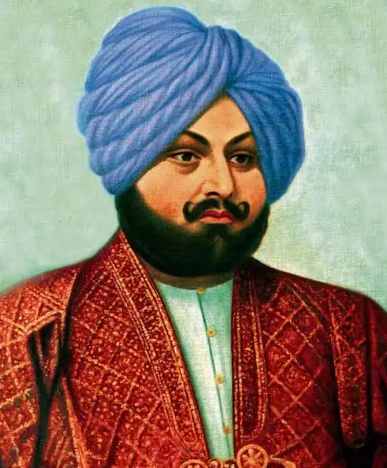
Sardar Dyal Singh Majithia (1848-1898) was born in Varanasi into a prominent and wealthy family from Majitha village in the Amritsar district of Punjab. During the 19th century, Majitha village was notable for its significance, as Maharaja Ranjit Singh had included 16 generals from three families in his army between 1800 and 1849. Dyal Singh, a distinguished son of this influential village, was a philanthropist and a national hero dedicated to equality, freedom, fraternity, liberalism, and humanity. He was an editor, journalist, educationist, economist, writer, prominent Congress leader, Brahmo Samajist, rationalist, eloquent speaker, and a man of exemplary character.
Dyal Singh embodied the spirit of his time, being a talented individual, a visionary, and a champion of public awareness and intellectual freedom. He left behind a legacy that inspires pride in all. According to B.K. Nehru, Dyal Singh did for North India what Raja Ram Mohon Roy, founder of the Brahmo Samaj, accomplished for Bengal in the early 19th century—leading it from the darkness of ignorance into the light of modernity.
To awaken and mobilise the public in North-Western India, Dyal Singh began editing The Tribune in Lahore on February 2, 1881. Before its publication, two significant newspapers—The Civil and Military Gazette (Lahore) and The Pioneer (Allahabad)—were operating in North India. However, both were British-owned and supported the oppressive forces of imperialism. Therefore, a national newspaper was necessary to educate and mobilise the public.
Dyal Singh was passionate about freedom and, influenced by the ideas of Surendranath Banerjee, Rai Bahadur Mulraj, and J.C. Bose, founded The Tribune to give a voice to the Indian populace and raise public awareness. The first edition of The Tribune was published on February 2, 1881, and it had 12 pages, priced at four Annas (25 paise) per copy. The Tribune was a weekly newspaper and was issued on every Saturday.
Sitalchandra Mukherjee began working as the first editor. Mukherjee, who was editing his newspaper “The Indian People” from Allahabad, agreed to manage The Tribune and send editorials and articles from there. Sitalakanta Chatterjee was appointed as the editor in Lahore. P.K. Chatterjee used to do newspaper cutting and pasting work in Lahore. Regarding the founding of The Tribune, Surendranath Banerjee wrote, “I pursued him to start a news paper at Lahore. I purchased for him at Calcutta the first press for The Tribune Newspaper and to me he entrusted the duty of selecting the first editor. I recommended late Sitalakanta Chatterji of Dacca(Now Bangladesh) for the post,his sucessful career as the first editor amply justified my choice’’.( A Nation in Making, Published1931)
Dyal Singh’s fearless courage, keen insight, and unwavering dedication to his purpose placed him at the forefront of those who used their wonderful pens for the nation’s benefit. The founders and managers of The Tribune believed in working solely for the public good, recognising that welfare could be promoted more effectively through moderation and restraint than through harsh attacks or extremist rhetoric.
The editorial in the first issue (2February 1881): Most Relevant today
The editorial in the first issue (2February 1881), entitled ‘About Ourselves’ explained the reasons and the policy of publishing it . Dyal Singh penned,’The projectors and conductors of The Tribune have no pet theories to maintain, nor any personal interests to serve through the medium of this journal. They profess simply to act for the public weal and they are conscious that the public weal is more advanced by the charity and moderation than by rancour and hard words. Our appearance in the field of journalism is to meet a crying want of this part of India ,namely, and English journal for representation of native opinion… The aim of The Tribune will be, as its name imports, fairly and temperately to advocate the cause of masses. In this column we shall seek to represent the public opinion of India specially of upper India represent the public opinion of India, specially upper India.” The main objective of The Tribune in the vision of the founder was to act as the’ People’s mouthpiece ‘ and the voice of the voiceless .Dyal Singh inked in the editorial , ‘As the mouth of the people’ .He inked,“The Tribune will be conducted on broad and Catholic principles ….we shall not be identified with any particular race, class or creed, nor seek to give prominence to the view of any political party.”
Dyal Singh was well-versed in the fact that Indian society is multi-religious; therefore, for the cause of social harmony, national unity, and progress, secularism is a fundamental principle. Consequently, in the first editorial, he also took a neutral stance on religious matters. He vividly wrote, ‘In religious matters, we shall maintain a strictly neutral position.’ This vision of the founder is most relevant today when the diehard communal ideologies, religious zealots, and psycho nationalists are demolishing the basic structure of society in the name of religion to mobilise mass hysteria against minorities, and are generating vote bank theory to win elections at the cost of necessities of life. Additionally, increasing the communal – corporate alliance is fatal for the poor masses.
In our opinion, at that time when there were more people educated in Urdu and Persian languages in Punjab. According to the Public Service Commission Report (1886-1887), there were 16,939 English-educated Indians in Madras, 3,200 in Bengal, and only 1,944 in Punjab. Publishing ‘The Tribune’ newspaper in English was truly a courageous act. In the first editorial of The Tribune, Dyal Singh wrote that its objective was to “represent indigenous public opinion” so that it could function as the “Mouthpiece of the People.”
Establishment of Punjab University, Lahore, 1882:
Punjab University, Lahore, was established in 1882 due to the tireless efforts of, Dyal Singh Majithia. He envisioned that Punjab University should emulate the universities in Calcutta, Madras, Bombay, and London, and he advocated for their establishment and operation. To promote this vision, he launched a movement, publishing nearly two dozen articles, starting with the first edition of the Tribune. As a result of his relentless dedication, English was adopted as the medium of instruction, which he viewed as a crucial key to societal and national development.
Dyal Singh started the publication of The Tribune from Lahore (now in Pakistan) on February 2, 1881.After the partition, the newspaper, which moved from Lahore to Shimla and then to Ambala, is now published from Chandigarh and other cities in English, Hindi, and Punjabi.
The Tribune Trust and Current Trustees
On August 15, 1978, on the occasion of Independence Day, Dainik Tribune and Punjabi Tribune were launched. All three editions of The Tribune (English, Hindi, and Punjabi) are published by The Tribune Trust. Currently, the Chairman of the Tribune Trust is the Hon. N. N.Vohra (former Governor of Jammu and Kashmir), and the trustees include Justice S. S. Sodhi, Lt. General S. S. Mehta, Gurbachan Jagat (former Governor of Manipur), and S. Paramjit Singh, among others.
Current Editors and Editors-in-Chief of The Tribune
The first editor of The Tribune was Sital Chandera Mukherjee.He was followed by Sitakant Chatterjee, Lala Harkishan Lal and,JC Bose ,and Bipin Chandra Pal (close associate and friend of Lala Lajpat Rai and Bal Gangadhar Tilak), Kali Nath Ray, Prem Bhatia, Hari Jai Singh, H. K. Dua, Raj Chengappa, Harish Khare, and Rajesh Ramachandran. Currently, the Editor-in-Chief is Ms. Jyoti Malhotra, the editor of Dainik Tribune is Naresh Kaushal, and the acting editor of Punjabi Tribune is Ms Arvinder Pal Kaur.
A Shining Example of Women’s Empowerment:
143 years after the founding of The Tribune, on May 14, 2024, Ms Jyoti Malhotra became the first woman Editor-in-Chief. Before joining the Tribune Group, Jyoti Malhotra had 30 years of experience as a journalist. She previously worked as a Senior Editor at newspapers like The Indian Express and The Print. Her main areas of expertise are Indian domestic and foreign policy.As Editor-in-Chief, she is a shining example of women’s empowerment.
Difficulties and continuous growth in development: From February 2, 1881, to February 2, 2026,
From February 2, 1881, to February 2, 2026, the Tribune faced numerous problems and difficulties. Details of these significant problems and events are given below:
Problems and difficulties.
Firstly, Robert Knight, a pro-Indian editor, wrote a detailed report in The Statesman (London Edition) about the workings of the British bureaucracy and defence fraud. As a result, a wealthy man, at the behest of the British bureaucracy, filed a case in Hyderabad. Dyal Singh Majithia was a member of the Defence Committee at that time. He exposed the defence fraud through The Tribune. When a delegation went to meet the Lieutenant Governor of Punjab (1892–1897), Dennis Fitzpatrick, he advised them to raise their grievances through The Tribune. Consequently, the British bureaucracy was angered, and a civilian from Punjab wrote to ‘The Pioneer’ (Allahabad) that “the administration of Punjab is in the hands of the Governor and the Tribune, and the secretaries and district magistrates are nowhere to be seen.” This was a great honour for The Tribune and Dyal Singh Majithia.
Secondly, in 1890, the Superintendent of Police filed a case against Dyal Singh and the editor of The Tribune. According to the First Information Report (FIR), Dyal Singh had allowed the nationalist activist Allah Ram to deliver a public speech on the premises of his bungalow in Amritsar.
Thirdly, in 1919, due to civil disturbances and political activities in Punjab, the editor of The Tribune, Kali Nath Ray, was arrested by the British imperialist government. However, due to the intervention of Mahatma Gandhi, he was honourably released.
B. Continuous growth in development
1. Bhagat Singh and The Tribune:
It is being propagated by the current ruling leaders that Jawaharlal Nehru and Mahatma Gandhi were against Bhagat Singh. This is being done to tarnish their image. We inform our discerning readers that Jawaharlal Nehru met the revolutionaries on August 8, 1929, when they were on a hunger strike inside jail. This news was published in The Tribune under the headline “The Great Sacrifice May Bear Fruit: Pandit Jawaharlal Nehru’s Impressions of Prisoners.” (The Tribune, Lahore, August 10, 1929). Not only this, the martyrdom of Sukhdev Thapar, Bhagat Singh, and Rajguru on March 23, 1931, the news was first published by The Tribune on front page on March 25, 1931, under the headline ”Bhagat Singh, Rajguru and Sukhdev Executed” (The Tribune. Lahore, March 25, 1931, P.1). The news of martyrdom spread like wild fire from Lahore to Calcutta, Madras and Bombay. The popularity of the Tribune increased manifold throughout India and abroad among the Diasporas.
2. World War II and the Partition of India :1939-1947
During World War II, The Tribune’s influence in Punjab grew as its reporting provided insights into the global situation and political awareness during wartime, colonialism, nationalism and self-governance, political activism among farmers, labourers, and the elite, mobilisation, information and wartime politics, civil liberties, and constitutional issues. Furthermore, it reported on famine relief, shortages, and economic upheaval, which directly affected Punjabis. It translated global events into local consequences, making the war personally relevant to its readers. It reported on the impact of local mobilisation, anti-war sentiment, and demands. Political debates, local leadership, and the relationship between the bureaucracy and the people have always been, and continue to be, its reporting. The Quit India Movement (1942), the Indian National Army (INA) and Red fort Trials (November 1945-May 1946), Revolts in the Royal Indian Navy, Royal Indian Air Force, Indian Army and Indian Police (1946), constitutional developments and elections of 1946, and the formation of the interim government were the most wanted columns of the Tribune. During the communal riots of 1947 and the Partition of India, it acted with great restraint.
3. The National Emergency (June 25, 1975 – March 21, 1977): Balanced Approach
During the National Emergency ( Article 352 of the Constitution–June 25, 1975 – March 21, 1977), when restrictions were imposed on newspapers, the then editor-in-chief of The Tribune managed to publish the newspaper in a balanced manner, giving voice to the people while also avoiding government reprisals.
4. Consistent Focus on Raising Awareness about Farmers’ Issues.
A notable feature of its publication is its consistent focus on raising awareness about farmers’ issues. It has a long tradition of publishing articles related to agriculture, which continues to this day. The way it covered the 2020-21 farmers’ movement and subsequent farmer protests is unique. As a result, its popularity has increased among educated farmers and agricultural labourers. All its editions are visually appealing.
In brief, The Tribune has achieved significant growth by prioritising the representation of indigenous public opinion over commercial profits. As a leading newspaper in Punjab and North India, it publishes editorials and articles with a focus on public welfare issues. Its core ideals include advocating for the rights of marginalised groups, women’s rights, gender equality, secularism, and unity in diversity, reflected across its English and Hindi and Punjabi publications. Indeed, all three editions of The Tribune are a valuable legacy of the founder-Dyal Singh Majithia.





