By Surjit Singh Flora

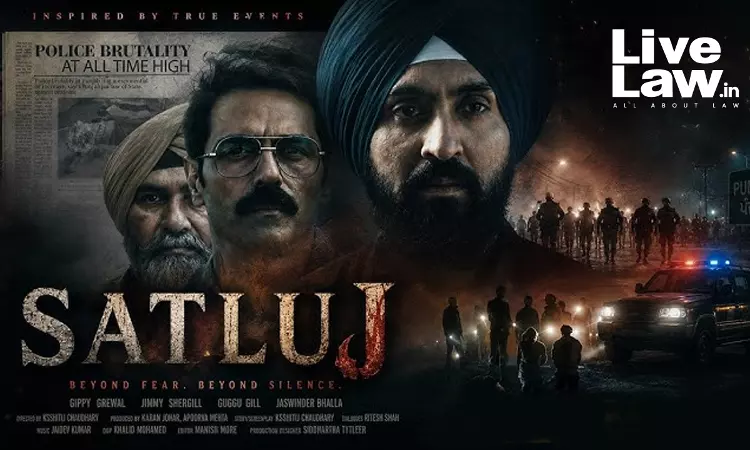
(Asian independent) A film once titled Punjab ’95 reached audiences under a different name after a long and disputed journey through India’s censorship system. Honey Trehan’s biographical drama stars Diljit Dosanjh as Jaswant Singh Khalra, the Punjabi human rights activist who investigated alleged illegal cremations and disappearances during the 1990s.
The film’s reported release on ZEE5, followed by its removal from access in India, gave Satluj an unusual online afterlife. More importantly, it brought renewed attention to Khalra’s work and his killing. The film remains one account of Punjab’s immense and painful history, however, rather than a complete record of it.
Khalra worked as a bank director before becoming known for documenting alleged human rights violations in Punjab. During the violence and counterinsurgency of the 1980s and 1990s, families across the state reported that police had detained relatives who never came home.
Khalra examined municipal cremation records in Tarn Taran. His research drew attention to entries listing large numbers of unidentified bodies cremated by police. Human rights groups, court proceedings, and survivor testimony have documented serious allegations of enforced disappearances, unlawful killings, and custodial abuse during that period.
The film follows selected cases linked to Khalra’s investigation. That focus gives the story a human scale. It shows a man reading official records, meeting families, and confronting a fear that had become part of daily life. The film doesn’t attempt to recount every story from the insurgency or every act of violence committed during those years.
That limitation matters. Punjab’s conflict involved militant groups, police forces, political leaders, courts, central agencies, and civilians caught between competing powers. A biographical drama can portray one person’s moral choices with force, but it can’t resolve the entire historical record.
Diljit Dosanjh plays Khalra with restraint rather than the easy charm often associated with a celebrity vehicle. His performance keeps the focus on a man whose determination grows through paperwork, testimony, and meetings with grieving families.
The approach suits the subject. Khalra’s courage didn’t come from public spectacle. It came from his persistence, his refusal to overlook disturbing records, and his willingness to question powerful institutions despite the danger to himself and his family.
Trehan’s direction reportedly keeps the film close to the pressures of ordinary life. Khalra appears not only as an investigator, but also as a husband, father, colleague, and Sikh man carrying the knowledge he has gathered. The film’s measured tone gives Dosanjh room to portray fear without turning Khalra into a symbol stripped of his personal life.
That treatment may make Khalra more accessible to younger viewers. His story belongs to the past, yet the central problem remains familiar: what does a person do after finding evidence that others would prefer to keep hidden?
Because Satluj dramatizes real events, its scenes should be considered alongside the documentary record. Khalra’s investigation reportedly identified 2,097 cremations in Tarn Taran involving unidentified bodies or bodies recorded in disputed circumstances. His wider work raised questions about thousands of alleged disappearances across Punjab.
The evidence takes several forms. Cremation registers can show that a body passed through an official system. Court records can establish facts in individual cases. Survivor accounts describe detention, loss, and lasting trauma that documents alone can’t convey.
Those sources don’t always answer every question in the same way. Numbers vary by district, period, and method of investigation. The National Human Rights Commission examined several Punjab cremation cases after proceedings in the Supreme Court. Amnesty International and Human Rights Watch also published broader allegations concerning the counterinsurgency period.
Khalra’s story carries the force of documented evidence, but that evidence requires careful reading.
The film had a changing public identity long before its release. Reports said it was first called Ghallughara, then Punjab ’95, before arriving as Satluj. Each title carried a different political and historical association, so the changes became part of the public discussion.
Reports concerning the Central Board of Film Certification said the board requested more than 100 alterations, including cuts and changes to the title and character names. The full basis for those requests, and the final status of every proposed edit, hasn’t been clear in all published accounts. Still, the reported demands raised concern among filmmakers, activists, and Khalra’s supporters.
The film’s availability also changed after its reported release on ZEE5. When audiences in India could no longer easily find it, discussion didn’t disappear. It moved instead to clips, reviews, social media posts, and informal sharing.
Punjab ’95 pointed directly to a year associated with Khalra’s abduction and killing. Ghallughara carried painful historical associations for Sikhs. Satluj, by contrast, takes its name from a river that runs through Punjab’s physical and cultural memory.
The new title broadens the image while narrowing the stated subject. A river can carry grief, memory, and evidence across generations. It can also suggest one current within a much larger history.
Reports linked the change to pressure during the certification process rather than to a simple creative rebranding. That history makes the title part of the film’s story, not merely a marketing choice.
Limited official access increased public curiosity. Online discussion introduced Khalra’s name to viewers who hadn’t encountered his work in schoolbooks, mainstream cinema, or family conversations.
Dosanjh reportedly said that reaching people fulfilled an important purpose for the film. That view fits the response surrounding Satluj, particularly among younger Punjabis looking for an entry point into a difficult past.
Unauthorized copies and unverified social media posts, however, can’t replace reliable sources. A short clip may preserve an emotional moment, but it can’t establish a historical claim. Full context requires original reporting, court decisions, human rights documentation, and survivor testimony.
Satluj succeeds as a tribute to Khalra’s courage and sacrifice. Its narrow focus also creates a risk. Viewers could mistake an individual biography, shaped by a court-centered investigation, for the full history of Punjab’s tragedy.
Legal cases often identify particular acts and responsible individuals. They may not explain the political decisions, institutional incentives, or broader conditions that allowed abuses to continue. Placing blame only on a small group of corrupt officers can narrow a debate that human rights reports have treated as broader and more systematic.
Claims of institutional responsibility also require evidence and careful sourcing. A film can’t establish a sweeping conspiracy through dramatic scenes alone. Punjab’s history requires room for competing accounts, documented facts, unresolved questions, and the experiences of people whose losses never reached a courtroom.
The Satluj can be read as the course of Khalra’s work through official records, fear, and public testimony. Other rivers and waterways, including the Ravi, Beas, Ghaggar, and smaller streams, suggest stories beyond the film’s frame. That interpretation belongs to the film’s wider reception, not to a claim made by its filmmakers.
Those other currents include the anti-Sikh violence of 1984, the Anandpur Sahib Resolution, electoral politics, militant violence, the counterinsurgency, the Terrorist and Disruptive Activities (Prevention) Act, local rivalries, and the roles of Delhi and the central government. Each subject carries its own evidence and disputes.
Together, they show why one film can’t contain all of Punjab’s grief. Satluj gains strength from its close attention to one man’s choices, while the wider history remains necessary to understand the forces surrounding him.
A fuller account requires reputable human rights reports, Supreme Court and National Human Rights Commission records, survivor testimony, academic histories, and reporting produced during the period itself. Those sources place Khalra’s work beside the causes and consequences of Punjab’s conflict.
The film opens a door into Khalra’s life and the evidence he pursued. It cannot be the final account.
Satluj gives a new generation a clear view of Jaswant Singh Khalra’s compassion, courage, and sacrifice. Dosanjh’s performance and Trehan’s focused direction make that individual story difficult to dismiss.
Punjab’s past, however, extends beyond any single prosecution, officer, or film. Khalra’s questions about justice and human rights remain in the record, even when censorship, removal, and silence restrict access to the story.