

THE ASIAN INDEPENDENT UK

Bal Ram Sampla
Geopolitics
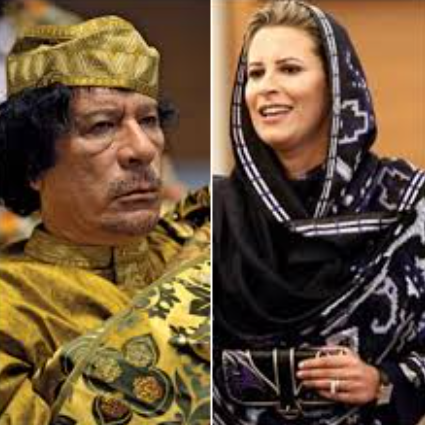
Aisha Gaddafi is the daughter of Muammar Gaddafi, the man who ruled Libya for over forty years. She was not just a bystander in her father’s story — she was a trained lawyer, a former United Nations Goodwill Ambassador, and someone who watched the world her family built collapse in a matter of months. Since her father was captured and killed in 2011, she has lived in exile in Oman. From there, she has spoken out about what she believes the world needs to understand about what happened to Libya — and why it matters for other nations today.
What Happened to Libya?
To understand her warning, we first need to understand the story behind it. In 2003, Muammar Gaddafi made a dramatic decision: he voluntarily gave up Libya’s programs to develop nuclear and chemical weapons. He invited international inspectors into the country. He destroyed missiles. He cooperated fully. In return, Western governments — particularly the United States and the United Kingdom — welcomed him back into the international community. After years of sanctions and isolation, Libya was offered a seat at the table.
For a brief moment, it looked like a success story. Libya was praised as a model for how rogue states could reform and rejoin the world. Leaders shook Gaddafi’s hand. Trade returned. Diplomats visited Tripoli.
Then, in 2011, everything changed. When the Arab Spring — a wave of popular uprisings across the Middle East — reached Libya, protests erupted against Gaddafi’s rule. NATO, led by France, the United Kingdom, and the United States, launched an air campaign under a United Nations resolution to “protect civilians.”
Within months, Gaddafi’s forces were overwhelmed. In October 2011, he was captured by rebel fighters and killed. Libya, once a stable if authoritarian state, collapsed into chaos. It has not fully recovered since.
“Negotiating with a wolf will not save the sheep or bring lasting peace — it only sets the date for the next meal.”
— Aisha Gaddafi
What Is Her Warning?
Aisha Gaddafi’s message, addressed directly to the people of Iran, is built on one central lesson: do not trust Western powers when they offer you peace in exchange for disarmament. She believes her father made a fatal mistake. He chose dialogue. He gave up his weapons. He believed the promises made to him. And when the moment came, those promises meant nothing. NATO bombs fell anyway.
Her warning to Iran is therefore simple and blunt: do not repeat Libya’s mistake. She argues that any country that surrenders its military strength — particularly its most powerful weapons — in exchange for Western approval is not buying security. It is buying time before the same fate arrives. The weapons, she believes, were the only real protection Libya had.
She also points with admiration to countries like Cuba, Venezuela, and North Korea — nations that have endured decades of Western pressure, sanctions, and isolation, yet have never bent to demands for disarmament. In her view, their resistance, however costly, is what has kept them from sharing Libya’s fate.
Why Does This Matter for Iran?
Iran has been at the center of nuclear negotiations with Western powers for years. In 2015, Iran signed the JCPOA — a landmark nuclear deal — agreeing to limit its nuclear activities in exchange for relief from crippling economic sanctions.
In 2018, the United States under President Trump walked away from the deal entirely, reimposing sanctions while Iran had already kept its side of the bargain. For many Iranians and regional observers, this felt like a betrayal, and it made Aisha Gaddafi’s parallel feel uncomfortably relevant.
Her message arrives as Iran once again faces pressure over its nuclear program, with the question of whether to negotiate or resist sitting at the heart of Iranian politics. To those who feel burned by the 2018 withdrawal, her warning resonates deeply: the Libya case is not ancient history — it is a blueprint for how these situations can end.
Is She Right?
Gaddafi did disarm. Western leaders did welcome him. NATO did intervene eight years later and his regime did fall. These are historical realities, not opinions. The parallel with Iran’s situation — a country pressured to limit its nuclear program in exchange for economic benefits — is genuinely striking.
But her argument leaves out important point. Gaddafi’s regime was deeply repressive. The 2011 uprising was driven by his own people, not simply engineered from outside. NATO’s intervention, while debated and criticized, was triggered by a real civil war — not a quiet, stable country that was suddenly attacked. The situation was far more complicated than a simple story of Western betrayal.
Conclusion
Aisha Gaddafi’s warning is the voice of someone who lost everything and is trying to make sense of why. Her message is emotionally powerful, historically grounded, and politically charged. She is right that Libya’s disarmament did not protect it. She is right that promises made by powerful nations do not always hold. But the full picture is more complex than a simple lesson about wolves and sheep.
References
1.https://www.armscontrol.org/factsheets/chronology-libyas-disarmament-and-relations-united-states
2.https://www.belfercenter.org/publication/lessons-libya-how-not-intervene
3.https://committees.parliament.uk/writtenevidence/59173/html/
4.https://link.springer.com/chapter/10.1057/9781137273956_9
5.https://www.wilsoncenter.org/blog-post/giving-the-bomb-revisiting-libyas-decision-to-dismantle-its-nuclear-program
6.https://en.wikipedia.org/wiki/2011_military_intervention_in_Libya