SAMAJ WEEKLY UK
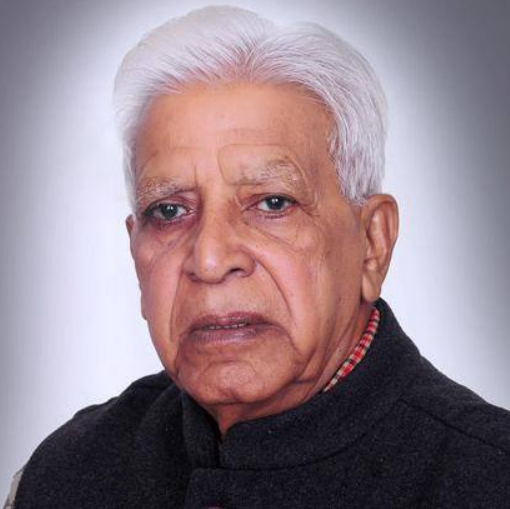
Dr Ramjilal, Social Scientist,
Former Principal, Dyal Singh College,
Karnal (Haryana, India).
Email: [email protected]
Brief:
The introduction of Large Language Models (LLMs), particularly following OpenAI’s launch of ChatGPT, has brought about a transformative shift in educational technology. In India, a nation facing significant structural disparities amidst efforts toward digital transformation, the availability of ChatGPT’s free tier presents distinct challenges for educators. This paper explores the multi-dimensional issues that Indian teachers encounter with the free version of ChatGPT. By focusing on the widening digital divide, the erosion of academic integrity, the cognitive demands of verifying AI-generated information, and cultural discrepancies, this analysis contends that unregulated access to AI undermines the core objectives of India’s National Education Policy (NEP) 2020. It also offers practical recommendations for developing institutional frameworks that can convert AI into a beneficial pedagogical tool instead of a disruptive force.
Expansion:
The integration of artificial intelligence into educational systems globally has led to extensive discussions. In developing countries such as India, the democratisation of AI through free platforms like ChatGPT was initially seen as a significant advancement. However, the actual impact on Indian classrooms reveals a considerably different perspective. While premium versions of such platforms provide superior processing capabilities and updated information, the constrained functionalities of the “free tier” have presented complex challenges. As one educator succinctly remarked, “Assignments and reports are generated by ChatGPT by the students, and they argue that it is the modern form of a calculator… We are producing fools if they don’t have to think” (Quora, 2019).
Indian educators, faced with high student-to-teacher ratios and numerous administrative tasks, are now navigating the intricacies of this unregulated digital landscape. This analysis examines how the challenges introduced by ChatGPT’s free tier conflict with educational dynamics and national policies in India.
1. Addressing the Digital Divide and Equity Issues:
One of the key goals of India’s National Education Policy (NEP) 2020 is to enhance equity and inclusion in education, ensuring that digital tools facilitate the bridging of educational gaps. However, the reality of ChatGPT’s free tier contradicts this aim by fostering an illusion of equal accessibility.
While the software is free for all to use, its effective application requires a solid digital infrastructure, including high-speed internet, reliable electrical supply, and modern hardware. Research indicates that “AI understanding is often superficial and tool-centric, with minimal hands-on exposure—especially in rural and government schools” (Kundu, Bej & Mondal, 2025).
In rural and semi-urban areas, these essential resources are often lacking. Additionally, the free tier often experiences systemic congestion that results in “at capacity” errors during peak usage times. Privileged students, however, can easily circumvent these issues by opting for premium access or utilising proprietary, real-time data integrations. Consequently, a new hierarchy emerges in Indian classrooms, with under-resourced students receiving slower, less comprehensive outputs from basic models, while wealthier students benefit from optimised AI tools. Rather than democratising education as intended, ChatGPT’s free tier may unintentionally exacerbate existing socioeconomic inequalities within the student body.
2. Impact on Critical Thinking and Academic Integrity:
India’s traditional evaluation system has long been scrutinised for its emphasis on rote memorisation and high-stakes examinations. The NEP 2020 advocates for a transition toward formative assessments that cultivate critical thinking, creativity, and analytical capabilities. However, the unchecked proliferation of ChatGPT’s free tier has led to an observable increase in what can be termed a “copy-paste epidemic” in students’ assignments, homework, and laboratory reports.
Educational reviews suggest that faculty members are increasingly concerned about heavy reliance on ChatGPT, which may threaten academic integrity due to “the difficulty of detecting AI-generated content and the inadequacies of current academic policies in modulating such usage” (Lo, 2023; Shoufan, 2023).
The free version generates coherent text efficiently, making it an attractive option for students overwhelmed by their workloads. This trend disrupts the cognitive processes essential for developing writing and synthesis skills. Compounding this challenge is the lack of effective detection mechanisms within Indian institutions. Commercial plagiarism detection software has yet to adapt successfully to the nuances of AI-generated content, complicating the task of upholding academic integrity.
3. Cultural, Linguistic, and Curricular Misalignment:
The National Education Policy (NEP) 2020 emphasises multilingualism and the promotion of regional Indian languages as mediums of instruction. It also mandates curricula that are localised and draw from native cultural contexts. Free-tier language models, primarily trained on Western, anglocentric data repositories, struggle to meet these localised requirements.
Although the free version of ChatGPT supports major languages like Hindi, Bengali, and Tamil, its underlying translation algorithms often remain rigid and culturally detached. Empirical observations indicate that issues such as data privacy, algorithmic bias, misinformation, and cultural misalignment are heightened in settings that lack proper training and digital governance (Kundu et al., 2025).
The outputs frequently lack regional nuances, idiomatic accuracy, and localised historical contexts that are essential for state education frameworks (like those in Uttar Pradesh, Bihar, or Maharashtra). When Indian teachers attempt to use the free tier to generate localised lesson plans or multilingual teaching aids, they often encounter overly formal translations that require significant rewriting to be pedagogically effective.
4. The Policy Vacuum and Institutional Deficits:
One of the most concerning aspects of the current situation is that Indian teachers are navigating technological disruptions without any formal policy framework. While premier institutions like the IITs and select central universities have started internal discussions, the vast majority of K-12 schools and provincial colleges lack formal guidelines for the deployment of AI.
Teachers receive little to no institutional support or standardised professional development in AI literacy, leaving them to make isolated and subjective decisions about whether to ban AI tools, ignore their use, or integrate them on an ad hoc basis. This absence of centralised training prevents teachers from developing “AI-resistant” assessment methodologies—such as oral presentations, structured viva-voce assessments, supervised in-class writing sessions, and experiential project-based learning. These methods are crucial to fulfilling the core assessment directives of the NEP 2020.
Conclusion and Recommendations:
While the free tier of ChatGPT has democratised access to artificial intelligence, its unregulated implementation across India has created significant pedagogical, ethical, and logistical challenges for educators. To bridge the gap between AI disruptions and the progressive mandates of the NEP 2020, India’s educational leadership must shift from passive observation to proactive governance through the following measures:
1. Framework Development: The Ministry of Education, along with bodies like the NCERT and UGC, should create a national technology policy that clearly outlines the ethical boundaries for AI integration in classrooms.
2. Assessment Re-engineering: Institutional assessment rubrics must undergo a significant shift from traditional text-heavy homework submissions toward process-oriented, experiential evaluations (e.g., portfolios, real-time debates, and practical problem-solving).
3. Targeted Teacher Upskilling: Scalable and continuous professional development programmes should be implemented to equip teachers with essential AI literacy, prompt-engineering skills, and strategies for addressing AI-driven plagiarism.
Only through systematic institutional intervention can Indian educators move from simply defending their classrooms against AI disruption to using it as a partner to realise the transformative vision of the NEP 2020.
References for further study:
>Lal,Ramji,Dr.(09/10/2025).https://theasianindependent.co.uk/right-to-education-practical-aspects-an-analysis/#google_vignette
>Lal,Ramji,Dr.(09/10/2025). //https://samajweekly.com/right-to-education-practical-aspects-an-analysis/
>Lal,Ramji,Dr.(09/10/2025).https://samajweekly.com/right-to-education-2/
>Lal, Ramji, Dr. (10 October 2025, Pratibimb Media).https://pratibimbmedia.com/right-to-
Lal, Ramji, Dr. (September 5, 2026 ).https://theasianindependent.co.uk/reimagining-education-addressing-current-crises-and-developing-solutions-for-the-21st-century-education-in-a-new-way/
>Lal, Ramji, Dr. (5 September 2026). Pratibimb Media. https://pratibimbmedia.com/reimagining-education-solutions-to-current-problems-a-review/
>Lal, Ramji, Dr. (6 September 2026). Solutions to the current problems of education, Jan Sandesh Times (Hindi), Lucknow, 6 September 2026, p.13.
>Cotton, D. R., Cotton, P. A., & Shipway, J. R. (2023). Chatting and cheating: Ensuring academic integrity in the era of ChatGPT. Minerva, 61(2), 229-254.
>Gordijn, B., & Have, H. t. (2023). ChatGPT: Mitigating the risks of large language models in educational settings. Medicine, Health Care and Philosophy, 26(2), 1-5.
>Kundu, A., Bej, T., & Mondal, R. (2025). Exploring teachers’ AI literacy: cognitive, pedagogical, ethical, and contextual insights from Indian schools. Institute for Educational Research and Policy, Bankura, India.
>Ministry of Human Resource Development. (2020). National Education Policy 2020. Government of India.
>Mondal, H., Marndi, G., Behera, J. K., & Mondal, S. (2023). ChatGPT for teachers: Practical examples for utilising artificial intelligence for educational purposes. Indian Journal of Vascular and Endovascular Surgery, 10(3), 234-239.
>OpenAI. (2023). ChatGPT: Optimising language models for dialogue. OpenAI Blog.
>Shrivastava, S., & Agrawal, R. (2024). Teachers’ perceptions and challenges in using ChatGPT in higher education classrooms: The Indian perspective. Journal of Educational Technology Systems, 52(4), 412-431.