SAMAJ WEEKLY UK
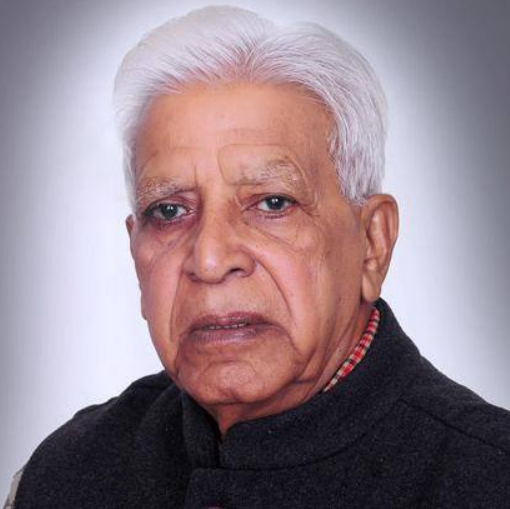
Dr RAMJILAL,
Social Scientist and Former Principal,
Dyal Singh College, Karnal (Haryana, India).
Email.id-[email protected]
Brief:
The Swaminathan Commission (2006) recommended setting minimum support prices based on the C²+50% formula. During the 2014 Lok Sabha elections (2014), the then-star campaigner of the Bharatiya Janata Party, Narendra Modi (now the Prime Minister of India), addressed 437 public meetings. In 219 of these public meetings, Narendra Modi promised to implement the Swaminathan Report, provide farmers with a minimum support price for their crops, and waive their loans. The BJP’s 2014 manifesto also promised to provide farmers with one and a half times the cost of their produce. Star campaigner Narendra Modi promised, “Trust me.
After our government comes to power, I will waive farmers’ loans with the first stroke of the pen on the first day.” However, this has not happened. After coming to power, the government leadership reneged and filed an affidavit in the Supreme Court of India in 2015 stating that the government could not fulfil this promise. But since then, the implementation of the Swaminathan Report, providing farmers with a minimum support price for their crops (MSP—C²+50% formula), and Loan waiver issues have been widely debated and raised by farmers and their organisations.
The key question is not simply whether every farmer’s loan should be waived, but rather whether there is equality and fairness in how different classes of borrowers are treated. A corporate borrower and a small farmer are not in the same position. Generally, a large company borrows for commercial investment, while a farmer borrows against an uncertain agricultural income that is vulnerable to drought, floods, crop diseases, input-price inflation, and volatile market prices.
Expansion:
The debate over loan waivers in India raises a fundamental question of economic justice: Why does the financial system seem capable of absorbing enormous losses arising from large corporate loans while relief for indebted farmers is consistently portrayed as fiscally irresponsible? This issue warrants serious public discussion, especially when agriculture remains the livelihood for millions of Indian families
A write-off is not the same as waiver
Before discussing the apparent imbalance, an important distinction must be made. A bank loan write-off is not necessarily a loan waiver. When a bank writes off an NPA, the accounting entry removes the bad loan from its balance sheet after provisioning. The borrower does not automatically receive a legal declaration that the debt no longer exists. Recovery proceedings may continue.
The Government of India has itself clarified this distinction. In a Rajya Sabha answer, the Ministry of Finance stated that the Union Government had not undertaken a general debt waiver during the preceding five financial years and that banks, rather than the government, write off NPAs according to RBI guidelines and their own board-approved policies.
Nevertheless, the scale of corporate and large-industry write-offs is striking.
The figures related to non-performing assets (NPAs) are alarming. Data from the Reserve Bank of India (RBI) covering the periods from 2008-2014 and 2014-2020 indicates that new gross NPAs of public sector banks (PSBs) rose to approximately ₹18.28 lakh crore from 2014-2015 to 2019-2020. In contrast, during the UPA regime (2008-09 to 2013-14), new NPAs were around ₹5 lakh crore. Over the last six years, PSBs have written off bad loans worth ₹68,338.8 crore, a significant increase from just ₹32,109 crore in the 2008-2014 period. Banks tend to write off NPAs that are older than four years to clean up their balance sheets.
According to information provided by RTI activist Prafulla Sharda, the Modi government wrote off ₹11,19,482 crore from banks between April 1, 2015, and March 31, 2021. This is five times more than the ₹2.22 lakh crore in loans waived by the UPA government from 2004 to 2014. During the 15 months of the COVID-19 pandemic, the BJP-led In the central context, the government waived a total of ₹245,456 crore in loans. Within this context, public sector banks wrote off loans worth ₹56,681 crore, while private banks waived ₹80,883 crore. Public sector banks accounted for a mere ₹3,826 crore of this amount, and non-banking financial companies (NBFCs) waived ₹1,216 crore.
Scheduled commercial banks collectively wrote off ₹2,859 crore.
Additionally, industrialists have received various benefits. A report from The New India Express (Hyderabad: July 17, 2022) indicated that a central government order mandates state governments and power-generating companies to purchase at least 20,000 tonnes of coal from the Adani Group. This order extends to the central government as well. The cost of coal imported by Adani is approximately ten times higher than that of domestic coal, which ranges from ₹1,700 to ₹2,000 per tonne. This order extends to the central government as well. The cost of coal imported by Adani is approximately ten times higher than that of domestic coal, which ranges from ₹1,700 to ₹2,000 per tonne.
Anti-Farmer and Negative Agricultural Policy: A Multi-Billion-Dollar Opportunity Report (September 2021) —Punishment for Farmers:
According to a report by the Organisation for Economic Co-operation and Development (OECD), Indian farmers suffered losses of ₹45 lakh crore between 2000 and 2016-17 due to inadequate minimum support prices. Another estimate places this loss at ₹8,000 to ₹10,000 per acre per year. The root cause of this issue lies in the agricultural policies implemented by the BJP-led NDA government and the Congress-led UPA government over the past twenty years (2000 to 2020), which have been characterised as “anti-farmer” and “negative”. To appease consumers and protect their interests, the prices of farmers’ produce have not been increased in tandem with agricultural investments. Meanwhile, the costs of electricity, water, diesel, petrol, fertilisers, urea, pesticides, labour, and other inputs have skyrocketed unprecedentedly. Consequently, farmers are being “punished” by maintaining low prices for agricultural products to prioritise consumer interests.
The report titled “A Multi-Billion Dollar Opportunity” (September 2021), published by three United Nations agencies—the Food and Agriculture Organisation (FAO), the United Nations Development Programme (UNDP), and the United Nations Environment Programme (UNEP)—states, “For the past twenty years, agricultural policies in India have been designed to protect consumer interests without raising food prices, and farmers bear the brunt of this.” This is further confirmed in the OECD’s “Agricultural Policy Monitoring and Development 2020” report, which indicates that farmers in India suffer from low food prices. The OECD report clearly states that the “Producer Support Estimate” for Indian farmers is negative by 5.7%, resulting in farmers incurring a loss of $23 billion in 2019.
Legal Guarantee of Minimum Support Price (C²+50%): Estimated Cost of Approximately 2 Lakh Crore:
There is a strong consensus that the government should provide a legal guarantee for the minimum support price (MSP – C² + 50%), which would cost the central and state governments around 2 lakh crore rupees annually. However, this should not be viewed as a loss, as it would help replenish the government’s crop reserves. Currently, the decline in wheat production due to climate factors underscores the necessity of this measure to alleviate hunger. The government should engage with the leaders of the United Kisan Morcha to formulate a policy that guarantees the MSP.
Critics argue against making the MSP a legal requirement, citing the estimated cost of 2 lakh crore rupees. However, they fail to question where the funds for the billions of rupees in benefits and exemptions given to corporate entities by past Congress-led UPA and current BJP-led NDA governments have come from.
Where does the farmer stand?
The situation of the ordinary farmer is fundamentally different. Agriculture is dependent on factors that an individual cultivator cannot control. A farmer may invest heavily in seeds, fertilisers, pesticides, irrigation, labour and machinery, yet lose the entire crop because of an extreme weather event. Even a good harvest does not guarantee a remunerative price.
The Government of India informed Parliament in March 2023 that it had not announced a farm-loan waiver since 2008, although individual state governments had announced their own schemes from their own resources. At the same time, agricultural credit had increased substantially, from about ₹8 lakh crore to ₹18.50 lakh crore in the eight years preceding 2022-23.
Credit expansion is important, but more credit cannot by itself solve the problem of unsustainable farm debt. If a farmer’s income is insufficient to service existing debt, providing another loan may merely postpone the crisis.
The RBI’s Annual Report 2024-25 records that outstanding Kisan Credit Card loans reached about ₹6.01 lakh crore at the end of 2024-25, including crop loans, term loans and loans for animal husbandry and fisheries. The RBI also raised the collateral-free agriculture-loan limit from ₹1.6 lakh to ₹2 lakh per borrower in December 2024.
These measures improve access to institutional credit, but the larger question remains: What happens when the farmer is unable to repay because the crop has failed or prices have collapsed?
On January 13, 2016, the Indian Cabinet approved the Pradhan Mantri Fasal Bima Yojana, which assigned the entire crop insurance responsibility to 18 insurance companies. Over the five-year period from 2016-2017 to 2021-2022, these companies accumulated profits of ₹40,000 crore, while farmers continued to protest for compensation.
This substantial sum ultimately flowed into the pockets of corporations. The additional benefits provided to corporations, industrialists, and capitalists could total trillions of rupees, yet farmers and advocates for agricultural reform, often blinded by shortsightedness, overlook this reality. This amount vastly exceeds the ₹200,000 crore that would be required for legalising the Minimum Support Price (MSP– C²+50%).
Minimum Support Price (MSP): A Natural Right of Farmers
If this situation persists without the enactment of farmer-friendly policies and the provision of a minimum support price for agricultural produce based on the C²+50% formula suggested by the Swaminathan Report (2006), then farmers will continue to face exploitation. Indian farmers must understand their rights, remain vigilant, and actively push for changes in government policies to implement farmer-friendly measures.
We strongly advocate that receiving a minimum support price (MSP) is a natural right of farmers. Our main emphasis is that the MSP should be calculated using the C²+50%- formula and that a statutory guarantee for this price is essential. During discussions between the government and leaders of the Samyukta Kisan Morcha throughout the farmers’ protests in 2020 and 2021, the demand for legalising the minimum support price was repeatedly stressed, with farmers insisting on a support price based on the Swaminathan Commission report.
The Supreme Court and farmers’ loan waivers: State of Tamil Nadu & Another v. National South Indian River Interlinking Agriculturist Association (November 2021):
The Supreme Court has also dealt with the constitutional and policy dimensions of farm-loan waivers. In State of Tamil Nadu & Another v. National South Indian River Interlinking Agriculturist Association, decided in November 2021, the court considered a scheme relating to agricultural loan waivers for small and marginal farmers.
The case arose from a Tamil Nadu scheme that initially provided relief to small and marginal farmers. The litigation raised questions under Article 14 of the Constitution and concerned whether restricting the benefit according to landholding was arbitrary. During the proceedings, Tamil Nadu informed the court that it had waived approximately ₹12,110.74 crore of crop loans for 1,643,346 farmers through cooperative banks.
The importance of this judgement goes beyond the particular Tamil Nadu scheme. It demonstrates that loan waiver is fundamentally a matter of governmental economic and social policy, subject to constitutional scrutiny. The Supreme Court recognised the policy considerations surrounding the vulnerability of small and marginal farmers and the state’s attempt to direct limited resources towards those most distressed.
This is important because the public debate often treats farmer loan waivers as though they are inherently unconstitutional or economically immoral. That is an oversimplification. The constitutional question is whether a particular policy is arbitrary, discriminatory or contrary to law. A properly designed relief scheme for distressed farmers can have a legitimate connection with the constitutional goal of social and economic justice.
Equality Should Not Mean Identical Treatment:
Article 14 of the Constitution guarantees equality before the law and equal protection of the laws. However, equality does not necessarily require that people in identical circumstances be treated identically. A multinational corporation with professional management, diversified assets, and access to multiple sources of finance is not economically equivalent to a two-hectare farmer whose livelihood depends on a single crop. Therefore, a policy that acknowledges the special vulnerability of farmers cannot automatically be condemned as discriminatory. In fact, treating radically unequal economic situations as if they were identical may itself exacerbate substantive inequality.
This principle should guide public policy. A farmer facing crop failure and accumulated agricultural debt should have access to a transparent mechanism for restructuring or relief. At the same time, large corporate borrowers who default should be held accountable, and strong recovery mechanisms and scrutiny of the circumstances surrounding the lending and default should be enforced.
The Moral Question of Public Money:
The strongest argument against indiscriminate loan waivers is that taxpayers ultimately bear the cost, and this concern is legitimate. Repeated blanket waivers can weaken credit discipline, encourage strategic default, and place pressure on state finances. However, the same principle of fiscal responsibility should be applied consistently. If society demands that farmers repay every rupee regardless of crop failure, natural disasters, or market collapses, then society should also demand maximum recovery from large defaulters, transparent reporting of write-offs, examination of lending decisions, and accountability in cases of negligence or wilful default.
The Reserve Bank of India’s (RBI) framework makes it clear that banks may write off fully provisioned non-performing assets (NPAs) from their balance sheets while recovery efforts can continue. Therefore, public debate should not conflate an accounting write-off with a complete extinguishment of liability. Nevertheless, the sheer size of Large industry write-offs reported to Parliament makes it reasonable for citizens to ask, ‘Why is the financial burden associated with corporate failure primarily discussed as a banking problem, while farmer distress is often portrayed as a moral failure of the borrower?’
What does the comparison tell us?
The comparison raises a serious question about the structure of India’s financial system. A large corporate borrower generally has access to multiple mechanisms: restructuring, refinancing, settlement, insolvency proceedings, asset sales and legal recovery processes. A small farmer may have much less bargaining power and may depend upon a crop loan, cooperative bank or regional rural bank.
The difference is therefore not simply about money. It is also about institutional access, bargaining power and the ability to survive financial distress. At the same time, it would be wrong to claim that every corporate write-off represents a gift to a rich industrialist. Banks write off bad debts for accounting and provisioning purposes, while recovery proceedings can continue. Similarly, not every farmer receiving relief is an irresponsible borrower; agriculture is uniquely exposed to weather, price and production risks.
Subhash Chandra’s Case: August 2026: Reignited the Debate:
Subhash Chandra’s case has raised significant concerns regarding financial justice. The National Company Law Tribunal (NCLT) approved a resolution plan that includes a deemed claim of approximately ₹22,006 crore; however, the recoveries from Chandra’s personal estate are estimated to be only ₹6.25 crore. This represents a substantial 99.97 per cent haircut for creditors. It is important to clarify that the ₹22,006 crore was not entirely Chandra’s personal debt; most of it stemmed from guarantees he provided for corporate loans. Several creditors, including public sector banks, have challenged this decision. On August 31, the bench determined that there was no clear majority in the previous decision. Consequently, on September 1, 2026, the NCLT President constituted a five-member special bench and stayed the earlier order. (Dainik Tribune, Chandīgarh, 2 September, 2026, p. 1.) This case has reignited the debate about the balance between corporate debt relief and the ongoing debt burden faced by farmers.
From Loan Waiver to Agricultural Income Security:
Farmers still face debt due to expensive inputs, weather uncertainties, lack of irrigation, market price fluctuations, small land holdings, and health and social expenses. Therefore, a loan waiver alone is not a permanent solution. The solution should not be limited to periodic political announcements of loan waivers. India needs a more comprehensive agricultural debt policy:
1. Farmers affected by verified natural disasters should receive automatic and timely restructuring or relief.
2. Crop insurance must be made more reliable, transparent, prompt, and free from corruption in both the revenue department and Mandis.
3. Farmers need a legal guarantee for the Minimum Support Price (MSP) set at C2+50%, alongside improved access to markets, storage, and processing facilities.
4. Institutional credit should replace reliance on informal moneylenders whenever possible.
5. A clear distinction should be made between wilful corporate defaults and ordinary business failures, while recovery efforts from large borrowers should be pursued with the same seriousness as those for small borrowers.
6. Agricultural debt data should be published transparently so that citizens can compare the treatment of different categories of borrowers.
7. A national framework for addressing genuine agricultural distress should be established, rather than leaving farmers dependent solely on the political priorities of individual state governments.
8. The joint family system is a concept that belongs to the past. The shift to a single-family system has resulted in smaller landholdings, which has marginalised many farmers. Additionally, the younger generation has less interest in farming, often migrating to foreign countries or cities in search of jobs. As a result, these marginalised farmers, or kisans, are increasingly dependent on machinery or on migrant labourers from other states in India, leading to higher costs. Kisan organisations should advocate for cooperative farming instead of contract farming, and the government should provide financial support for cooperative farming and cooperative societies.
Conclusion:
India cannot build an equitable economy by making one class bear the full burden of economic failure while treating another class primarily through financial restructuring and write-offs. Farmers are not asking for charity; they are asking for economic security, fair prices, affordable institutional credit, and justice when circumstances beyond their control make repayment impossible. At the same time, it is inaccurate to say that every corporate loan written off is a government waiver. The distinction between write-off, restructuring, settlement, and waiver must be maintained. However, the substantial value of large industry loan write-offs reported to Parliament necessitates transparency and accountability.
The Supreme Court’s jury shows that farmer loan relief can be addressed within the framework of constitutional governance and social justice. The challenge for governments is to design policies that are financially responsible, legally defensible, and socially just.
Thus, the central issue is not “loan waiver versus no loan waiver” but rather “whose economic distress receives institutional recognition, and on what principles?” A democratic welfare state must ensure that small cultivators are not treated as the weakest link in the financial system. If public money can be used to stabilise banks and manage large corporate bad debts, then public policy must also create a credible and dignified mechanism to protect the farmers whose Labour feeds the nation. The question before India is straightforward: if the farmer carries the risk of feeding the country, why should their economic needs be overlooked?
References for further study:
> Lal, Ramji,Dr. ,”Legal Guarantee of Minimum Support Price (C2+50%) and the Speed of the Engine of Agricultural Development: An Evaluation/https://theasianindependent.co.uk/legal-guarantee-of-minimum-support-price-c250-and-the-speed-of-the-engine-of-agricultural-development-an-evaluation/)
>Lal, Ramji, Dr.( May 2015), “Implementing the Swaminathan Report is Impossible Without Policy, Determination, and Willpower,” Sajag Samaj (Karnal), Year 9, Issue 5, May 2015, pp. 8-12.
>Lal, Ramji ,Dr. (October 21, 2020), “A Law Should Be Made Regarding MSP,” Yug Marg (Chandigarh and Kurukshetra Editions), October 21, 2020, p. 6.
>Lal, Ramji,Dr. ,”Legal Guarantee of Minimum Support Price (C2+50%) and the Speed of the Engine of Agricultural Development: An Evaluation,” https://theasianindependent.co.uk/legal-guarantee-of-minimum-support-price-c250-and-the-speed-of-the-engine-of-agricultural-development-an-evaluation/.
> Lal,Ramji,Dr.(August 30, 2026)).The Changing Nature of Farmers’ Movements in India – 2000 to 2026: A Review https://theasianindependent.co.uk/the-changing-nature-of-farmers-movements-in-india-2000-to-2026-a-review/
>Lal,Ramji,Dr.(August 30, 2026)).https://samajweekly.com/the-changing-nature-of-farmers-movements-in-india-2000-to-2026-a-review/
>Lal,Ramji,Dr.(August 30, 2026)Pratibimb Media)/https://pratibimbmedia.com/the-evolving-nature-of-indian-farmers-movements-2000-to-2026-a-review/
>Farm Loan Waivers and Corporate Defaulters are Two Sides of the Same Coinhttps://thewire.in/economy/farm-loan-waivers-and-corporate-defaulters-are-two-sides-of-the-same-coin
>Reserve Bank of India, Gross and Net NPAs of Scheduled Commercial Banks.
>Government of India, Ministry of Finance, Agricultural Debt Waiver and Debt Relief Scheme, 2008.
>Government of India, Ministry of Finance, implementation and reimbursement under ADWDRS.
>RBI, guidelines on disclosure and movement of NPAs and write-offs.
>Reserve Bank of India (29 May 2025), Annual Report 2024-25, Chapter IV, “Credit Deliver and Financial Inclusion.” RBI, 29 May 2025.
>Government of India, Ministry of Finance (19 August 2025)., Rajya Sabha Unstarred Question No. 1035, “Details of Sector-wise Loans Waived Off,” 12 December 2023.
>Government of India, Ministry of Finance, (19 August 2025), Rajya Sabha Unstarred Question No. 2958, “Corporate Loan Waivers and Tax Exemptions,” 19 August 2025.
>Government of India, Ministry of Agriculture, (31 March 2023). Rajya Sabha Starred Question No. 329, “Waiving Off Farmers Loans,” 31 March 2023.
>Supreme Court of India, State of Tamil Nadu & Another v. National South Indian River Interlinking Agriculturist Association, Civil Appeal No. 6764 of 2021, judgment dated 23 November
>Reserve Bank of India, Master Circular – Priority Sector Lending, provisions concerning agricultural credit and farmers.
>The Constitution of India, Article 14 (Equality before law and equal protection of laws) and Directive
Principles State Policy (Chapter 4) concerning social and economic justice. In the present context, economic justice in India should mean that the small farmer gets relief in his genuine hardship, but the large corporate/capitalist/rich borrower or person should not get an unfair advantage merely because of his size, influence or political reach.
>Parliamentary/RBI data on Agriculture & Allied Activities loan write-offs, FY 2020-21 to FY 2025-26.
>Recent parliamentary reporting on Large Industries & Services versus Agriculture write-offs, FY 2021-22 to FY 2025-26.
>https://www.indiatoday.in/business/story/subhash-chandra-insolvency-haircut-rs-22006-crore-claims-rs-6-25-crore-plan-need-context-2983410-2026-08-31
>https://economictimes.indiatimes.com/industry/banking/finance/banking/99-97-haircut-how-the-scissor
>https://www.forbesindia.com/article/cover-stories/lenders-to-subhash-chandra-face-a-99-97-haircut-tha
>Dainik Tribune, Chandigarh,2 September,2026, p.1.