SR Darapuri I.P.S.(Retd)
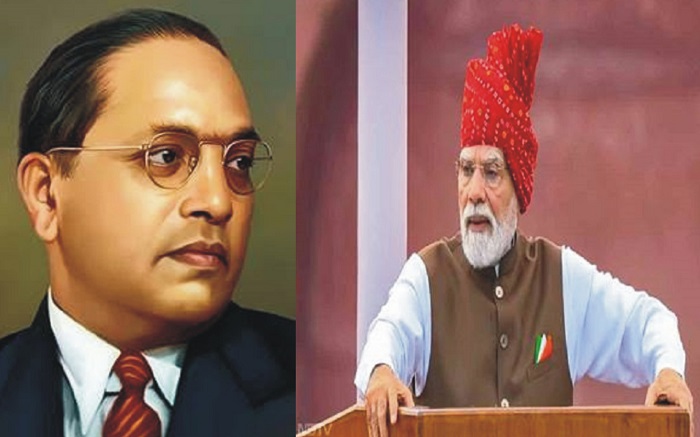
 (Asian independent) Prime Minister Narendra Modi’s Independence Day address at the Red Fort presented Viksit Bharat 2047 as the central national aspiration. The speech emphasised self-reliance, technological advancement, artificial intelligence, manufacturing, defence capability, energy security, youth empowerment and national unity. This vision seeks to project India as a powerful, prosperous and technologically advanced nation by the centenary of Independence.
Yet, from an Ambedkarite perspective, economic and technological development cannot by themselves define national progress. The more fundamental question is: developed India for whom, and on what constitutional foundations?
Dr B.R. Ambedkar understood democracy as much more than elections and representative government. For him, political democracy could not survive without social democracy, founded upon liberty, equality and fraternity. A country could become economically prosperous while continuing to suffer from caste oppression, social exclusion and unequal distribution of power. Therefore, the real test of development must be whether ordinary citizens experience freedom, dignity, equality and security in their everyday lives.
The idea of Atmanirbhar Bharat also deserves an Ambedkarite examination. Economic and technological self-reliance can strengthen national sovereignty, but national self-reliance must ultimately translate into citizen self-reliance. Development should generate secure employment, social security, quality education and equal economic opportunities rather than merely increase aggregate wealth or corporate concentration.
The emphasis on national security also raises an important constitutional question. The State has a legitimate duty to combat terrorism, armed insurgency and violence. However, a democracy must carefully distinguish between armed violence and political dissent. The language of “ideological” enemies or “dimaagi Naxals” becomes constitutionally problematic if legitimate criticism, radical political thought or peaceful dissent is treated as a threat to national security. Ambedkar’s idea of constitutional morality requires the State to exercise power within constitutional limits and to respect disagreement.
The same principle applies to national unity. For Ambedkar, fraternity did not mean uniformity or unquestioning patriotism. It meant a feeling of equal belonging among citizens. The Republic becomes stronger when Dalits, Adivasis, minorities, women, workers, farmers and political dissenters can all experience India as equally their own.
Thus, the central question for Viksit Bharat 2047 should not simply be how rich, powerful or technologically advanced India becomes. It should be whether India’s development simultaneously produces greater social equality, economic justice, civil liberties and democratic participation.
The contrast can therefore be expressed simply:
Viksit Bharat must become not merely a powerful India, but a just India; not merely an economically self-reliant India, but an empowered citizenry; not merely a strong State, but a constitutional State.
The ultimate Ambedkarite test of India in 2047 would be whether liberty, equality and fraternity have moved from the pages of the Constitution into the everyday lives of its citizens.
That is the unfinished promise of the Indian Republic.