

RAMJILAL, Social Scientist and Former Principal, Dyal Singh College, Karnal (Haryana-India).
Email id: drramjilal1947 @gmail.com
(Asian independent)

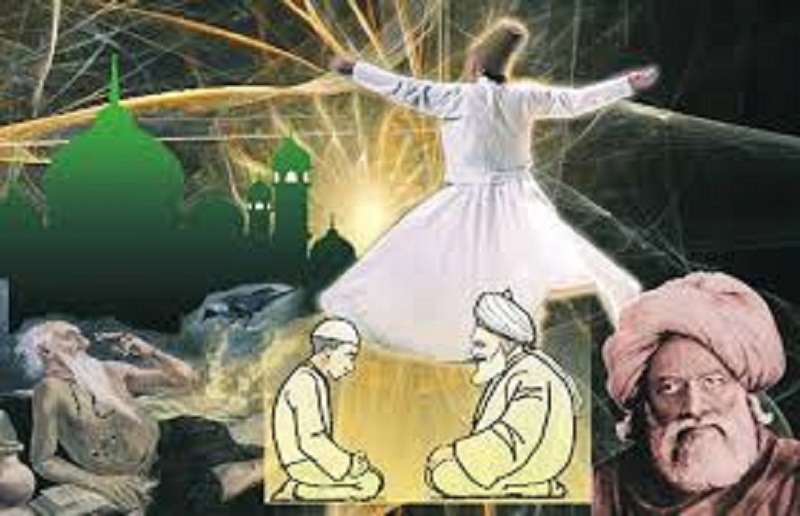
Abstract: What Is Sufism?
The term “Sufi” is often linked to the Arabic word “Safa” (Purty), which translates to “suf” (Wool), which translates to “wool”. This connection refers to the coarse woollen garments that some early ascetics wore or the Suffa (the platform of the Prophet’s mosque where poor companions mediated). While there are other interpretations of the etymology, the wool origin is widely accepted as the most credible. Over time, Sufism transitioned from individual ascetic practices to structured spiritual lineages known as tariqas. Among the most notable orders are the Chishti, Suhrawardy, Qadiri, and Naqshbandi traditions.
Sufism, known in Arabic as tasawwuf, constitutes the mystical and spiritual dimension of Islam that focuses on the purification of the heart and emphasises love of God, self-discipline, compassion, annihilation of ego (Fana), humility, tolerance, universal brotherhood, and service to humanity. It aims to deepen the inner aspects of religious life, highlighting the importance of sincerity, spiritual awareness, and the transformation of human character. Rather than being a separate religion, Sufism represents a diverse tradition within Islam, comprising various spiritual orders, teachings, and interpretations.
Many prominent Sufi poets have conveyed these principles through the metaphor of divine love, reflecting the connection between the human soul and its Creator. While Sufism encompasses a wide range of practices and theological perspectives across different orders, certain themes such as spiritual discipline, ethical behaviour, and the quest for closeness to God remain central to many Sufi traditions. Throughout history, Sufi hospices, teaching centres, literary contributions, and shrines have played significant roles in shaping the religious and cultural fabric of the Muslim world.
Origin and Historical Development of Sufism:
The origins of Sufism are intricately linked to the early history of Islam, predominantly during the seventh and eighth centuries. During this period, several Muslims began to emphasise practices such as asceticism, prayer, repentance, and a detachment from worldly luxuries. These practices emerged within Muslim communities in the Middle East, particularly in key centres of religious scholarship such as Basra, Kufa, and Baghdad. By the tenth century, Sufism had evolved into a distinct Islamic mystical tradition, significantly influenced by the Qur’an, the teachings of Prophet Muhammad, early ascetic approaches, and interactions with various religious and philosophical movements of the late antique period.
.
Sufism further disseminated across Asia, Africa, and beyond through the efforts of travelling scholars, mystics, merchants, and religious networks. In South Asia, prominent Sufi teachers established crucial centres in cities such as Lahore, Multan, Delhi, and Pakpattan. Their endeavours significantly contributed to the formation of religious institutions, the development of literature in Persian and regional languages, the creation of devotional music, and local pilgrimage traditions.
Lahore holds particular significance in this narrative, mainly due to Ali Hujwiri, also known as Data Ganj Bakhsh, who authored the influential Persian-language work “Kashf al-Mahjub”, focusing on Sufism. As a result, Punjab emerged as a vital hub for Sufi learning and cultural expression.
Sufi institutions were integral not only to spiritual life but also to education, social relations, and political authority. Some Sufi masters provided counsel to rulers, while others opted to remain separate from royal influences. To fully understand their historical contributions, it is essential to consider the specific social and political contexts in which they operated, rather than adopting a singular, generalised perspective.
Keywords: Sufism, Sufi ideology, Muslim Kamboja/Kambohs, Kamboh history, Muslim Kamboj community, Suhrawardy Silsila and tradition, Chishti order, Punjab Sufism, Lodhi dynasty Sufism, Hazrat Sheikh Sama-al-Din Kamboh (1405-1495), Shaikh Jamaluddin Kamboh Dehlwi, Multan to Delhi Sufi network, Ulema (Islamic scholars), humanity, and universal brotherhood.
Details:
- Contributions of Muslim Kamboh/Kamboj Sufi Saints: The Kamboja-Kambohs were an ethnic group native to the Pamir-Badakhshan region. Their conversion to Islam was significantly influenced by prominent figures such as Bahauddin Zakariya and his son Sadruddin.
The history of Muslim Kambohs/Kambojs in some contexts forms an important part of the broader history of Muslim communities in Punjab, Haryana, northern India and western U.P. The Kamboh community was prominent in the social, administrative and intellectual life of mediaeval and early modern India. Scholarly research has specifically examined the community’s position in sixteenth-century Indian Muslim society (Umar & Umar, 1992).
During the Mughal period, the Kambohs, along with the Sayyids, were highly regarded within the Indian Muslim community and often held prestigious military and civil positions, including roles such as prime minister, nawab, commander-in-chief, and governor. The Kamboh Sufis also played a significant role in preaching and spreading Sufism during this era. That is why this era is considered a remarkable period in the history of the Kamboja-Kambohs, marked by increased recognition and influence.
2 .Some of the most well-known Sufi Kamboh figures include:
- Hazarat Sheikh Sama-al-Din Kamboh (1405-1495):
Hazarat Sheikh Sama-al-Din Kamboh, a prominent 15th-century Sufi saint of the Suhrawardy order based in Multan (Punjab), was born in 1405 AD. He arrived in Delhi during the reign of Bahlul Lodi and served as a spiritual advisor and patron saint (Pir) to the Lodi dynasty—specifically Bahlul Lodi and Sikandar Lodi—ranking among the foremost Ulema (Islamic scholars) of that era. His father, Sheikh Fakhruddin Kamboh, was a respected religious leader and spiritual guide, or ‘Pir’, of the time, commanding great respect among Muslim spiritual and religious figures.
Hazrat Sheikh Sama-al-Din Kamboh is also described as a respected teacher who instructed students in religious and intellectual subjects. His attributed writings include ‘Miftah-ul-Asrar’ (Key of Secrets), a work on Sufism, and a glossary associated with the Persian mystical work ‘Lama ‘at’. These literary attributions are important because they connect the Kamboh name with the transmission of mystical knowledge as well as spiritual leadership.
Spiritual discipline apart, Shaikh Sama’al-Din was a scholar of traditional sciences and imparted instructions as a professional teacher to many students. Amongst one of his famous students who rose to eminence was Shaikh Jamali Kamboh.
- Shaikh Jamaluddin Kamboh Dehlwi: Shaikh Jamaluddin Kamboh Dehlwi, also known as Jamali Kamboh, was a prominent Sufi saint and poet from Delhi during the 16th century. Born into a Punjabi Muslim Sunni family, Jamali was initiated into Sufism by his teacher, Shaikh Sama’al-Din Kamboh. He served as a tutor to Sultan Sikandar Lodi and married Shaikh Sama’al-Din Kamboh’s daughter. Jamali lived in Mehrauli during the reign of Sultan Sikandar Lodi (1489–1517) and later composed panegyrics in honour of Babur, the first Mughal emperor (1483–1530), and his successor, Humayun.
He was a member of the Suhrawardy Order and was trained by Shaikh Sama’al-Din Kamboh. Jamali served as a tutor to Sultan Sikandar Lodhi and composed several works in Persian, including “Siyar-i-Arifin”, which documents Sufism. He gained recognition as “Khusrau-i-Sani”.
Jamali was known for his critiques of the Sultan’s lifestyle and passed away in 1536 while accompanying the Mughal Emperor Humayun on a military expedition. His tomb is located in the Mehrauli Archaeological Park, near Qutb Minar. He was also the father of Shaikh Gadai Kamboh, who succeeded him.
As a poet at the court of Sultan Sikandar Lodi, who himself wrote under the pen name Gulrukh, Jamali received significant patronage for his literary works. The Sultan would often seek Jamali’s feedback on his poetry for corrections and improvements.
Recognised for his poetic talent in Persian, Jamali Kamboh was referred to as Khusrau-i-Sani, meaning “Khusrau the Second”. He authored several works, including “Siyar-i-Arifin”, completed between 1530 and 1536, which documents the Chishti and Suhrawardy Sufis of that era. He also wrote a Masnawi titled “Mihr wa Mähi Shaikh” and a Diwan of verses.
In his role as an advisor, Shaikh Jamali once admonished Sultan Sikandar Lodi for his shaven chin, for neglecting his obligatory prayers and fasts, and for indulging in worldly pleasures. Jamali Kamboh died in 1536 while accompanying Mughal Emperor Humayun during an expedition to Gujarat. His son, Shaikh Gadai Kamboh, who was also his disciple, succeeded him and continued his legacy.
The Mazar of Hazrat Shaikh Jama’al-Din is located in Delhi, where the Zubairies of Panipat assembled every year to offer Fateha in pre-independence days.
- Shaikh Abdullah Biyabani:
- Halim, as the eldest son of Sama al-Din Kamboh, Abdullah Biyabani was both a poet and a mystic. Historical accounts depict him as someone who led a life of renunciation, dedicating himself to prayer and withdrawing from worldly pursuits. It is reported that he spent time in the wilderness, embracing a deeply ascetic lifestyle. His death is believed to have occurred around 1529.
- Shaikh Nasir al-Din Dehlavi: Another notable son of Sama al-Din Kamboh, Nasir al-Din Dehlavi was a distinguished religious scholar recognised for his expertise in Shariat (Islamic law) and Tariqat (the spiritual path). During the reigns of Sikandar Lodi, Ibrahim Lodi, and Babur, he served as Shaikh-ul-Islam of Delhi. His inclusion in historical accounts emphasises the close relationship between religious scholarship and Sufi spirituality within the Kamboh family.
- Shaikh Gadai Kamboh (Abdur Rahman): A prominent sixteenth-century Punjabi Muslim Sufi, scholar, and influential religious official, Gadai Kamboh was a son, disciple, and successor of Jamali Kamboh. He attracted numerous disciples and was known for his association with Sama, or devotional spiritual gatherings that involved music. During Akbar’s reign, he held the esteemed position of Sadr-us-Sudur, where he was responsible for significant religious and charitable administrative functions. His life highlights the interconnections between Sufi leadership, Mughal political institutions, and religious scholarship.
- Maulana Fakhr al-Din Multani: Recognised as the father of Sama al-Din Kamboh, Fakhr al-Din Multani is described in historical accounts as a respected religious figure. He symbolises an earlier generation of the Kamboh family’s religious tradition, though further evidence is needed to clarify his precise standing among formally recognised Sufi saints.
- Maulana Makhdum Shaikh Ishaq of Delhi: A. Halim identifies him as the elder brother of Sama al-Din Kamboh and a significant Suhrawardy mystic linked to the early Lodi period. He was esteemed for his piety and religious knowledge. His inclusion in the broader narrative of the Kamboh spiritual family is fitting; however, additional biographical sources should be consulted to confirm his specific community identity.
In summary, the principal figures—Sama al-Din Kamboh, Jamali Kamboh, Abdullah Biyabani, Nasir al-Din Dehlavi, and Gadai Kamboh—serve as a solid foundation for studying the contributions of Muslim Kambohs to Indian Sufism. Their collective efforts encompassed mystical teachings, religious scholarship, Persian poetry, Sufi biographies, and spiritual guidance.
3.Contemporary Relevance of Sufism and the Kamboh Scholars:
The legacy of Sufism, particularly that of Muslim Kamboh Sufi scholars, continues to hold significant relevance in today’s society. In a world increasingly characterised by communal polarisation, religious intolerance, Islamophobia, materialism, and social inequality, the core values promoted by Sufism—such as compassion, humility, spiritual discipline, and service—provide a crucial ethical framework for fostering peaceful coexistence. These Sufi principles advocate for the recognition of human dignity regardless of religious differences, promoting harmony amidst diversity.
The Kamboh Sufi tradition, specifically, warrants further scholarly exploration. Figures such as Sama al-Din Kamboh, Jamali Kamboh, and Gadai Kamboh illustrate the intricate connections between community history, mystical thought, Persian literature, and the political landscape of their time. Their writings and biographical accounts open avenues for research into the role of regional communities in shaping India’s broader intellectual and religious heritage.
Institutions of higher education, historians, and cultural organisations are encouraged to promote the critical study of original Persian texts, manuscripts, inscriptions, and historical biographies related to these scholars. Such academic efforts would aid in distinguishing established facts from later embellishments while also highlighting lesser-known scholars and enriching the historical narrative of South Asian Sufism.
The impact of these Sufi figures extends beyond their lineage or associations with rulers; their enduring significance lies in their contributions to spiritual learning, literary preservation, and religious thought. Their histories exemplify how India’s cultural heritage has been shaped by various communities, whose intellectual and cultural achievements transcend geographical, linguistic, and social barriers. Preserving this heritage necessitates careful study and a commitment to upholding its finest ethical values—compassion, knowledge, humility, and respect for humanity.
In conclusion, the key figures—Sama al-Din Kamboh, Jamali Kamboh, Abdullah Biyabani, Nasir al-Din Dehlavi, and Gadai Kamboh—serve as essential starting points for understanding the contributions of the Muslim Kambohs to Indian Sufism. Their collective work, spanning mystical teachings, religious scholarship, Persian poetry, Sufi biographies, and spiritual guidance, promotes ideals of universal brotherhood, secularism, and unity in diversity.
References:
1.Lal,Ramji,Dr.(July 26, 2026). https://theasianindependent.co.uk/the-muslim-era-712-ad-1857-ad-the-role-of-the-muslim-kamboh-community-a-review/
2.Lal,Ramji,Dr.(July 26, 2026). https://samajweekly.com/the-muslim-era-712-ad1857-ad-the-role-of-the-muslim-kamboh-community-a-review/
3.Cook, D. (2015). Mysticism in Sufi Islam. In Oxford Research Encyclopedia of Religion. Oxford University Press. https://doi.org/10.1093/acrefore/9780199340378.013.51
4.Umar, M., & Umar, M. (1992). The Kambohs: A prominent community of Indian Muslims in the sixteenth century [Summary]. Proceedings of the Indian History Congress, 53, 328–330
5.Green, N. (2012). Making space: Sufis and settlers in early modern India. Oxford University Press.
6.Hujwiri, A. (n.d.). Kashf al-Mahjub [Persian treatise on Sufism]. A foundational work of South Asian Sufi literature.
7.Jamali Kamboh Dehlavi. (1893). Sayr al-Arifin [Biographical accounts of Sufi saints]. Delhi. (Original work composed in the sixteenth century; historical bibliographic reference.)
8.Rizvi, S. A. A. (1978). A history of Sufism in India (Vol. 1). Munshiram Manoharlal Publishers.
- Siddiqui, Iqtidar Hussain (1999) (1992). “Social mobility in the Delhi sultanate”. In Habib, Irfan (ed.). Researches in the history of India: 1200–1750. Medieval India. Centre of Advanced Study in History, Aligarh Muslim University. Oxford: Oxford University Press. pp. 41–42. ISBN978-0-19-564658-0.{{cite book}}: CS1 maint: numeric names: authors list (link)
- Pande, Rekha (1990). Succession in the Delhi Sultanate. p. 175.
- Khan, Gulfishan (2023). “Exploring the Geographies and Locales in Shaykh Jamali Dehlawi’s Siyar al-ʿārifīn (The Virtues of Gnostics)”. In Pradines, Stéphane; Topan, Farouk (eds.). Muslim Cultures of the Indian Ocean: Diversity and Pluralism, Past and Present.
12.Exploring Muslim Contexts. Edinburgh University Press. p. 132. ISBN 978-1-4744-8649-1.
- Hadi, Nabi (1995). Dictionary of Indo-Persian Literature. p. 541
14.From Wikipedia, the free encyclopaedia Jamali Kamboh)
15.https://www.theislamicheritage.com/detail/Sheikh-Jamaluddin- Kamboh
16.https://blog.sufinama.org/mystics-of-the-sayyid-lodi-period/