THE ASIAN INDEPENDENT UK

Bal Ram Sampla
Geopolitics
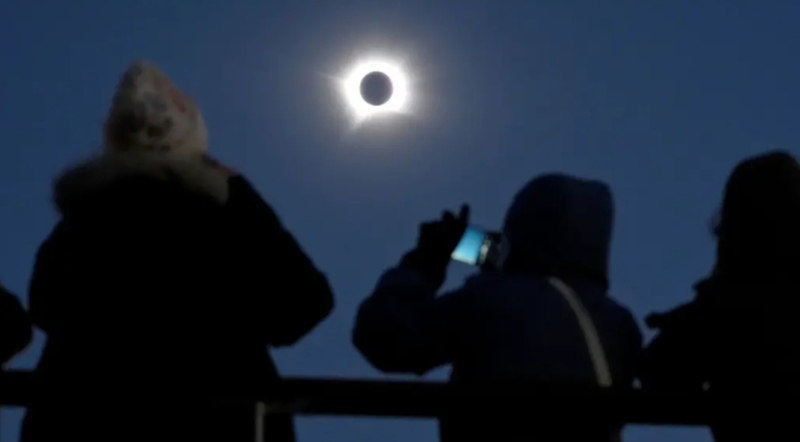
A solar eclipse is a natural phenomenon that occurs when the Moon passes directly between the Earth and the Sun, temporarily blocking the Sun’s light and casting a shadow across parts of the Earth.
While modern science explains this event through planetary movement and orbital mechanics, ancient cultures developed rich myths to explain why the Sun—the source of life and warmth, suddenly disappeared from the sky. In India, these stories blend divine battles, cosmic balance, and deeply rooted cultural traditions.
The Legend of Rahu and Ketu
The most famous Indian myth explaining eclipses originates from an ancient event known as Samudra Manthan, or the Churning of the Ocean of Milk. According to Hindu mythology, the gods (Devas) and demons (Asuras) joined forces to churn the cosmic ocean to retrieve Amrita, the nectar of immortality.
When the nectar emerged, Lord Vishnu took the form of Mohini, a beautiful maiden, to distribute the drink exclusively to the gods. However, a clever demon named Svarbhanu disguised himself as a god and slipped into the line. Just as he swallowed a drop of the nectar, Surya (the Sun god) and Chandra (the Moon god) noticed the trick and alerted Vishnu.
Vishnu immediately severed Svarbhanu’s head with his divine disc (Sudarshana Chakra). Because the nectar had already touched the demon’s throat, both parts of his body remained immortal:
(1) Rahu: The severed head, representing the lunar node that chases the celestial bodies.
(2) Ketu: The headless body.
Out of revenge for being exposed, Rahu periodically chases and swallows the Sun or the Moon. However, because Rahu has no throat or body, the swallowed Sun eventually emerges from his severed neck, ending the eclipse and restoring light to the world.
Cultural Practices and Beliefs
In traditional Indian households, eclipses are viewed as periods of spiritual vulnerability and transition. Several traditional practices are observed during an eclipse:
(1) Fasting and Cleansing: Many people refrain from eating or cooking during an eclipse, believing the absence of sunlight increases harmful impurities in food. Stored water and milk are often protected by placing leaves of sacred basil (Tulsi) inside.
(2) Ritual Baths: After an eclipse ends, it is customary to take a bath in a river or home to symbolically wash away negative energy.
(3) Protection for Expectant Mothers: Pregnant women are often advised to stay indoors and avoid using sharp objects like knives or scissors during the eclipse to ensure the health of the unborn child.
Today, people across India view solar eclipses through a dual lens. While astronomers and the public appreciate eclipses as magnificent astronomical events, the timeless stories of Rahu and Ketu remain an integral part of Indian heritage and storytelling.
References
1.https://www.exoticindiaart.com/article/rahu-ketu/?hl=en-
2.https://timesofindia.indiatimes.com/astrology/others/story-of-rahu-and-ketu/articleshow/111650701.cms?hl=en-GB
3.https://mythcrafts.com/2017/08/15/rahu-and-ketu-hindu-eclipse-mythology/?hl=en-GB
4.https://rajeshkochhar.com/rahu-and-ketu-in-mythological-and-%E2%80%9Castronomological%E2%80%9D-contexts/?hl=en-
5.https://indianmyth.wordpress.com/2018/07/31/the-eclipse-demon-in-indian-astronomy/?hl=en-