

SAMAJ WEEKLY UK
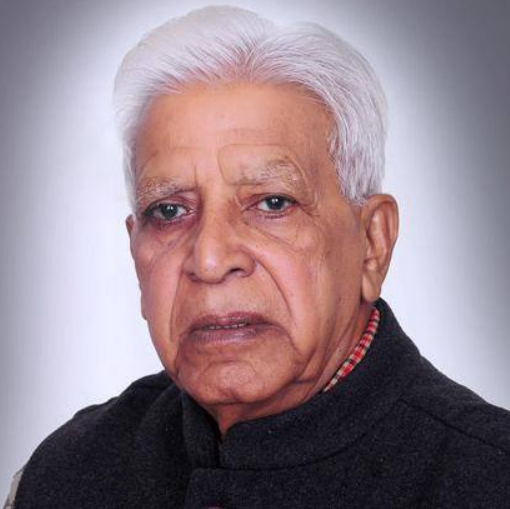
DR. RAMJILAL,
Social Scientist and Former Principal,
Dyal Singh College, Karnal (Haryana, India).
Email ID: [email protected]
Abstract:
The Kamboh, also referred to as Kamboj during the medieval period, are an ancient Kshatriya clan of India. During the Mahabharata war, Maharaja Sudakshina Kamboj of the Kamboj Mahajanapada sided with the Kauravas. In Sanskrit literature, the term ‘Kamboj’ denoted the Kabul region. During Alexander’s invasion (327–326 BCE), after her husband and son were martyred in battle, Queen Kripa Kamboj led the army against Alexander from the fort of Massaga for several weeks, eventually forcing him to agree to a treaty. The historian Curtius praised Kripa Kamboj’s valour.
Following the Arab invasions in the 7th century and the campaigns of Mahmud of Ghazni in the 11th century, a portion of this community converted to Islam. Notable figures from this community include Miyan Jumman Khan Kamboh, Sheikh Itmad-ul-Amir-ul-Mulk Sambhal Kamboh, Sheikh Sama-al-Din Kamboh, Hazrat Sheikh Sama-al-Din Kamboh, Sheikh Jamali Kamboh, Sheikh Nasiruddin Dehlavi (Kamboh), Shahnawaz Khan Kamboh, Sheikh Gadai Kamboh, Muhammad Saleh Kamboh, Nawab Khair Andesh Khan Kamboh (I), Sheikh Abdullah Biyabani Kamboh, and Hasan Mahmudi Kamboh.
According to The People of India (1868), the Kamboh community believes they were brought into the fold of Islam by Mahmud of Ghazni himself. From the era of the Lodi Sultanate through the Mughal period to the Revolt of 1857, the Kamboh community played a pivotal role in administration, the military, the judiciary, and the Sufi tradition. Mughal historian M. Athar Ali writes, “Among Indian Muslims, the Sayyids and Kambohs were particularly favoured for high military and civil positions during the Mughal reign.”
Details:
1. Delhi Sultanate and Lodi Period:
During this era, many members of the Kamboh community held significant administrative positions. Under the reign of Sikandar Lodi, Miyan Jumman Khan Kamboh served as the chief officer of the *Hajib-i-Khas* (in charge of the royal private chambers), while Umar Khan Kamboh was a key minister in the Amir-i-Akhur (Cavalry Department). Additionally, Miyan Ladan Khan Kamboh was renowned as Sikandar Lodi’s Imam and royal companion (*Nadim*). During Sher Shah Suri’s reign, Sheikh Itmad-ul-Amir-ul-Mulk Sambhal Kamboh served as the *Amir-i-Ariz* (Director General of Salaries/Military Paymaster) and later ascended to the position of Prime Minister due to his hard work and integrity. This period represents a glorious chapter in the history of the Kamboh community, as leaders of the Kamboh/Kamboj community were at the forefront of administrative excellence during the Sultanate era.
Conversion to Islam: The Sufi Ideology:
This period marked the early era of Sufi ideology. A significant number of Kamboj individuals converted to Islam under the influence of Bahauddin Zakariya Suhrawardi and his son Sadruddin. Sheikh Sama-al-Din Kamboh, a prominent 15th-century Sufi saint of the Suhrawardi order based in Multan (Punjab), was born in 1405 AD. He arrived in Delhi during the reign of Bahlul Lodi (d. 1488) and served as a spiritual advisor and patron saint to the Lodi dynasty—specifically Bahlul Lodi and Sikandar Lodi—ranking among the foremost Ulema (Islamic scholars) of that era. His father, Sheikh Fakhruddin Kamboh, was a respected religious leader and spiritual guide, or ‘Pir,’ of the time, commanding great respect among Muslim spiritual and religious figures.
The shrine (Mazar) of Hazrat Sheikh Sama-al-Din Kamboh still stands in Delhi today. His renowned disciples included Sheikh Jamali Kamboh and Sheikh Nasiruddin Dehlavi (Kamboh). Sheikh Nasiruddin Dehlavi served as the ‘Sheikh-ul-Islam’ of Delhi during the reigns of Sikandar Lodi, Ibrahim Lodi, and Babur.
Sheikh Gadai Kamboh—whose real name was Abdur Rahman—was the son, disciple, and successor of the renowned Punjabi Muslim Sufi saint and scholar Sheikh Jamali Kamboh. He is credited with serving as a courtier during the reign of Emperor Humayun. Under Akbar’s rule, he held the position of “Sadr-us-Sudur”—the chief justice or religious head of Hindustan. Following Humayun’s defeat in 1540, Gadai received assistance from Bairam Khan and undertook a pilgrimage to Mecca; during his stay in Gujarat, he organised Sama gatherings (musical spiritual assemblies). Upon the restoration of Mughal rule in 1555, he became the chief religious official, overseeing justice, the appointment of Qazis (judges), and the management of charitable activities. Gadai wielded significant influence in the court, and Akbar held him in high regard due to his efforts to combat corruption—an influence stemming not from the sword or fear, but from the charisma of Sufi ideology.
The Mughal Era – From Akbar to Aurangzeb: The Golden Age of the Kamboh Community
The reign of Akbar is considered a golden age for the Kamboh community. In the *Ain-i-Akbari*, Abul Fazl writes that belonging to the Kamboh lineage was a matter of honour during the reigns of Akbar and Jahangir.
Military Commanders and Administrators:
During this period, Shah Nawaz Khan Kamboh (1529–1599) was one of Akbar’s most trusted generals. He held several key positions, including Mir Tuzak (Quartermaster General), *Mir Bakhshi* (Chief Military Advisor), and Vakil (Prime Minister). In 1581, he became the Governor of Bengal and led a force of 9,000 cavalrymen in the Brahmaputra region. The Kamboh Nawabs of Meerut are descendants of his lineage.
The Kamboh Community during the Reign of Mughal Emperor Aurangzeb (1658–1707):
During Aurangzeb’s reign, several prominent scholars, Sufis, and saintly figures from the Kamboh community emerged. Members of the Kamboh lineage made significant contributions to administration, calligraphy, and literature. Notable figures from the Aurangzeb era included Muhammad Saleh Kamboh, who served as the royal historian for Shah Jahan and also as a teacher to Emperor Aurangzeb. He was known as a virtuous and pious scholar. Another distinguished individual was Muhammad Hussain Kamboh, a high-ranking official during Aurangzeb’s reign, known for his contributions to the community. Additionally, Shaikh Inayat-Allah Kamboh, the elder brother of Muhammad Saleh, was a renowned scholar and writer who influenced the literary and administrative environment of Aurangzeb’s early reign.
The Kamboh Nawabs of Meerut:
Descendants of Shahbaz Khan Kamboh arrived in Meerut during the 17th century. Muhammad Khan served as the Faujdar (military commander/administrator) of Etawah. Around 1696, after the fortification of Meerut, Muhammad Fazil Khan and Muhammad Masih Khan took authority. Even after the decline of Mughal power, the Kamboh Nawabs maintained significant influence over Meerut’s politics until 1947, extending into the British era.
Nawab Khair Andesh Khan Kamboh (I), originally named Abu Muhammad Khan Kamboh (d. 1710), was a prominent figure during the reigns of Shah Jahan and Aurangzeb. Aurangzeb granted him the rank (mansab) of 5,000 horsemen and the title “Khair Andesh Khan.” He served as the Faujdar of Etawah, and, during Bahadur Shah’s reign, his rank was elevated to 6,000 horsemen. In Meerut, he commissioned the construction of the Khair Nagar Gate, the fort, and the Khair-ul-Masjid (mosque) in 1691. He also served as the governor of regions including Rohilkhand, Bihar, Etawah, Bengal, and Kalabagh. Khair Andesh Khan Kamboh (II), the second son of Khair Andesh Khan Kamboh (First), held a rank of 5,000, served as the Governor of Kashmir, and founded the Nawab Bazaar in Srinagar.
Nawab Mohabbat Khan Kamboh is known for constructing the famous Mohabbat Khan Mosque in Peshawar. General Nawab Bahadur Kamboh was recognised as a highly intelligent military officer and Wazir (minister).
Judges and Scholars:
The Kambohs were not only prominent as Nawabs and administrators but also as judges and scholars. During Akbar’s reign, Shaikh Gadai Kamboh served as the Sadr-us-Sudur (chief justice and administrator). He played a pivotal role in formulating Akbar’s religious policy, Din-i-Ilahi (Divine Faith, 1582), which synthesised ideas from Islam, Hinduism, Zoroastrianism, and Christianity. This policy promoted peace, charity, and tolerance without forced conversions.
Social Status:
In Mughal-era India, the Kambohs were classified among the Sheikhs. According to Muhammad Umar, the Kambohs were celebrated for their bravery, generosity, and intellect. During this period, Kamboh women, while observing purdah (seclusion), engaged in education and Sufi traditions while managing their households. Kamboh Begums (noblewomen) at the Mughal court patronised and promoted art and culture. Among Indian Muslims of the Mughal era, the Kambohs were regarded as the most aristocratic. Notably, to preserve the purity of their lineage, Kamboh Muslims avoided matrimonial alliances with the Mughals, unlike certain Hindu castes. This marked a shift from the ancient Kamboj society’s practice of “marriage diplomacy.”
The People’s Revolution of 1857: Swords and the Noose:
According to Muhammad Umar in The People of India (1868), the Kamboh community is significantly present in the areas of Etah, Rohilkhand, and Meerut, where they are recognised for their skills in cavalry service, trade, and government employment.
The popular uprising of 1857 began in the cantonments of Meerut and Ambala. The Kamboh Nawabs had a dual role in this rebellion; while the Kamboh Nawabs of Meerut supported the British, the Kamboh Zamindars of Bulandshahr emerged as heroes of the revolution. Nawab Ahmadullah Khan Kamboh and Nawab Asadullah Khan Kamboh from the Meerut region remained loyal to the British and assisted in suppressing the uprising. However, they were wounded and had their property looted on two occasions. Later, between 1885 and 1895, the British government honoured them with the titles of ‘Nawab’ and ‘Khan Bahadur.’
Conversely, the heroes of the rebellion in Bulandshahr included Azim Khan Kamboh, a prominent Zamindar of the Khanpur estate. He fought alongside Nawab Wali Dad Khan in the Battle of Mala Ghat on October 10, 1857. Azim Khan was captured while attempting to cross the Ganges and was executed by hanging following a court-martial.
Azim Khan Kamboh’s son, Haji Munir Khan Kamboh, a commander in Buland Shahr, confronted the British at the Battle of Gulaothi on July 29, 1857. He was martyred during the fight, suffering deep sword wounds to his face.
Throughout the uprising, more than 50 villages in the Meerut region were declared ‘rebel’ or mutinous villages. In just the village of Basodh, 180 people were massacred within ten hours, and thousands were hanged from trees. The British systematically confiscated the property of these rebellious villages. Although British records provide details about the names, father’s names, and villages of the Kamboj people from Khanpur, Kamalpur, and other settlements, their caste identity is often omitted. As a result, the Kamboj individuals who were executed are primarily identified by their villages. Records at the Meerut Martyrs’ Memorial Museum contain a list of those who were captured and executed.
During the popular uprising of 1857, countless women—beyond notable figures like Rani Lakshmibai or Begum Hazrat Mahal—sacrificed their lives. Women from the ordinary farming and working classes in regions of Western Uttar Pradesh, such as Meerut, Baghpat, Shamli, and Muzaffarnagar, were martyred not for the sake of a princely state but for the cause of freedom. The rebellious villages in these areas, particularly those dominated by the Kamboh community—such as Thana Bhawan, Khanpur, Kamalpur, Kaithwari, Kalina, Kanauni, and Kairana—were at the forefront of the struggle. Both Hindu and Muslim women took up arms against the British. To crush the rebellion, the British imperial government hanged or burned alive approximately a dozen women and young girls. Heroines of the 1857 uprising who have been forgotten including Asgari Begum, Habiba Bibi, Bhawani, and Jamila, among others from Muzaffarnagar and Thana Bhawan. Asgari Begum of Thana Bhawan was burned alive (Rana Safvi, June 23, 2023, The Wire). There is a need for official research to determine exactly how many Kamboh women participated in the revolution in this region.
In summary, from 712 CE (the era of Qasim) to the Great Uprising of 1857, the Muslim Kamboh community played a pivotal role in shaping the social, cultural, economic, and political landscape of India. During the 1857 uprising, Kamboh landowners from Khanpur were sentenced to death. Thousands of people—including ordinary Kamboh farmers, labourers, and women—played a significant role in this revolution. Muslim history is not just a chronicle of wars; it also encompasses justice, Sufism, and cultural synthesis, all of which stand as testaments to the pride and heritage of the Kamboh community.
Read more at:
>Watson, John Forbes; Kaye, John William, eds. (1868). The people of India : a series of photographic illustrations, with descriptive letterpress, of the races and tribes of Hindustan. Vol. 3. London (India Museum): India Office (W. H. Allen & Co.),p.192.
(It contains details regarding the administrative and aristocratic character of the Kamboh community and the high positions they held).
> Medieval India: Researches in the History of India, 1200–1750. Centre of Advanced Study in History, Aligarh Muslim University. 1992. pp. 41–42.
>Pande, Rekha (1990). Succession in the Delhi Sultanate. p. 175.
>Pradines, Stéphane; Topan, Farouk, eds. (2023). Muslim Cultures of the Indian Ocean: Diversity and Pluralism, Past and Present. Exploring Muslim Contexts. Edinburgh University Press. p. 132. ISBN 978-1-4744-8649-1.
>Hadi, Nabi (1995). Dictionary of Indo-Persian Literature. p. 541.
>Ali. Athar.M. (1966). The Mughal nobility under Aurangzeb London : Asia Publishing House for the Dept of History, Aligarh Muslim University, 1966
(It describes the preference given to Kambohs for military and civil positions during Mughal rule).
>https://en.wikipedia.org/wiki/Shaikh_Gadai_Kamboh.
>https://hi.wikipedia.org/wiki.
>Selections from State Papers,1857-58, Vol.1: Calcutta.
(This volume records the names and villages of the revolutionaries of 1857, but not their castes. The Meerut-Buland Shahr region was an area with a significant Kamboh population).
>https://en.wikipedia.org/wiki/Nawab_Khair_Andesh_Khan.
>Ameer, Sabine; Umair, Shah; Ahmad, Ameer (27 August 2023). “Fading Legacy of Abu ka Maqbara: A Space of Resistance During the 1857 Uprising”. The Quint. Retrieved 1 August 2024
>Pathak. Amit. Dr. (1857).1857: A Living History: Meerut Shaheed Smarak
(The 1,500 documents at the Meerut Memorial Museum contain village-based records rather than caste-based ones.)
>District Gazetteer, Meerut,1904.
>Lal. Ramji. Dr. (April 27, 2026) The Great Queen Kripa Kamboja: The Unsung Heroine of Ancient India/https://theasianindependent.co.uk/the-great-queen-kripa-kamboja-the-unsung-heroine-of-ancient-india/
>Lal. Ramji. Dr. (1June,2026). Women’s Empowerment in Ancient India: An Analysis/ https://theasianindependent.co.uk/womens-empowerment-in-ancient-india-an-analysis/
>Lal. Ramji. Dr. (4 May2026) .The Warrior Kamboj Queens in Ancient India: Martial Leadership and Historical Legacy/https://theasianindependent.co.uk/tag/the-warrior-kamboj-queens-in-ancient-india-martial-leadership-and-historical-legacy/
> Lal Ramji. Dr. https://www.researchgate.net/publication/408602398_The_Warrior_Kamboj_Queens_in_Ancient_India_Martial_Leadership_and_Historical_Legacy/fulltext/6a4ea
>https://www.milligazette.com/news/Family-Kids/15010-the-forgotten-women-of-1857-azizun-bai-asghari-begum-habiba/
>source: http://www.milligazette.com / The Milli Gazette / Home> Online News> Family & Kids / Online published – October 31st, 2016 and – Print issue: October 16-31, 2016
>https://www.mpositive.in/tag/shamsul-islam/
>https://timesofindia.indiatimes.com/city/meerut/the-revolt-of-1857-when-gender-barriers-crumbled-women-fought-as-equals/articleshow/52193240.cms. May 9, 2016,
(It mentions women in Muzaffarnagar fighting against the British).